Shop No.20, Aurobindo Palace Market, Hauz Khas, Near Church +91 9818282497 | 011 26867121 110016 New Delhi IN
Midland The Book Shop ™
Shop No.20, Aurobindo Palace Market, Hauz Khas, Near Church +91 9818282497 | 011 26867121 New Delhi, IN
+919871604786 https://www.midlandbookshop.com/s/607fe93d7eafcac1f2c73ea4/69591829db7aed90e0608dfb/without-tag-line-480x480.png" [email protected]
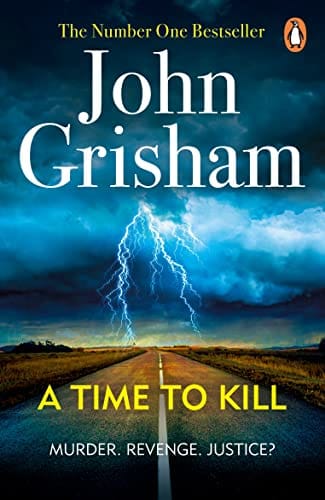
9780099537038 634012accb8a66b802c564e9 A Time To Kill https://www.midlandbookshop.com/s/607fe93d7eafcac1f2c73ea4/634012accb8a66b802c5651a/41ocimvec-l.jpg

______________________________
THE MULTI-MILLION COPY BESTSELLER

John Grisham's first and most shocking novel, adapted as a film starring Samuel L. Jackson and Matthew McConaughey

When Carl Lee Hailey guns down the violent racists who raped his ten-year-old daughter, the people of the small town of Clanton, Mississippi see it as justice done, and call for his acquittal.

But when extremists outside Clanton - including the KKK - hear that a black man has killed two white men, they invade the town, determined to destroy anything and anyone that opposes their sense of justice. A national media circus descends on Clanton.

As tensions mount, Hailey hires the inexperienced Jake Brigance to defend him. It's the kind of case that could make a young lawyer's career.

But it's also the kind of case that could get a young lawyer killed.
______________________________
The original, epoch-defining Jake Brigance novel. Brigance returns in SYCAMORE ROW and A TIME FOR MERCY.
______________________________
'A master at the art of deft characterisation and the skilful delivery of hair-raising crescendos' Irish Independent

'John Grisham is the master of legal fiction' - Jodi Picoult

'The best thriller writer alive' - Ken Follett

'John Grisham has perfected the art of cooking up convincing, fast-paced thrillers' Telegraph

'Grisham is a superb, instinctive storyteller' - The Times

'Grisham's storytelling genius reminds us that when it comes to legal drama, the master is in a league of his own.' - Daily Record

'Masterful - when Grisham gets in the courtroom he lets rip, drawing scenes so real they're not just alive, they're pulsating' Mirror

'A giant of the thriller genre' TimeOut


Amazon.com Review

With a chillingly calm, even delivery, Michael Beck, a regular Grisham reader (The RainmakerThe Runaway Jury), turns the narrative of this disturbing tale of racism, ignorance, and brutality into an almost visceral experience. "Cobb strung a length of quarter inch ski rope over a limb ... he grabbed her and put the noose around her head." The story is frighteningly believable and expertly crafted around a horrible crime and the tragic consequences that follow. At times, Beck's character voices can be distracting, but his efforts are generally applied to good effect, adding another level of tension to this already suspenseful look at a small Mississippi town's struggle for justice. (Running time: 17 hours, 12 cassettes) --George Laney --This text refers to an alternate kindle_edition edition.

Review

"Grisham's pleasure in relating the Byzantine  complexities of Clanton (Mississippi) politics is contagious and he tells a good  story...An enjoyable book."—Library  Journal.

"Grisham excels!"—Dallas Times Herald. --This text refers to an alternate kindle_edition edition.

Book Description

The multi-million copy bestselling thriller that introduced Jake Brigance to Clanton

This is the book that launched the giant Grisham, that became the film, and that has now inspired a sequel, Sycamore Row --This text refers to an alternate kindle_edition edition.

Review

"Grisham's pleasure in relating the Byzantine  complexities of Clanton (Mississippi) politics is contagious and he tells a good  story...An enjoyable book." -- Library  Journal.

"Grisham excels!" --  Dallas Times Herald. --This text refers to the hardcover edition.

From the Inside Flap

Before "The Firm and "The Pelican Brief made him a superstar, John Grisham wrote this riveting story of retribution and justice -- at last it's available in a Doubleday hardcover edition. In this searing courtroom drama, best-selling author John Grisham probes the savage depths of racial violence...as he delivers a compelling tale of uncertain justice in a small southern town...Clanton, Mississippi.
The life of a ten-year-old girl is shattered by two drunken and remorseless young man. The mostly white town reacts with shock and horror at the inhuman crime. Until her black father acquires an assault rifle -- and takes justice into his own outraged hands.
For ten days, as burning crosses and the crack of sniper fire spread through the streets of Clanton, the nation sits spellbound as young defense attorney Jake Brigance struggles to save his client's life...and then his own... --This text refers to the hardcover edition.

About the Author

John Grisham is the author of a collection of stories, a work of nonfiction, three sports novels, four kids’ books, and many legal thrillers. His work has been translated into forty-two languages. He lives near Charlottesville, Virginia. --This text refers to the hardcover edition.

From the Publisher

Before The Firm and The Pelican Brief made him a superstar, John Grisham wrote this riveting story of retribution and justice -- at last it's available in a Doubleday hardcover edition. In this searing courtroom drama, best-selling author John Grisham probes the savage depths of racial violence...as he delivers a compelling tale of uncertain justice in a small southern town...

Clanton, Mississippi. The life of a ten-year-old girl is shattered by two drunken and remorseless young man. The mostly white town reacts with shock and horror at the inhuman crime. Until her black father acquires an assault rifle -- and takes justice into his own outraged hands.

For ten days, as burning crosses and the crack of sniper fire spread through the streets of Clanton, the nation sits spellbound as young defense attorney Jake Brigance struggles to save his client's life...and then his own...

"Grisham's pleasure in relating the Byzantine complexities of Clanton (Mississippi) politics is contagious and he tells a good story...An enjoyable book." -- Library Journal.

"Grisham excels!" -- Dallas Times Herald.


--This text refers to the hardcover edition.

From the Back Cover

>The Firm and  The Pelican Brief made him a superstar,  John Grisham wrote this riveting story of  retribution and justice -- at last it's available in a  Doubleday hardcover edition. In this searing courtroom  drama, best-selling author John Grisham probes the  savage depths of racial violence...as he delivers  a compelling tale of uncertain justice in a small  southern town...Clanton, Mississippi.  

The life of a ten-year-old girl is shattered by two  drunken and remorseless young man. The mostly  white town reacts with shock and horror at the inhuman  crime. Until her black father acquires an assault  rifle -- and takes justice into his own outraged  hands.

For ten days, as burning crosses  and the crack of sniper fire spread through the  streets of Clanton, the nation sits spellbound as &nb --This text refers to the hardcover edition.

Excerpt. © Reprinted by permission. All rights reserved.

Few people attacked the morning like Jake Brigance. He walked briskly to the end of the driveway and got the morning papers for Carla. It was dark, clear, and cool with the promise of summer rapidly approaching.
 
He studied the darkness up and down Adams Street, then turned and admired his house. Two homes in Ford County were on the National Register of Historic Places, and Jake Brigance owned one of them. Although it was heavily mortgaged, he was proud of it nonetheless. It was a nineteenth-century Victorian built by a retired railroad man who died on the first Christmas Eve he spent in his new home. The facade was a huge, centered gable with hipped roof over a wide, inset front porch. Under the gable a small portico covered with bargeboard hung gently over the porch. The five supporting pillars were round and painted white and slate blue. Each column bore a handmade floral carving, each with a different flower—daffodils, irises, and sunflowers. The railing between the pillars was filled with lavish lacework. Upstairs, three bay windows opened onto a small balcony, and to the left of the balcony an octagonal tower with stained-glass windows protruded and rose above the gable until it peaked with an iron-crested finial. Below the tower and to the left of the porch, a wide, graceful veranda with ornamental railing extended from the house and served as a carport. The front panels were a collage of gingerbread, cedar shingles, scallops, fish scales, tiny intricate gables, and miniature spindles.
 
Carla had located a paint consultant in New Orleans, and the fairy chose six original colors—mostly shades of blue, teal, peach, and white. The paint job took two months and cost Jake five thousand dollars, and that did not include the countless hours he and Carla had spent dangling from ladders and scraping cornices. And although he was not wild about some of the colors, he had never dared suggest repainting.
 
As with every Victorian, the house was gloriously unique. It had a piquant, provocative, engaging quality derived from an ingenuous, joyous, almost childlike bearing. Carla had wanted it since before they married, and when the owner in Memphis finally died and the estate was closed, they bought it for a song because no one else would have it. It had been abandoned for twenty years. They borrowed heavily from two of the three banks in Clanton, and spent the next three years sweating and doting over their landmark. Now people drove by and took pictures of it.
 
The third local bank held the mortgage on Jake’s car, the only Saab in Ford County. And a red Saab at that. He wiped the dew from the windshield and unlocked the door. Max was still barking and had awakened the army of bluejays that lived in Mrs. Pickle’s maple tree. They sang to him and called farewell as he smiled and whistled in return. He backed into Adams Street. Two blocks east he turned south on Jefferson, which two blocks later ran dead end into Washington Street. Jake had often wondered why every small Southern town had an Adams, a Jefferson, and a Washington, but no Lincoln or Grant. Washington Street ran east and west on the north side of the Clanton square.
 
Because Clanton was the county seat it had a square, and the square quite naturally had a courthouse in the center of it. General Clanton had laid out the town with much thought, and the square was long and wide and the courthouse lawn was covered with massive oak trees, all lined neatly and spaced equally apart. The Ford County courthouse was well into its second century, built after the Yankees burned the first one. It defiantly faced south, as if telling those from the North to politely and eternally kiss its ass. It was old and stately, with white columns along the front and black shutters around the dozens of windows. The original red brick had long since been painted white, and every four years the Boy Scouts added a thick layer of shiny enamel for their traditional summer project. Several bond issues over the years had allowed additions and renovations. The lawn around it was clean and neatly trimmed. A crew from the jail manicured it twice a week.
 
Clanton had three coffee shops—two for the whites and one for the blacks, and all three were on the square. It was not illegal or uncommon for whites to eat at Claude’s, the black cafe on the west side. And it was safe for the blacks to eat at the Tea Shoppe, on the south side, or the Coffee Shop on Washington Street. They didn’t, however, since they were told they could back in the seventies. Jake ate barbecue every Friday at Claude’s, as did most of the white liberals in Clanton. But six mornings a week he was a regular at the Coffee Shop.
 
He parked the Saab in front of his office on Washington Street and walked three doors to the Coffee Shop. It had opened an hour earlier and by now was bustling with action. Waitresses scurried about serving coffee and breakfast and chatting incessantly with the farmers and mechanics and deputies who were the regulars. This was no white-collar cafe. The white collars gathered across the square at the Tea Shoppe later in the morning and discussed national politics, tennis, golf, and the stock market. At the Coffee Shop they talked about local politics, football, and bass fishing. Jake was one of the few white collars allowed to frequent the Coffee Shop. He was well liked and accepted by the blue collars, most of whom at one time or another had found their way to his office for a will, a deed, a divorce, a defense, or any one of a thousand other problems. They picked at him and told crooked lawyer jokes, but he had a thick skin. They asked him to explain Supreme Court rulings and other legal oddities during breakfast, and he gave a lot of free legal advice at the Coffee Shop. Jake had a way of cutting through the excess and discussing the meat of any issue. They appreciated that. They didn’t always agree with him, but they always got honest answers. They argued at times, but there were never hard feelings.
 
He made his entrance at six, and it took five minutes to greet everyone, shake hands, slap backs, and say smart things to the waitresses. By the time he sat at his table his favorite girl, Dell, had his coffee and regular breakfast of toast, jelly, and grits. She patted him on the hand and called him honey and sweetheart and generally made a fuss over him. She griped and snapped at the others, but had a different routine for Jake.
 
He ate with Tim Nunley, a mechanic down at the Chevrolet place, and two brothers, Bill and Bert West, who worked at the shoe factory north of town. He splashed three drops of Tabasco on his grits and stirred them artfully with a slice of butter. He covered the toast with a half inch of homemade strawberry jelly. Once his food was properly prepared, he tasted the coffee and started eating. They ate quietly and discussed how the crappie were biting.
 
In a booth by the window a few feet from Jake’s table, three deputies talked among themselves. The big one, Marshall Prather, turned to Jake and asked loudly, “Say, Jake, didn’t you defend Billy Ray Cobb a few years ago?”
 
The cafe was instantly silent as everyone looked at the lawyer. Startled not by the question but by its response, Jake swallowed his grits and searched for the name.
 
“Billy Ray Cobb,” he repeated aloud. “What kind of case was it?”
 
“Dope,” Prather said. “Caught him sellin’ dope about four years ago. Spent time in Parchman and got out last year.”
 
Jake remembered. “Naw, I didn’t represent him. I think he had a Memphis lawyer.”

Prather seemed satisfied and returned to his pancakes. Jake waited.

Finally he asked, “Why? What’s he done now?”

“We picked him up last night for rape.” --This text refers to the hardcover edition.

 
9780099537038
out of stock INR 559
1 1
A Time To Kill

A Time To Kill

ISBN: 9780099537038
₹559
₹699   (20% OFF)


Back In Stock Shortly - Fill The Book Request Form

Details
  • ISBN: 9780099537038
  • Author: John Grisham
  • Publisher: Arrow
  • Pages: 530
  • Format: Paperback
SHARE PRODUCT

Book Description

______________________________
THE MULTI-MILLION COPY BESTSELLER

John Grisham's first and most shocking novel, adapted as a film starring Samuel L. Jackson and Matthew McConaughey

When Carl Lee Hailey guns down the violent racists who raped his ten-year-old daughter, the people of the small town of Clanton, Mississippi see it as justice done, and call for his acquittal.

But when extremists outside Clanton - including the KKK - hear that a black man has killed two white men, they invade the town, determined to destroy anything and anyone that opposes their sense of justice. A national media circus descends on Clanton.

As tensions mount, Hailey hires the inexperienced Jake Brigance to defend him. It's the kind of case that could make a young lawyer's career.

But it's also the kind of case that could get a young lawyer killed.
______________________________
The original, epoch-defining Jake Brigance novel. Brigance returns in SYCAMORE ROW and A TIME FOR MERCY.
______________________________
'A master at the art of deft characterisation and the skilful delivery of hair-raising crescendos' Irish Independent

'John Grisham is the master of legal fiction' - Jodi Picoult

'The best thriller writer alive' - Ken Follett

'John Grisham has perfected the art of cooking up convincing, fast-paced thrillers' Telegraph

'Grisham is a superb, instinctive storyteller' - The Times

'Grisham's storytelling genius reminds us that when it comes to legal drama, the master is in a league of his own.' - Daily Record

'Masterful - when Grisham gets in the courtroom he lets rip, drawing scenes so real they're not just alive, they're pulsating' Mirror

'A giant of the thriller genre' TimeOut


Amazon.com Review

With a chillingly calm, even delivery, Michael Beck, a regular Grisham reader (The RainmakerThe Runaway Jury), turns the narrative of this disturbing tale of racism, ignorance, and brutality into an almost visceral experience. "Cobb strung a length of quarter inch ski rope over a limb ... he grabbed her and put the noose around her head." The story is frighteningly believable and expertly crafted around a horrible crime and the tragic consequences that follow. At times, Beck's character voices can be distracting, but his efforts are generally applied to good effect, adding another level of tension to this already suspenseful look at a small Mississippi town's struggle for justice. (Running time: 17 hours, 12 cassettes) --George Laney --This text refers to an alternate kindle_edition edition.

Review

"Grisham's pleasure in relating the Byzantine  complexities of Clanton (Mississippi) politics is contagious and he tells a good  story...An enjoyable book."—Library  Journal.

"Grisham excels!"—Dallas Times Herald. --This text refers to an alternate kindle_edition edition.

Book Description

The multi-million copy bestselling thriller that introduced Jake Brigance to Clanton

This is the book that launched the giant Grisham, that became the film, and that has now inspired a sequel, Sycamore Row --This text refers to an alternate kindle_edition edition.

Review

"Grisham's pleasure in relating the Byzantine  complexities of Clanton (Mississippi) politics is contagious and he tells a good  story...An enjoyable book." -- Library  Journal.

"Grisham excels!" --  Dallas Times Herald. --This text refers to the hardcover edition.

From the Inside Flap

Before "The Firm and "The Pelican Brief made him a superstar, John Grisham wrote this riveting story of retribution and justice -- at last it's available in a Doubleday hardcover edition. In this searing courtroom drama, best-selling author John Grisham probes the savage depths of racial violence...as he delivers a compelling tale of uncertain justice in a small southern town...Clanton, Mississippi.
The life of a ten-year-old girl is shattered by two drunken and remorseless young man. The mostly white town reacts with shock and horror at the inhuman crime. Until her black father acquires an assault rifle -- and takes justice into his own outraged hands.
For ten days, as burning crosses and the crack of sniper fire spread through the streets of Clanton, the nation sits spellbound as young defense attorney Jake Brigance struggles to save his client's life...and then his own... --This text refers to the hardcover edition.

About the Author

John Grisham is the author of a collection of stories, a work of nonfiction, three sports novels, four kids’ books, and many legal thrillers. His work has been translated into forty-two languages. He lives near Charlottesville, Virginia. --This text refers to the hardcover edition.

From the Publisher

Before The Firm and The Pelican Brief made him a superstar, John Grisham wrote this riveting story of retribution and justice -- at last it's available in a Doubleday hardcover edition. In this searing courtroom drama, best-selling author John Grisham probes the savage depths of racial violence...as he delivers a compelling tale of uncertain justice in a small southern town...

Clanton, Mississippi. The life of a ten-year-old girl is shattered by two drunken and remorseless young man. The mostly white town reacts with shock and horror at the inhuman crime. Until her black father acquires an assault rifle -- and takes justice into his own outraged hands.

For ten days, as burning crosses and the crack of sniper fire spread through the streets of Clanton, the nation sits spellbound as young defense attorney Jake Brigance struggles to save his client's life...and then his own...

"Grisham's pleasure in relating the Byzantine complexities of Clanton (Mississippi) politics is contagious and he tells a good story...An enjoyable book." -- Library Journal.

"Grisham excels!" -- Dallas Times Herald.


--This text refers to the hardcover edition.

From the Back Cover

>The Firm and  The Pelican Brief made him a superstar,  John Grisham wrote this riveting story of  retribution and justice -- at last it's available in a  Doubleday hardcover edition. In this searing courtroom  drama, best-selling author John Grisham probes the  savage depths of racial violence...as he delivers  a compelling tale of uncertain justice in a small  southern town...Clanton, Mississippi.  

The life of a ten-year-old girl is shattered by two  drunken and remorseless young man. The mostly  white town reacts with shock and horror at the inhuman  crime. Until her black father acquires an assault  rifle -- and takes justice into his own outraged  hands.

For ten days, as burning crosses  and the crack of sniper fire spread through the  streets of Clanton, the nation sits spellbound as &nb --This text refers to the hardcover edition.

Excerpt. © Reprinted by permission. All rights reserved.

Few people attacked the morning like Jake Brigance. He walked briskly to the end of the driveway and got the morning papers for Carla. It was dark, clear, and cool with the promise of summer rapidly approaching.
 
He studied the darkness up and down Adams Street, then turned and admired his house. Two homes in Ford County were on the National Register of Historic Places, and Jake Brigance owned one of them. Although it was heavily mortgaged, he was proud of it nonetheless. It was a nineteenth-century Victorian built by a retired railroad man who died on the first Christmas Eve he spent in his new home. The facade was a huge, centered gable with hipped roof over a wide, inset front porch. Under the gable a small portico covered with bargeboard hung gently over the porch. The five supporting pillars were round and painted white and slate blue. Each column bore a handmade floral carving, each with a different flower—daffodils, irises, and sunflowers. The railing between the pillars was filled with lavish lacework. Upstairs, three bay windows opened onto a small balcony, and to the left of the balcony an octagonal tower with stained-glass windows protruded and rose above the gable until it peaked with an iron-crested finial. Below the tower and to the left of the porch, a wide, graceful veranda with ornamental railing extended from the house and served as a carport. The front panels were a collage of gingerbread, cedar shingles, scallops, fish scales, tiny intricate gables, and miniature spindles.
 
Carla had located a paint consultant in New Orleans, and the fairy chose six original colors—mostly shades of blue, teal, peach, and white. The paint job took two months and cost Jake five thousand dollars, and that did not include the countless hours he and Carla had spent dangling from ladders and scraping cornices. And although he was not wild about some of the colors, he had never dared suggest repainting.
 
As with every Victorian, the house was gloriously unique. It had a piquant, provocative, engaging quality derived from an ingenuous, joyous, almost childlike bearing. Carla had wanted it since before they married, and when the owner in Memphis finally died and the estate was closed, they bought it for a song because no one else would have it. It had been abandoned for twenty years. They borrowed heavily from two of the three banks in Clanton, and spent the next three years sweating and doting over their landmark. Now people drove by and took pictures of it.
 
The third local bank held the mortgage on Jake’s car, the only Saab in Ford County. And a red Saab at that. He wiped the dew from the windshield and unlocked the door. Max was still barking and had awakened the army of bluejays that lived in Mrs. Pickle’s maple tree. They sang to him and called farewell as he smiled and whistled in return. He backed into Adams Street. Two blocks east he turned south on Jefferson, which two blocks later ran dead end into Washington Street. Jake had often wondered why every small Southern town had an Adams, a Jefferson, and a Washington, but no Lincoln or Grant. Washington Street ran east and west on the north side of the Clanton square.
 
Because Clanton was the county seat it had a square, and the square quite naturally had a courthouse in the center of it. General Clanton had laid out the town with much thought, and the square was long and wide and the courthouse lawn was covered with massive oak trees, all lined neatly and spaced equally apart. The Ford County courthouse was well into its second century, built after the Yankees burned the first one. It defiantly faced south, as if telling those from the North to politely and eternally kiss its ass. It was old and stately, with white columns along the front and black shutters around the dozens of windows. The original red brick had long since been painted white, and every four years the Boy Scouts added a thick layer of shiny enamel for their traditional summer project. Several bond issues over the years had allowed additions and renovations. The lawn around it was clean and neatly trimmed. A crew from the jail manicured it twice a week.
 
Clanton had three coffee shops—two for the whites and one for the blacks, and all three were on the square. It was not illegal or uncommon for whites to eat at Claude’s, the black cafe on the west side. And it was safe for the blacks to eat at the Tea Shoppe, on the south side, or the Coffee Shop on Washington Street. They didn’t, however, since they were told they could back in the seventies. Jake ate barbecue every Friday at Claude’s, as did most of the white liberals in Clanton. But six mornings a week he was a regular at the Coffee Shop.
 
He parked the Saab in front of his office on Washington Street and walked three doors to the Coffee Shop. It had opened an hour earlier and by now was bustling with action. Waitresses scurried about serving coffee and breakfast and chatting incessantly with the farmers and mechanics and deputies who were the regulars. This was no white-collar cafe. The white collars gathered across the square at the Tea Shoppe later in the morning and discussed national politics, tennis, golf, and the stock market. At the Coffee Shop they talked about local politics, football, and bass fishing. Jake was one of the few white collars allowed to frequent the Coffee Shop. He was well liked and accepted by the blue collars, most of whom at one time or another had found their way to his office for a will, a deed, a divorce, a defense, or any one of a thousand other problems. They picked at him and told crooked lawyer jokes, but he had a thick skin. They asked him to explain Supreme Court rulings and other legal oddities during breakfast, and he gave a lot of free legal advice at the Coffee Shop. Jake had a way of cutting through the excess and discussing the meat of any issue. They appreciated that. They didn’t always agree with him, but they always got honest answers. They argued at times, but there were never hard feelings.
 
He made his entrance at six, and it took five minutes to greet everyone, shake hands, slap backs, and say smart things to the waitresses. By the time he sat at his table his favorite girl, Dell, had his coffee and regular breakfast of toast, jelly, and grits. She patted him on the hand and called him honey and sweetheart and generally made a fuss over him. She griped and snapped at the others, but had a different routine for Jake.
 
He ate with Tim Nunley, a mechanic down at the Chevrolet place, and two brothers, Bill and Bert West, who worked at the shoe factory north of town. He splashed three drops of Tabasco on his grits and stirred them artfully with a slice of butter. He covered the toast with a half inch of homemade strawberry jelly. Once his food was properly prepared, he tasted the coffee and started eating. They ate quietly and discussed how the crappie were biting.
 
In a booth by the window a few feet from Jake’s table, three deputies talked among themselves. The big one, Marshall Prather, turned to Jake and asked loudly, “Say, Jake, didn’t you defend Billy Ray Cobb a few years ago?”
 
The cafe was instantly silent as everyone looked at the lawyer. Startled not by the question but by its response, Jake swallowed his grits and searched for the name.
 
“Billy Ray Cobb,” he repeated aloud. “What kind of case was it?”
 
“Dope,” Prather said. “Caught him sellin’ dope about four years ago. Spent time in Parchman and got out last year.”
 
Jake remembered. “Naw, I didn’t represent him. I think he had a Memphis lawyer.”

Prather seemed satisfied and returned to his pancakes. Jake waited.

Finally he asked, “Why? What’s he done now?”

“We picked him up last night for rape.” --This text refers to the hardcover edition.
 

User reviews

  0/5