
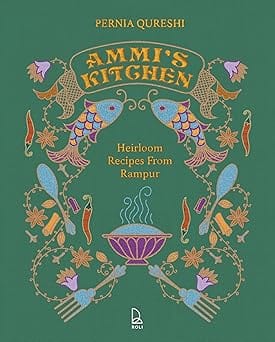

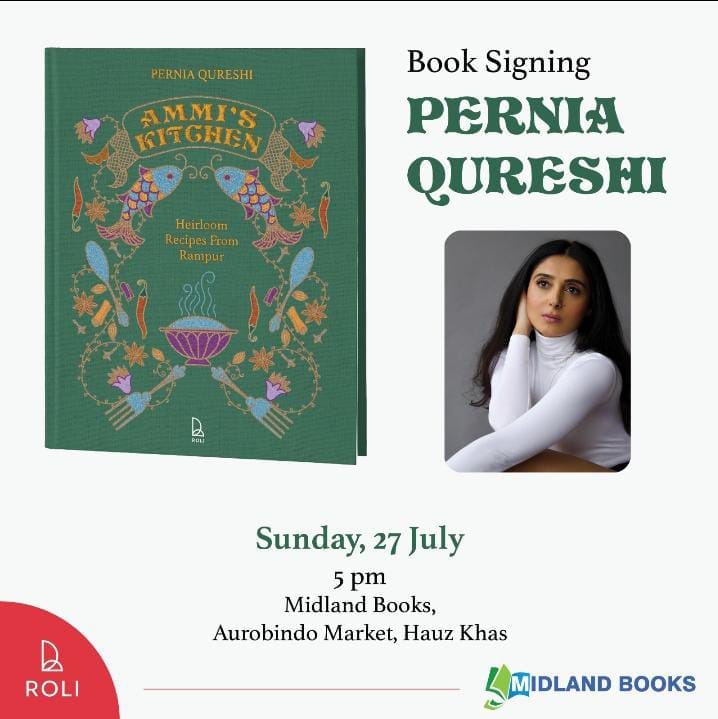
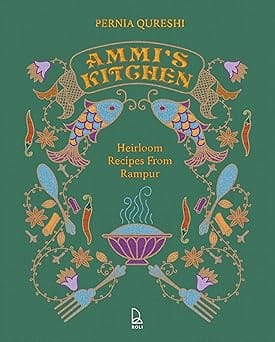
Ammis Kitchen Heirloom Recipes From Rampur
ISBN:
9789392130472
₹1,596
₹1,995
(20% OFF)
Details
- ISBN: 9789392130472
- Author: Pernia Qureshi
- Publisher: Roli Book
- Pages: 192
- Format: Hardback
Book Description
Ammi’s Kitchen: Heirloom Recipes from Rampur is a tribute to all grandmothers who have been the torchbearers of saving and passing on the legacy of classic traditional family recipes. Pernia Qureshi’s grandmother, Mussharaf-ul-Nissa Begum, originally from Chandausi in the United Provinces, was married at a young age into the princely state of Rampur. With the influence of her hometown, now combined with the newfound exposure to Rampur’s more modern and eclectic cuisine, she created a food language that was uniquely her own.
This book is a collection of recipes she mastered over the years, which still carry the aromas of the treasures of history.
About the Author
Pernia Qureshi is one of India’s leading style icons and fashion entrepreneurs. Author of Be Stylish with Pernia Qureshi, she currently runs India’s first video podcast in the category of luxury, lifestyle, and fashion, called ‘Fashionably Pernia’. Her family ran a popular and highly successful restaurant in Delhi called ‘Rampur Kitchen’ based on their family recipes. In more recent years, her sister has been the brainchild behind ‘Ammi’s Kitchen’, a food-delivery venture inspired by their beloved grandmother and her incredible recipes. This book celebrates her passion for food and the joy it brings to life.
Related Books


₹1,119
₹1,399
(20% OFF)





₹1,199
₹1,499
(20% OFF)
User reviews
1 Review
The Idea of Scrambled Eggs in Chapli Kabab Makes Me Want to Scream! Aadab from Northern California (USA). I am a personal chef (home cook) focusing on learning and exploring regional cuisines from present-day India, Pakistan, Bangladesh, and Iran. I am experienced in using specialty spices and herbs, e.g. vetiver roots (Chrysopogon zizanioides, syn. Vetiveria zizanioides), lesser galangal (Alpinia officinarum), culinary-grade white sandalwood (Santalum album), and spiked ginger lily (Hedychium spicatum)—in the blending and layering of spices from Dastarkhwan-e-Awadh and Hyderabadi Ghizaayat. The heirloom recipes of Mussharaf-ul-Nissa Begum ji of Chandausi, Uttar Pradesh, are collected and curated by her granddaughter and author, Pernia Qureshi, of the affluent Qureshi family. While the collected recipes are fascinating and enjoyable to cook, these are not purist Rampuri recipes sourced from archival cookbooks in Persian and Urdu preserved from Rampur's Raza Library: established by Nawab Faizullah Khan (1774–1794) from his personal collection. My initial issue with the book is its reliance on store-bought spice brands. Despite an opening chapter dedicated to "Spices and Basic Recipes," including in-house family recipes for garam masala, chaat masala, biryani masala, nihari mixed masale, and haleem masala—some of the recipes default to commercial blends. For example, the "Veg Seekh Kabab" (p. 29) calls for Kitchen King® masala, and the "Lahori Seekh Kabab" (p. 36) requires Green Label® Madras curry powder. For a work highlighting heirloom heritage, outsourcing these fundamental flavor profiles to mass-market brands is a disappointing shortcut. Furthermore, the text suffers from several editorial oversights. On page 105, the word "course" is incorrectly used when referring to texture; it should be "coarse" (e.g., coarse paste). On that same page, the ingredient "red chilli pepper powder" is used, which is redundant and should simply be "red chilli powder." I do not know the further extent of such misspelt words, typos, and incorrect usage throughout the remainder of the book. The most egregious failure is the "Mutton Biryani" recipe on page 143, which calls for a staggering 200 g of biryani masala per 1 kg of mutton. To be clear: 200 g biryani masala equates to roughly 1¾ cups of biryani masala. Attempting this ratio would result in an abrasive, horrendously bitter, and utterly inedible waste of food! I have since received personal confirmation from Shrimati Priya Kapoor ji, Director of Roli Books, admitting the error for the book's errata: "Thank you for pointing this out—you are absolutely right. The correct quantity is 65 grams of biryani masala for one kilogram of mutton for the 'Mutton Biryani' recipe. Our apologies for any inconvenience caused, and once again, thank you for taking the time to bring this to our attention." Despite the errors and the reliance on store-bought masale, I still recommend "Ammi's Kitchen: Heirloom Recipes from Rampur." It is a wonderfully produced book featuring the quality and delicious food photography of Karishma Karamchandani. However, if you wish to explore purist Rampur recipes sourced and translated from Persian and Urdu at the Rampur Raza Library, consider the following works from a Rampuri-native culinary custodian, steward, and historian: "Degh to Dastarkhwan: Qissas and Recipes from Rampur Cuisine" and "The Rampur Cookbook." The latter book is scheduled to be published August 18, 2026 in India via Bloomsbury India. Ronald N. Tan Personal Chef at Tan Can Cook Vacaville, California (USA)Apr 16, 2026 9:14:03 PM


 +91 9818282497
(2).png)