Shop No.20, Aurobindo Palace Market, Hauz Khas, Near Church +91 9818282497 | 011 26867121 110016 New Delhi IN
Midland The Book Shop ™
Shop No.20, Aurobindo Palace Market, Hauz Khas, Near Church +91 9818282497 | 011 26867121 New Delhi, IN
+919871604786 https://www.midlandbookshop.com/s/607fe93d7eafcac1f2c73ea4/69591829db7aed90e0608dfb/without-tag-line-480x480.png" [email protected]
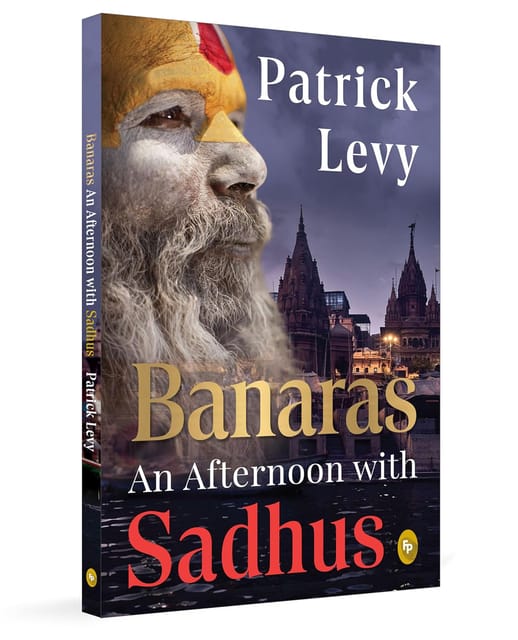
9789370898622 6985e9bb3a4dcf0c0673c9e5 Banaras An Afternoon With Sadhus https://www.midlandbookshop.com/s/607fe93d7eafcac1f2c73ea4/6985e9bd3a4dcf0c0673c9ed/8163yixvxel-_sl1500_.jpg

Banaras: An Afternoon with Sadhus is a luminous, intimate travel-spiritual narrative that follows a single afternoon among India’s itinerant renunciants—men who abandoned the identities that once “defined and imprisoned” them.

Under a shifting patch of shade at Dr. Rajendra Prasad Ghat, a small circle forms: chai is poured, chillums are shared, and life stories surface—simple, brutal, funny, tender.

From there, the book opens into bigger questions: What does it mean to reject the modern script? What kind of courage (or rupture) does renunciation require? And what does “freedom” cost—to the one who leaves, and to the ones left behind?

Along the way, you encounter the sadhus as they are: radically sober, materially unburdened, and—strangely—joyful in the plain fact of being.

Why Should Readers Pick This Book?
  • A rare, grounded look at sadhus: A sadhu isn’t a caste or a label—it’s a way of life, open to anyone beyond fixed doctrine.
  • Atmospheric Banaras storytelling: The ghats turn into a living stage—heat, shade, chai, strangers, and sudden honesty.
  • Minimalism with spiritual muscle: Not “declutter culture,” but lived renunciation—radical sobriety, anti-accumulation, joy without excess.
  • Big questions, no sermons: It holds both the thrill of leaving everything behind and the moral unease that can follow.
  • For seekers, travelers, philosophers-at-heart: If roles, obligations, or ambition have ever felt tight, this opens a door.
Key Themes
  • Renunciation as the “wild card”: the leap into a life with no address, no name, and no safety net.
  • Radical sobriety & conscious living: simplicity as an ecological and spiritual stance.
  • Liberation in this lifetime: the idea of jivan-mukta—freedom from inner and outer burdens.

9789370898622
in stockINR 159
1 1
Banaras An Afternoon With Sadhus

Banaras An Afternoon With Sadhus

ISBN: 9789370898622
₹159
₹199   (20% OFF)


Details
  • ISBN: 9789370898622
  • Author: Patrick Levy
  • Publisher: Finger Print
  • Pages: 112
  • Format: Paperback
SHARE PRODUCT

Book Description

Banaras: An Afternoon with Sadhus is a luminous, intimate travel-spiritual narrative that follows a single afternoon among India’s itinerant renunciants—men who abandoned the identities that once “defined and imprisoned” them.

Under a shifting patch of shade at Dr. Rajendra Prasad Ghat, a small circle forms: chai is poured, chillums are shared, and life stories surface—simple, brutal, funny, tender.

From there, the book opens into bigger questions: What does it mean to reject the modern script? What kind of courage (or rupture) does renunciation require? And what does “freedom” cost—to the one who leaves, and to the ones left behind?

Along the way, you encounter the sadhus as they are: radically sober, materially unburdened, and—strangely—joyful in the plain fact of being.

Why Should Readers Pick This Book?
  • A rare, grounded look at sadhus: A sadhu isn’t a caste or a label—it’s a way of life, open to anyone beyond fixed doctrine.
  • Atmospheric Banaras storytelling: The ghats turn into a living stage—heat, shade, chai, strangers, and sudden honesty.
  • Minimalism with spiritual muscle: Not “declutter culture,” but lived renunciation—radical sobriety, anti-accumulation, joy without excess.
  • Big questions, no sermons: It holds both the thrill of leaving everything behind and the moral unease that can follow.
  • For seekers, travelers, philosophers-at-heart: If roles, obligations, or ambition have ever felt tight, this opens a door.
Key Themes
  • Renunciation as the “wild card”: the leap into a life with no address, no name, and no safety net.
  • Radical sobriety & conscious living: simplicity as an ecological and spiritual stance.
  • Liberation in this lifetime: the idea of jivan-mukta—freedom from inner and outer burdens.
User reviews

  0/5