Shop No.20, Aurobindo Palace Market, Hauz Khas, Near Church +91 9818282497 | 011 26867121 110016 New Delhi IN
Midland The Book Shop ™
Shop No.20, Aurobindo Palace Market, Hauz Khas, Near Church +91 9818282497 | 011 26867121 New Delhi, IN
+919871604786 https://www.midlandbookshop.com/s/607fe93d7eafcac1f2c73ea4/69591829db7aed90e0608dfb/without-tag-line-480x480.png" [email protected]
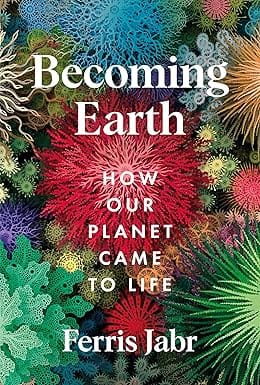
9781529038156 677fb7e8d0d1be003e48fe66 Becoming Earth https://www.midlandbookshop.com/s/607fe93d7eafcac1f2c73ea4/677fb7ead0d1be003e48fe73/91nihhgcsnl-_sy385_.jpg
The notion of a living world is one of humanity’s oldest beliefs. Once scorned by scientists, the facts supporting this concept have now become tenets of modern Earth system science, a relatively young field that studies the living and non-living components of the planet as an integrated whole. Life did not evolve passively in response to its environment, as scientists have long assumed. Instead, it evolved with Earth, shaping its climate and terrain at every scale. Becoming Earth transports the reader to some of the world's most extraordinary places to explore how these symbiotic relationships evolved, from an underwater kelp forest on the coast of California to a former gold mine two miles below the Earth’s surface. We see how microorganisms participate in many geological processes, producing new minerals and converting rock from one state to another. We learn how large mammals maintain grasslands and prevent permafrost from melting, and coral reefs and shellfish store huge amounts of carbon, improve water quality, and defend shorelines from severe weather. Jabr introduces us to the people protecting and restoring life's planet-stabilizing processes and protecting ancient ecological harmonies, and he opens our eyes to life’s imprint on every part of the planet today, from the heart of the Amazon rainforest to the soil in our backyards.


About the Author

Ferris Jabr is a contributing writer for The New York Times magazine and Scientific American. He has also written for The New Yorker, The Atlantic, Harper’s, Foreign Policy, National Geographic, Wired, Outside, McSweeney’s, and The Los Angeles Review of Books, among other publications. His work has been anthologized in several editions of The Best American Science and Nature Writing series and has received the support of fellowships from UC Berkeley and the MIT Knight Science Journalism Program, as well as a Whiting Foundation Creative Nonfiction Grant. He has an MA in journalism from New York University and a Bachelor of Science from Tufts University. He lives in Portland, Oregon with his husband, Ryan, their dog, Jack, and more plants than they can count.

9781529038156
in stockINR 959
1 1
Becoming Earth

Becoming Earth

ISBN: 9781529038156
₹959
₹1,199   (20% OFF)


Details
  • ISBN: 9781529038156
  • Author: Ferris Jabr
  • Publisher: Picador
  • Pages: 304
  • Format: Hardback
SHARE PRODUCT

Book Description

The notion of a living world is one of humanity’s oldest beliefs. Once scorned by scientists, the facts supporting this concept have now become tenets of modern Earth system science, a relatively young field that studies the living and non-living components of the planet as an integrated whole. Life did not evolve passively in response to its environment, as scientists have long assumed. Instead, it evolved with Earth, shaping its climate and terrain at every scale. Becoming Earth transports the reader to some of the world's most extraordinary places to explore how these symbiotic relationships evolved, from an underwater kelp forest on the coast of California to a former gold mine two miles below the Earth’s surface. We see how microorganisms participate in many geological processes, producing new minerals and converting rock from one state to another. We learn how large mammals maintain grasslands and prevent permafrost from melting, and coral reefs and shellfish store huge amounts of carbon, improve water quality, and defend shorelines from severe weather. Jabr introduces us to the people protecting and restoring life's planet-stabilizing processes and protecting ancient ecological harmonies, and he opens our eyes to life’s imprint on every part of the planet today, from the heart of the Amazon rainforest to the soil in our backyards.


About the Author

Ferris Jabr is a contributing writer for The New York Times magazine and Scientific American. He has also written for The New Yorker, The Atlantic, Harper’s, Foreign Policy, National Geographic, Wired, Outside, McSweeney’s, and The Los Angeles Review of Books, among other publications. His work has been anthologized in several editions of The Best American Science and Nature Writing series and has received the support of fellowships from UC Berkeley and the MIT Knight Science Journalism Program, as well as a Whiting Foundation Creative Nonfiction Grant. He has an MA in journalism from New York University and a Bachelor of Science from Tufts University. He lives in Portland, Oregon with his husband, Ryan, their dog, Jack, and more plants than they can count.

User reviews

  0/5