Shop No.20, Aurobindo Palace Market, Hauz Khas, Near Church +91 9818282497 | 011 26867121 110016 New Delhi IN
Midland The Book Shop ™
Shop No.20, Aurobindo Palace Market, Hauz Khas, Near Church +91 9818282497 | 011 26867121 New Delhi, IN
+919871604786 https://www.midlandbookshop.com/s/607fe93d7eafcac1f2c73ea4/69591829db7aed90e0608dfb/without-tag-line-480x480.png" [email protected]
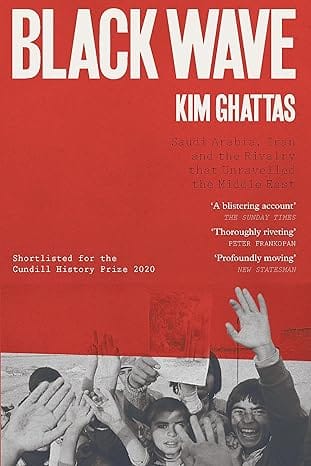
9781472271136 695fb347156c596ab122e123 Black Wave https://www.midlandbookshop.com/s/607fe93d7eafcac1f2c73ea4/695fb348156c596ab122e12b/81bnb6xswol-_sy466_.jpg

'Blistering' Sunday Times
'Indispensable' Observer
'Fascinating' The Times
'Brilliant' Peter Frankopan
'Revelatory' Lindsey Hilsum


A timely and unprecedented examination of how the modern Middle East unravelled, and why it started with the pivotal year of 1979. Shortlisted for the Cundhill History Prize 2020

'What happened to us?'

For decades, the question has haunted the Arab and Muslim world, heard across Iran and Syria, Saudi Arabia and Pakistan, and in the author's home country of Lebanon. Was it always so? When did the extremism, intolerance and bloodletting of today displace the region's cultural promise and diversity?

In Black Wave, award-winning journalist and author Kim Ghattas argues that the turning point in the modern history of the Middle East can be located in the toxic confluence of three major events in 1979: the Iranian revolution; the siege of the Holy Mosque in Mecca; and the Soviet invasion of Afghanistan. Before this year, Saudi Arabia and Iran had been working allies and twin pillars of US strategy in the region - but the radical legacy of these events made them mortal enemies, unleashing a process that transformed culture, society, religion and geopolitics across the region for decades to come.

Drawing on a sweeping cast of characters across seven countries over forty years, Ghattas demonstrates how this rivalry for religious and cultural supremacy has fed intolerance, suppressed cultural expression, encouraged sectarian violence, birthed groups like Hezbollah and ISIS and, ultimately, upended the lives of millions. At once bold and intimate, Black Wave is a remarkable and engrossing story of the Middle East as it has never been told before.



Review

Select Guide Rating

Book Description

A timely and unprecedented examination of how the modern Middle East unravelled, and why it started with the pivotal year of 1979. Shortlisted for the Cundill History Prize 2020

From the Back Cover

A timely and unprecedented examination of how the modern Middle East unravelled, and why it started
with the pivotal year of 1979.

In Black Wave, award-winning journalist and author Kim Ghattas argues that the turning point in the modern
history of the Middle East can be located in the toxic confluence of three major events in 1979: the Iranian
revolution; the siege of the Holy Mosque in Mecca; and the Soviet invasion of Afghanistan. Before this year, Saudi Arabia and Iran had been working allies and twin pillars of US strategy in the region - but the radical legacy of these events made them mortal enemies, unleashing a process that transformed culture, society, religion and geopolitics across the region for decades to come.

Drawing on a sweeping cast of charac

9781472271136
in stockINR 559
1 1
Black Wave

Black Wave

ISBN: 9781472271136
₹559
₹999   (44% OFF)


Details
  • ISBN: 9781472271136
  • Author: Kim Ghattas
  • Publisher: Wildfire
  • Pages: 400
  • Format: Paperback
SHARE PRODUCT

Book Description

'Blistering' Sunday Times
'Indispensable' Observer
'Fascinating' The Times
'Brilliant' Peter Frankopan
'Revelatory' Lindsey Hilsum


A timely and unprecedented examination of how the modern Middle East unravelled, and why it started with the pivotal year of 1979. Shortlisted for the Cundhill History Prize 2020

'What happened to us?'

For decades, the question has haunted the Arab and Muslim world, heard across Iran and Syria, Saudi Arabia and Pakistan, and in the author's home country of Lebanon. Was it always so? When did the extremism, intolerance and bloodletting of today displace the region's cultural promise and diversity?

In Black Wave, award-winning journalist and author Kim Ghattas argues that the turning point in the modern history of the Middle East can be located in the toxic confluence of three major events in 1979: the Iranian revolution; the siege of the Holy Mosque in Mecca; and the Soviet invasion of Afghanistan. Before this year, Saudi Arabia and Iran had been working allies and twin pillars of US strategy in the region - but the radical legacy of these events made them mortal enemies, unleashing a process that transformed culture, society, religion and geopolitics across the region for decades to come.

Drawing on a sweeping cast of characters across seven countries over forty years, Ghattas demonstrates how this rivalry for religious and cultural supremacy has fed intolerance, suppressed cultural expression, encouraged sectarian violence, birthed groups like Hezbollah and ISIS and, ultimately, upended the lives of millions. At once bold and intimate, Black Wave is a remarkable and engrossing story of the Middle East as it has never been told before.


Review

Select Guide Rating

Book Description

A timely and unprecedented examination of how the modern Middle East unravelled, and why it started with the pivotal year of 1979. Shortlisted for the Cundill History Prize 2020

From the Back Cover

A timely and unprecedented examination of how the modern Middle East unravelled, and why it started
with the pivotal year of 1979.

In Black Wave, award-winning journalist and author Kim Ghattas argues that the turning point in the modern
history of the Middle East can be located in the toxic confluence of three major events in 1979: the Iranian
revolution; the siege of the Holy Mosque in Mecca; and the Soviet invasion of Afghanistan. Before this year, Saudi Arabia and Iran had been working allies and twin pillars of US strategy in the region - but the radical legacy of these events made them mortal enemies, unleashing a process that transformed culture, society, religion and geopolitics across the region for decades to come.

Drawing on a sweeping cast of charac

User reviews

  0/5