
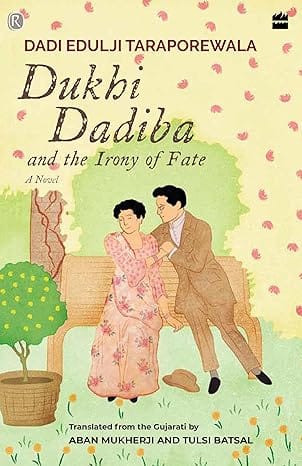
Dukhi Dadiba And The Irony Of Fate
ISBN:
9789369899203
₹319
₹399
(20% OFF)
Details
- ISBN: 9789369899203
- Author: Dadi Edulji Taraporewala
- Publisher: Harper Perennial
- Pages: 336
- Format: Paperback
Book Description
Dukhi Dadiba is a tragic love story written in an easy, colourful style. It centres around the missing heir of a very wealthy and socially prominent Parsi family, and the difficult choice the heroine has to make-whether to marry for money or love. It brings alive the lifestyle of upper-class Parsi society in late-nineteenth-century Mumbai, and the dilemmas they faced at a time when they were becoming increasingly Westernized.
Taraporewala's vividly drawn characters, his true-to-life dialogues, the twists and turns of an often improbable plot keep the readers riveted. There is a pompous social climber, Darashah Davar; his beautiful but fickle daughter, Pareen; her handsome and virtuous music teacher, Dadiba; the wealthy but weak heir to the Bahadurshah estate, Jehangir; and last but not the least, Jehangir's mother Ratanmai who, uncharacteristically for a woman of her time, chooses truth and justice over and above her deep feelings for her son. These characters come to life even more vividly through the evocative illustrations of the famous artist M.V. Dhurandhar.
About the Author
Born into a family of wealthy Parsi landowners in Tarapore, Dadi Edulji Hirji Taraporewala(1868–1914) was a prolific Gujarati poet, novelist and playwright, and an active member of the Parsi Writers Association.
Apart from several volumes of poems, which he published under the pseudonym Diljaan, he wrote eighteen novels, including Pativrata baayadi no Vahemi Bharathar (Doubting Husband of a Chaste Woman,1886) and Paak Daaman Piroja (Pure-hearted Piroja, 1892). His most popular novel Dukhi Dadiba was serialized in Masik Majah, a monthly magazine which Taraporewala edited, and published as a book in 1913, a year before he died at the age of forty-six.








 +91 9818282497
(2).png)