Shop No.20, Aurobindo Palace Market, Hauz Khas, Near Church +91 9818282497 | 011 26867121 110016 New Delhi IN
Midland The Book Shop ™
Shop No.20, Aurobindo Palace Market, Hauz Khas, Near Church +91 9818282497 | 011 26867121 New Delhi, IN
+919871604786 https://www.midlandbookshop.com/s/607fe93d7eafcac1f2c73ea4/69591829db7aed90e0608dfb/without-tag-line-480x480.png" [email protected]
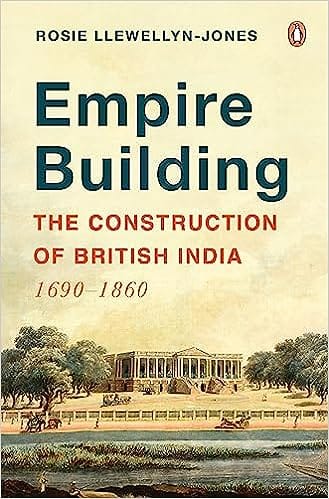
9780670099689 64df6d4270d2bd44b29b3d6b Empire Building The Construction Of British India 1690�1860 https://www.midlandbookshop.com/s/607fe93d7eafcac1f2c73ea4/64df6d4270d2bd44b29b3d7b/51ybnoacctl-_sx327_bo1-204-203-200_.jpg

Empire Building is a new account of the East India Company's impact on India, focusing on how it changed the subcontinent's built environment in the context of defence, urbanisation and infrastructural development.

Rosie Llewellyn-Jones examines these initiatives through a lens of 'political building' (using Indian contractors and labourers). Railways, docks, municipal buildings, Freemasons' lodges, hotels, racecourses, barracks, cemeteries, statues and canals-everything the British erected made a political statement, even if unconsciously. Hence this book is concerned less with architectural styles, more with subtle infiltration into the minds of those who saw and used these structures. It assesses, in turn, Indian responses to the changing landscape. Indians often reacted favourably to new manufacturing technologies from Britain, such as minting and gunpowder, while the British learnt from and adapted local methods.

From military engineers and cartography to imported raw metals and steam power, Llewellyn-Jones considers the social and environmental changes wrought by colonialism. This period was marked by a shift from formerly private, Indian-controlled functions, such as education, entertainment, trading and healing, to British public institutions such as universities, theatres, chambers of commerce and hospitals.

Stepping aside from ongoing colonialism debates, this is a fascinating account of India's physical transformation during the Company period.


About the Author

Rosie Llewellyn-Jones PhD holds a degree in Urdu from SOAS University of London. A renowned historian of colonial India, she is editor of Chowkidar, the journal of the British Association for Cemeteries in South Asia (BACSA). Her books include The Last King in India, and Lucknow 1857.
9780670099689
in stockINR 639
1 1
Empire Building The Construction Of British India 1690�1860

Empire Building The Construction Of British India 1690�1860

ISBN: 9780670099689
₹639
₹799   (20% OFF)


Details
  • ISBN: 9780670099689
  • Author: Rosie Llewellyn-jones
  • Publisher: Penguin Viking
  • Pages: 256
  • Format: Hardback
SHARE PRODUCT

Book Description

Empire Building is a new account of the East India Company's impact on India, focusing on how it changed the subcontinent's built environment in the context of defence, urbanisation and infrastructural development.

Rosie Llewellyn-Jones examines these initiatives through a lens of 'political building' (using Indian contractors and labourers). Railways, docks, municipal buildings, Freemasons' lodges, hotels, racecourses, barracks, cemeteries, statues and canals-everything the British erected made a political statement, even if unconsciously. Hence this book is concerned less with architectural styles, more with subtle infiltration into the minds of those who saw and used these structures. It assesses, in turn, Indian responses to the changing landscape. Indians often reacted favourably to new manufacturing technologies from Britain, such as minting and gunpowder, while the British learnt from and adapted local methods.

From military engineers and cartography to imported raw metals and steam power, Llewellyn-Jones considers the social and environmental changes wrought by colonialism. This period was marked by a shift from formerly private, Indian-controlled functions, such as education, entertainment, trading and healing, to British public institutions such as universities, theatres, chambers of commerce and hospitals.

Stepping aside from ongoing colonialism debates, this is a fascinating account of India's physical transformation during the Company period.


About the Author

Rosie Llewellyn-Jones PhD holds a degree in Urdu from SOAS University of London. A renowned historian of colonial India, she is editor of Chowkidar, the journal of the British Association for Cemeteries in South Asia (BACSA). Her books include The Last King in India, and Lucknow 1857.

User reviews

  0/5