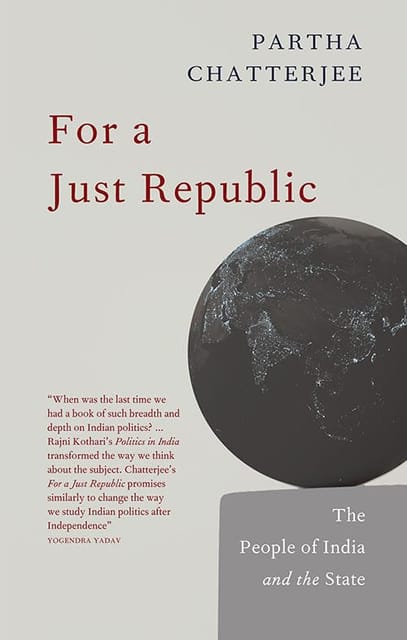
When the Constituent Assembly forged a Constitution for the new republic of India, it settled for a limited agreement which allowed people from different parts of the country to come together, even while leaving the deep histories of cultural identity to the regions. This points, says Chatterjee, to the varying trajectory of the nation-state – as opposed to the trajectory of what he calls “the people-nation”. One of the core achievements of this book is to analyse the complex connection between the two. Among Chatterjee’s other spinal ideas is that while the new constitutional arrangements show strong continuities with pre-1947 colonial institutions, there has been considerable variety in the formation of the people-nation – comprising communities shaped over more than a century by their habitation within diverse modern regional languages. Following this magisterial synthesis of Indian politics over the past seventy-five years, Chatterjee offers a persuasive political-economic analysis of the transition from the time of developmental planning to the present era of capitalist dominance. His study of changing caste-class-gender formations in the country’s diverse regions combines with a close examination of the uneven regional spread of India’s capitalist economy. This book makes a powerful case for a just republic of India in which the federal system respects the equal worth of each part and accepts coalitions as the normal form of government at the Centre.
Subscribe to get Email Updates!
Thanks for subscribing.
Your response has been recorded.

"We Believe In The Power of Books" Our mission is to make books accessible to everyone, and to cultivate a culture of reading and learning. We strive to provide a wide range of books, from classic literature, sci-fi and fantasy, to graphic novels, biographies and self-help books, so that everyone can find something to read.
Whether you’re looking for your next great read, a gift for someone special, or just browsing, Midland is here to make your book-buying experience easy and enjoyable.