Shop No.20, Aurobindo Palace Market, Hauz Khas, Near Church +91 9818282497 | 011 26867121 110016 New Delhi IN
Midland The Book Shop ™
Shop No.20, Aurobindo Palace Market, Hauz Khas, Near Church +91 9818282497 | 011 26867121 New Delhi, IN
+919871604786 https://www.midlandbookshop.com/s/607fe93d7eafcac1f2c73ea4/69453da445ba84d539b38f9a/black-yellow-simple-bold-youtube-channel-logo-400-x-100-px-1--480x480.png" [email protected]
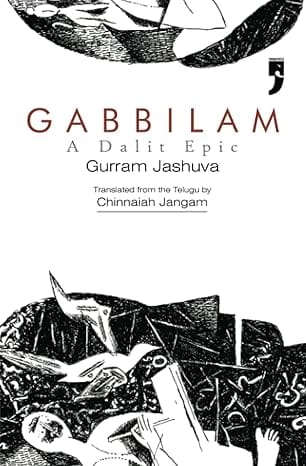
9789382579366 694936b14743c5e9240d3ebc Gabbilam A Dalit Epic https://www.midlandbookshop.com/s/607fe93d7eafcac1f2c73ea4/694936b34743c5e9240d3ec4/717pv5qllil-_sy466_.jpg
Gurram Jashuva is considered the father of Dalit literature in Telugu. He wrote using the Sanskrit meter in classical Telugu to prove himself an equal to Brahmin pandits.


In Gabbilam, Jashuva challenges the dominant Sanskrit and Telugu literary sphere by choosing the bat, known as Gabbilam in Telugu and believed to be a bad omen, as it is considered neither a bird nor an animal, to reflect the existential status of untouchables. He subverts the classic Meghaduta, and instead of using swans, parrots, peacocks, and
clouds as messengers like the Savarnas, he uses the stigmatized bat, that hangs upside down in temple towers, to send his message of suffering to the god Shiva.


Gabbilam presents a Dalit man as the hero and protagonist perhaps for the first time in the classical verse-epic tradition of Indian poetry, and is the earliest text to highlight the oppression, exclusion, and dehumanization of untouchables in casteist Hindu society. It occupies a pre-eminent position in the Telugu literary sphere, not just for the depiction of Dalit suffering but also for bringing the language of ordinary people into the classical medium. In its English translation for the first time, this Dalit epic can now be read and relished by a global audience.


9789382579366
in stockINR 319
1 1
Gabbilam A Dalit Epic

Gabbilam A Dalit Epic

ISBN: 9789382579366
₹319
₹399   (20% OFF)


Details
  • ISBN: 9789382579366
  • Author: Chinnaiah Jangam
  • Publisher: Yoda Press
  • Pages: 106
  • Format: Paperback
SHARE PRODUCT

Book Description

Gurram Jashuva is considered the father of Dalit literature in Telugu. He wrote using the Sanskrit meter in classical Telugu to prove himself an equal to Brahmin pandits.


In Gabbilam, Jashuva challenges the dominant Sanskrit and Telugu literary sphere by choosing the bat, known as Gabbilam in Telugu and believed to be a bad omen, as it is considered neither a bird nor an animal, to reflect the existential status of untouchables. He subverts the classic Meghaduta, and instead of using swans, parrots, peacocks, and
clouds as messengers like the Savarnas, he uses the stigmatized bat, that hangs upside down in temple towers, to send his message of suffering to the god Shiva.


Gabbilam presents a Dalit man as the hero and protagonist perhaps for the first time in the classical verse-epic tradition of Indian poetry, and is the earliest text to highlight the oppression, exclusion, and dehumanization of untouchables in casteist Hindu society. It occupies a pre-eminent position in the Telugu literary sphere, not just for the depiction of Dalit suffering but also for bringing the language of ordinary people into the classical medium. In its English translation for the first time, this Dalit epic can now be read and relished by a global audience.


User reviews

  0/5