Shop No.20, Aurobindo Palace Market, Hauz Khas, Near Church +91 9818282497 | 011 26867121 110016 New Delhi IN
Midland The Book Shop ™
Shop No.20, Aurobindo Palace Market, Hauz Khas, Near Church +91 9818282497 | 011 26867121 New Delhi, IN
+919871604786 https://www.midlandbookshop.com/s/607fe93d7eafcac1f2c73ea4/69591829db7aed90e0608dfb/without-tag-line-480x480.png" [email protected]
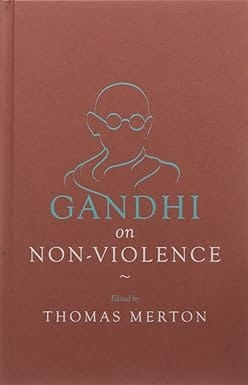
9789386050472 682dc03784fffe232d3045ed Gandhi On Non-violence https://www.midlandbookshop.com/s/607fe93d7eafcac1f2c73ea4/682dc03984fffe232d3045f5/71oy5valgml-_sy385_.jpg
Gandhi on Non-Violence brings together the political and moral philosophies central to the life and work of Mahatma Gandhi, pared down to their essentials. Philosophies which have influenced generations and inspired some of the world’s most transformative leaders and its greatest movements; from Martin Luther King, Jr. and Steve Biko to Václav Havel and Aung San Suu Kyi; from the Civil Rights movement in America and anti-apartheid struggles in South Africa to non-violent battles for democracy in Asia, Latin America and Eastern Europe. The principles of ahimsa and satyagraha as practised by Gandhi were selected for this volume by Thomas Merton, theologian, social activist and one of the most influential religious thinkers of the twentieth century. In his comprehensive introduction, Merton describes ahimsa and satyagraha as not merely political tools, but a response to evil itself. Which, if followed with truth and faith, can bring men—and nations—to their ‘right mind’ and free them forever from violence. And emphasizing the universality of ahimsa and satyagraha, Merton describes how they are linked to the traditional concept of Hindu dharma, the teachings of the Greek philosophers Socrates and Plato and to Christian thought, especially the act of forgiveness. Challenging, provocative and eternally valid, Gandhi’s principles are, as Merton himself puts it, ‘required reading for anyone who is seriously interested in man’s fate in the nuclear age.’


About the Author

Thomas Merton, poet, Catholic theologian, social activist and Trappist monk, was one of the most influential religious thinkers of the twentieth century. Merton entered the Cistercian Abbey of Gethsemani in Kentucky following his conversation to Catholicism in 1949. In the 1960s he was increasingly drawn into a dialogue between Eastern and Western religions and domestic issues of war and racism. His many books include New Seeds of ContemplationThe Seven Story MountainBread in the WildernessRaids on the UnspeakableMy Argument with the GestapoThe Wisdom of the DesertZen and the Birds of Appetite and The Way of Chang Tzu. Merton died in 1968.

9789386050472
out of stock INR 319
1 1
Gandhi On Non-violence

Gandhi On Non-violence

ISBN: 9789386050472
₹319
₹399   (20% OFF)


Back In Stock Shortly - Fill The Book Request Form

Details
  • ISBN: 9789386050472
  • Author: Thomas Merton
  • Publisher: Speaking Tiger
  • Pages: 152
  • Format: Hardback
SHARE PRODUCT

Book Description

Gandhi on Non-Violence brings together the political and moral philosophies central to the life and work of Mahatma Gandhi, pared down to their essentials. Philosophies which have influenced generations and inspired some of the world’s most transformative leaders and its greatest movements; from Martin Luther King, Jr. and Steve Biko to Václav Havel and Aung San Suu Kyi; from the Civil Rights movement in America and anti-apartheid struggles in South Africa to non-violent battles for democracy in Asia, Latin America and Eastern Europe. The principles of ahimsa and satyagraha as practised by Gandhi were selected for this volume by Thomas Merton, theologian, social activist and one of the most influential religious thinkers of the twentieth century. In his comprehensive introduction, Merton describes ahimsa and satyagraha as not merely political tools, but a response to evil itself. Which, if followed with truth and faith, can bring men—and nations—to their ‘right mind’ and free them forever from violence. And emphasizing the universality of ahimsa and satyagraha, Merton describes how they are linked to the traditional concept of Hindu dharma, the teachings of the Greek philosophers Socrates and Plato and to Christian thought, especially the act of forgiveness. Challenging, provocative and eternally valid, Gandhi’s principles are, as Merton himself puts it, ‘required reading for anyone who is seriously interested in man’s fate in the nuclear age.’


About the Author

Thomas Merton, poet, Catholic theologian, social activist and Trappist monk, was one of the most influential religious thinkers of the twentieth century. Merton entered the Cistercian Abbey of Gethsemani in Kentucky following his conversation to Catholicism in 1949. In the 1960s he was increasingly drawn into a dialogue between Eastern and Western religions and domestic issues of war and racism. His many books include New Seeds of ContemplationThe Seven Story MountainBread in the WildernessRaids on the UnspeakableMy Argument with the GestapoThe Wisdom of the DesertZen and the Birds of Appetite and The Way of Chang Tzu. Merton died in 1968.
User reviews

  0/5