Shop No.20, Aurobindo Palace Market, Hauz Khas, Near Church +91 9818282497 | 011 26867121 110016 New Delhi IN
Midland The Book Shop ™
Shop No.20, Aurobindo Palace Market, Hauz Khas, Near Church +91 9818282497 | 011 26867121 New Delhi, IN
+919871604786 https://www.midlandbookshop.com/s/607fe93d7eafcac1f2c73ea4/69591829db7aed90e0608dfb/without-tag-line-480x480.png" [email protected]
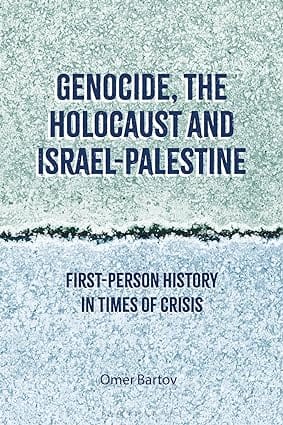
9789356409989 6574564daad0a055fb2bcc96 Genocide, The Holocaust And Israel-palestine First-person History In Times Of Crisis https://www.midlandbookshop.com/s/607fe93d7eafcac1f2c73ea4/6574564eaad0a055fb2bccad/81davob5dzl-_sy425_.jpg

This book discusses some of the most urgent current debates over the study, commemoration, and politicization of the Holocaust through key critical perspectives. Omer Bartov adeptly assesses the tensions between Holocaust and genocide studies, which have repeatedly both enriched and clashed with each other, whilst convincingly arguing for the importance of local history and individual testimony in grasping the nature of mass murder. He goes on to critically examine how legal discourse has served to both uncover and deny individual and national complicity. Genocide, the Holocaust and Israel-Palestine outlines how first-person histories provide a better understanding of events otherwise perceived as inexplicable and, lastly, draws on the author's own personal trajectory to consider links between the fate of Jews in World War II and the plight of Palestinians during and in the aftermath of the establishment of the state of Israel.

Bartov demonstrates that these five perspectives, rarely if ever previously discussed in a single book, are inextricably linked, and shed much light on each other. Thus the Holocaust and other genocides must be seen as related catastrophes in the modern era; understanding such vast human tragedies necessitates scrutinizing them on the local and personal scale; this in turn calls for historical empathy, accomplished via personal-biographical introspection; and true, open-minded, and rigorous introspection, without which historical understanding tends toward obfuscation, brings to light uncomfortable yet clarifying connections, such as that between the Holocaust and the Nakba, the mass flight and expulsion of the Palestinians in 1948.


Book Description

A multifaceted exploration of the Holocaust which connects its relationship with genocide, the importance of first-person histories of atrocity, and links to the 1948 Palestinian Nakba together in unprecedented fashion.

About the Author

Omer Bartov is Samuel Pisar Professor of Holocaust and Genocide Studies at Brown University, USA. He has written and edited numerous books, including Erased: Vanishing Traces of Jewish Galicia in Present-Day Ukraine (2007), Israel-Palestine: Lands and Peoples (2011) and Anatomy of a Genocide: The Life and Death of a Town Called Buczacz (2018), which won several prizes and has been translated into several languages.

9789356409989
out of stock INR 479
1 1
Genocide, The Holocaust And Israel-palestine First-person History In Times Of Crisis

Genocide, The Holocaust And Israel-palestine First-person History In Times Of Crisis

ISBN: 9789356409989
₹479
₹599   (20% OFF)


Back In Stock Shortly - Fill The Book Request Form

Details
  • ISBN: 9789356409989
  • Author: Omer Bartov
  • Publisher: Bloomsbury
  • Pages: 264
  • Format: Paperback
SHARE PRODUCT

Book Description

This book discusses some of the most urgent current debates over the study, commemoration, and politicization of the Holocaust through key critical perspectives. Omer Bartov adeptly assesses the tensions between Holocaust and genocide studies, which have repeatedly both enriched and clashed with each other, whilst convincingly arguing for the importance of local history and individual testimony in grasping the nature of mass murder. He goes on to critically examine how legal discourse has served to both uncover and deny individual and national complicity. Genocide, the Holocaust and Israel-Palestine outlines how first-person histories provide a better understanding of events otherwise perceived as inexplicable and, lastly, draws on the author's own personal trajectory to consider links between the fate of Jews in World War II and the plight of Palestinians during and in the aftermath of the establishment of the state of Israel.

Bartov demonstrates that these five perspectives, rarely if ever previously discussed in a single book, are inextricably linked, and shed much light on each other. Thus the Holocaust and other genocides must be seen as related catastrophes in the modern era; understanding such vast human tragedies necessitates scrutinizing them on the local and personal scale; this in turn calls for historical empathy, accomplished via personal-biographical introspection; and true, open-minded, and rigorous introspection, without which historical understanding tends toward obfuscation, brings to light uncomfortable yet clarifying connections, such as that between the Holocaust and the Nakba, the mass flight and expulsion of the Palestinians in 1948.


Book Description

A multifaceted exploration of the Holocaust which connects its relationship with genocide, the importance of first-person histories of atrocity, and links to the 1948 Palestinian Nakba together in unprecedented fashion.

About the Author

Omer Bartov is Samuel Pisar Professor of Holocaust and Genocide Studies at Brown University, USA. He has written and edited numerous books, including Erased: Vanishing Traces of Jewish Galicia in Present-Day Ukraine (2007), Israel-Palestine: Lands and Peoples (2011) and Anatomy of a Genocide: The Life and Death of a Town Called Buczacz (2018), which won several prizes and has been translated into several languages.
User reviews

  0/5