Shop No.20, Aurobindo Palace Market, Hauz Khas, Near Church +91 9818282497 | 011 26867121 110016 New Delhi IN
Midland The Book Shop ™
Shop No.20, Aurobindo Palace Market, Hauz Khas, Near Church +91 9818282497 | 011 26867121 New Delhi, IN
+919871604786 https://www.midlandbookshop.com/s/607fe93d7eafcac1f2c73ea4/69591829db7aed90e0608dfb/without-tag-line-480x480.png" [email protected]
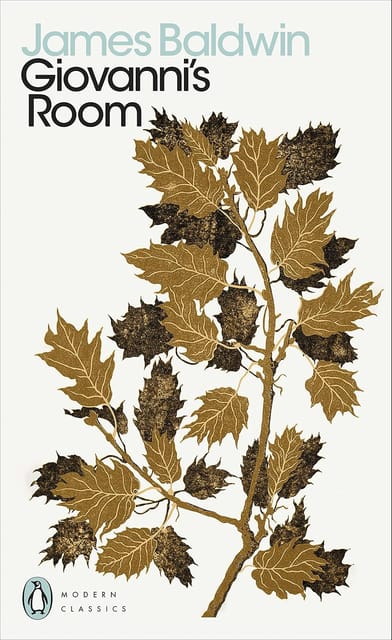
9780141032948 69f08c634ffbc69eb2e67079 Giovanni's Room /anglais https://www.midlandbookshop.com/s/607fe93d7eafcac1f2c73ea4/69f08aeb4ffbc69eb2e6313f/91nq9aokv1l-_sl1500_.jpg

Baldwin''s ground-breaking second novel, which established him as one of the great American writers of his time

''Audacious... remarkable... elegant and courageous'' Caryl Phillips

David, a young American in 1950s Paris, is waiting for his fiancée to return from vacation in Spain. But when he meets Giovanni, a handsome Italian barman, the two men are drawn into an intense affair. After three months David''s fiancée returns and, denying who he is, he rejects Giovanni for a ''safe'' future as a married man. It is a decision that will bring tragedy.

''Exquisite, a feat of fire-breathing, imaginative daring'' 
Guardian

''Gorgeous, fearless, tempered by dark knowledge and pain ... the greatest American prose stylist of his generation'' Colm Tóibín

''A layered exploration of queer desire ... It is electric'' Hilton Als

About the author

James Baldwin (1924-1987) was a novelist, essayist, playwright, poet, and social critic, and one of America's foremost writers. His essays, such as "Notes of a Native Son" (1955), explore palpable yet unspoken intricacies of racial, sexual, and class distinctions in Western societies, most notably in mid-twentieth-century America. A Harlem, New York, native, he primarily made his home in the south of France.

His novels include Giovanni's Room (1956), about a white American expatriate who must come to terms with his homosexuality, and Another Country (1962), about racial and gay sexual tensions among New York intellectuals. His inclusion of gay themes resulted in much savage criticism from the black community. Going to Meet the Man (1965) and Tell Me How Long the Train's Been Gone (1968) provided powerful descriptions of American racism. As an openly gay man, he became increasingly outspoken in condemning discrimination against lesbian and gay people.

9780141032948
in stockINR 399
James Baldwin
1 1
Giovanni's Room /anglais

Giovanni's Room /anglais

ISBN: 9780141032948
₹399
₹499   (20% OFF)


Details
  • ISBN: 9780141032948
  • Author: James Baldwin
  • Format: Paperback
  • Publisher: Penguin
  • Publication Date: 2001
SHARE PRODUCT

Book Description

Baldwin''s ground-breaking second novel, which established him as one of the great American writers of his time

''Audacious... remarkable... elegant and courageous'' Caryl Phillips

David, a young American in 1950s Paris, is waiting for his fiancée to return from vacation in Spain. But when he meets Giovanni, a handsome Italian barman, the two men are drawn into an intense affair. After three months David''s fiancée returns and, denying who he is, he rejects Giovanni for a ''safe'' future as a married man. It is a decision that will bring tragedy.

''Exquisite, a feat of fire-breathing, imaginative daring'' 
Guardian

''Gorgeous, fearless, tempered by dark knowledge and pain ... the greatest American prose stylist of his generation'' Colm Tóibín

''A layered exploration of queer desire ... It is electric'' Hilton Als
About the author

James Baldwin (1924-1987) was a novelist, essayist, playwright, poet, and social critic, and one of America's foremost writers. His essays, such as "Notes of a Native Son" (1955), explore palpable yet unspoken intricacies of racial, sexual, and class distinctions in Western societies, most notably in mid-twentieth-century America. A Harlem, New York, native, he primarily made his home in the south of France.

His novels include Giovanni's Room (1956), about a white American expatriate who must come to terms with his homosexuality, and Another Country (1962), about racial and gay sexual tensions among New York intellectuals. His inclusion of gay themes resulted in much savage criticism from the black community. Going to Meet the Man (1965) and Tell Me How Long the Train's Been Gone (1968) provided powerful descriptions of American racism. As an openly gay man, he became increasingly outspoken in condemning discrimination against lesbian and gay people.

User reviews

  0/5