Shop No.20, Aurobindo Palace Market, Hauz Khas, Near Church +91 9818282497 | 011 26867121 110016 New Delhi IN
Midland The Book Shop ™
Shop No.20, Aurobindo Palace Market, Hauz Khas, Near Church +91 9818282497 | 011 26867121 New Delhi, IN
+919871604786 https://www.midlandbookshop.com/s/607fe93d7eafcac1f2c73ea4/69591829db7aed90e0608dfb/without-tag-line-480x480.png" [email protected]
9789361314766 69872ec29fe24ef6b228c2bb Goddesses In South Asia Traditions And Transformations https://www.midlandbookshop.com/s/607fe93d7eafcac1f2c73ea4/69872ec59fe24ef6b228c2c4/715jxr6heql-_sl1500_.jpg
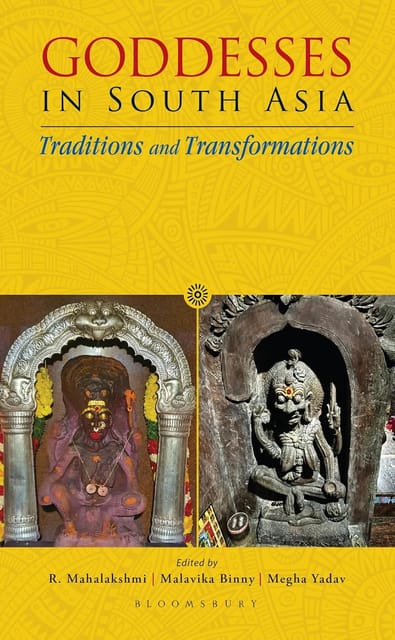
Goddess traditions have for long fascinated scholars, believers, writers and artists across South Asia. In the academic field, the diversity and complexity of goddess worship, and indeed the conceptualization of the goddess, have been illuminated through interdisciplinary methodologies and broad frameworks. This volume comprising thirteen chapters presents original research across a wide chronological and regional span, drawing on a range of literary, epigraphical, visual, archaeological, archival and ethnographic sources. With a focus on major early Indian religious traditions—Vedic, Buddhist, Jaina, Puranic, Tantric—while also giving prominence to lesserstudied traditions, such as village goddesses and socalled “minor deities,” Goddesses in South Asia draws attention to the different temporal contexts that have a bearing on the prescriptions and practices around goddess worship. It also examines the interactions between goddess worship and other religious traditions, including Islam and Christianity, raising important questions about cross-religious engagements with the divine feminine. The book invites the reader to ask: Is goddess worship indicative of the status of women in society? What do the multiplicity of goddess forms and worship indicate? How do female deities’ function within patriarchal societies? How are goddess figures represented across literary, oral, and visual media? In what way have academic and public discourses around the goddesses contributed to our understanding of goddess worship? How do goddess traditions continue to influence gender roles and social structures? The role of royal and other patronage, the institutionalizing of ritual practices, the legitimation of authority, and the construction of normative social values have been closely examined to elucidate these questions. With its critical and interdisciplinary approach, the volume offers fresh perspectives and makes a significant contribution to the study of goddess traditions in South Asia.


About the Author

R. Mahalakshmi is Professor at the Centre for Historical Studies in Jawaharlal Nehru University, Delhi, India.

Malavika Binny is Assistant Professor in the Department of History at Kannur University, India, and specializes in the history of premodern India, with a special focus on gender history and the history of science.

Megha Yadav is Assistant Professor in the Department of History, SRM University, Andhra Pradesh, India, and specialises in the history of South Asian Buddhism and gender history in early India.

9789361314766
in stockINR 1279
1 1
Goddesses In South Asia Traditions And Transformations

Goddesses In South Asia Traditions And Transformations

ISBN: 9789361314766
₹1,279
₹1,599   (20% OFF)


Details
  • ISBN: 9789361314766
  • Author: R Mahalakshmi
  • Publisher: Bloomsbury
  • Pages: 264
  • Format: Hardback
SHARE PRODUCT

Book Description

Goddess traditions have for long fascinated scholars, believers, writers and artists across South Asia. In the academic field, the diversity and complexity of goddess worship, and indeed the conceptualization of the goddess, have been illuminated through interdisciplinary methodologies and broad frameworks. This volume comprising thirteen chapters presents original research across a wide chronological and regional span, drawing on a range of literary, epigraphical, visual, archaeological, archival and ethnographic sources. With a focus on major early Indian religious traditions—Vedic, Buddhist, Jaina, Puranic, Tantric—while also giving prominence to lesserstudied traditions, such as village goddesses and socalled “minor deities,” Goddesses in South Asia draws attention to the different temporal contexts that have a bearing on the prescriptions and practices around goddess worship. It also examines the interactions between goddess worship and other religious traditions, including Islam and Christianity, raising important questions about cross-religious engagements with the divine feminine. The book invites the reader to ask: Is goddess worship indicative of the status of women in society? What do the multiplicity of goddess forms and worship indicate? How do female deities’ function within patriarchal societies? How are goddess figures represented across literary, oral, and visual media? In what way have academic and public discourses around the goddesses contributed to our understanding of goddess worship? How do goddess traditions continue to influence gender roles and social structures? The role of royal and other patronage, the institutionalizing of ritual practices, the legitimation of authority, and the construction of normative social values have been closely examined to elucidate these questions. With its critical and interdisciplinary approach, the volume offers fresh perspectives and makes a significant contribution to the study of goddess traditions in South Asia.


About the Author

R. Mahalakshmi is Professor at the Centre for Historical Studies in Jawaharlal Nehru University, Delhi, India.

Malavika Binny is Assistant Professor in the Department of History at Kannur University, India, and specializes in the history of premodern India, with a special focus on gender history and the history of science.

Megha Yadav is Assistant Professor in the Department of History, SRM University, Andhra Pradesh, India, and specialises in the history of South Asian Buddhism and gender history in early India.

User reviews

  0/5