Shop No.20, Aurobindo Palace Market, Hauz Khas, Near Church +91 9818282497 | 011 26867121 110016 New Delhi IN
Midland The Book Shop ™
Shop No.20, Aurobindo Palace Market, Hauz Khas, Near Church +91 9818282497 | 011 26867121 New Delhi, IN
+919871604786 https://www.midlandbookshop.com/s/607fe93d7eafcac1f2c73ea4/69591829db7aed90e0608dfb/without-tag-line-480x480.png" [email protected]
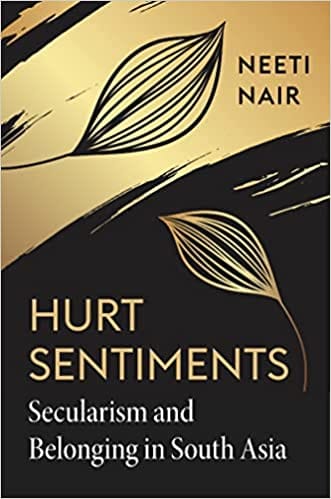
9780674293991 64009f3d1201e6c57fdf6145 Hurt Sentiments Secularism And Belonging In South Asia https://www.midlandbookshop.com/s/607fe93d7eafcac1f2c73ea4/64009f3e1201e6c57fdf6153/41jxzijdk6l-_sx329_bo1-204-203-200_.jpg

An insightful history of censorship, hate speech, and majoritarianism in post-partition South Asia.

At the time of the India-Pakistan partition in 1947, it was widely expected that India would be secular, home to members of different religious traditions and communities, whereas Pakistan would be a homeland for Muslims and an Islamic state. Seventy-five years later, India is on the precipice of declaring itself a Hindu state, and Pakistan has drawn ever narrower interpretations of what it means to be an Islamic republic.Bangladesh, the former eastern wing of Pakistan, has swung between professing secularism and Islam.

Neeti Nair assesses landmark debates since partition—debates over the constitutional status of religious minorities and the meanings of secularism and Islam that have evolved to meet the demands of populist electoral majorities. She crosses political and territorial boundaries to bring together cases of censorship in India, Pakistan, and Bangladesh, each involving claims of “hurt sentiments” on the part of individuals and religious communities. Such cases, while debated in the subcontinent’s courts and parliaments, are increasingly decided on its streets in acts of vigilantism.

Hurt Sentiments offers historical context to illuminate how claims of hurt religious sentiments have been weaponized by majorities. Disputes over hate speech and censorship, Nair argues, have materially influenced questions of minority representation and belonging that partition was supposed to have resolved. Meanwhile, growing legal recognition and political solicitation of religious sentiments have fueled a secular resistance.


Review

Reviews for Hurt Sentiments - 978-0674293991 Indian Edition

“An engaging, insightful, and deeply researched account of the trajectory of secularism in South Asia. Nair brilliantly juxtaposes debates in India, Pakistan, and Bangladesh to reveal how ‘hurt sentiments’ have imperiled secularism in different ways. Her focus on the late 1960s and 1970s as a pivotal moment in the transformation of secularism is entirely original, and powerfully illuminates its contemporary politics.” -Pratap Bhanu Mehta, author of The Burden of Democracy

“Breaking important new ground, Nair tracks the convoluted history of secularist practices in the subcontinent, in contrast to the more conventional preoccupation with their conceptual content. In the process, she enriches and complicates theories of Indian secularism. Historians and political sociologists of South Asia, as well as political theorists in general, will find much to appreciate. A truly significant work.”-Tanika Sarkar, author of Hindu Nationalism in India

“Opening with a brilliant chapter on the political aftermath of Gandhi’s assassination, Nair offers a new, compelling interpretation of the place of religion in the public life of postcolonial India, Pakistan, and Bangladesh. Hurt Sentiments deftly reconnects the history of ideas with the history of governmental practice. Making extensive and skillful use of constituent assembly and parliamentary debates, Nair provides a rare depth of historical understanding of censorship, civil liberties, blasphemy laws, and the fraught quest for secularism in the subcontinent.”-Sugata Bose, author of His Majesty’s Opponent: Subhas Chandra Bose and India’s Struggle against Empire

“In a wide-ranging intellectual history, Nair deftly explores the interrelated trajectories of freedom of expression to religion and public life in India, Bangladesh, and Pakistan. Hurt Sentiments offers a thoughtful history that is urgently relevant to questions of the present day.”-Alyssa Ayres, author of Our Time Has Come: How India Is Making Its Place in the World

“This timely book speaks to the embattled state of secularism and minorities in South Asia over the last few years, keeping in view the legacies of colonialism and partition. Crossing national boundaries, it offers an insightful history of how majoritarian politics has mobilized the idea of ‘hurt sentiments’ to marginalize minority communities and redefine state ideologies in India, Pakistan, and Bangladesh. Nair makes clear that the fate of secularism is not about an abstract ideology but concerns the polities where minorities enjoy equality.”-Gyan Prakash, author of Emergency Chronicles: Indira Gandhi and Democracy’s Turning Point

“A sensitive, historically textured, and wide-ranging assessment of the way in which hate speech and the weaponizing of ‘hurt sentiments’ efface the political agency of religious minorities across India, Pakistan, and Bangladesh. Nair assesses key conjunctures in colonial and postcolonial South Asia that led to either creative debate about constitutional guarantees for minorities or violent populist sentiment winning the day. Essential reading for our troubled times.”-Radhika Singha, author of The Coolie's Great War: Indian Labour in a Global Conflict, 1914–1921



About the Author

Neeti Nair is the author of Changing Homelands: Hindu Politics and the Partition of India and coeditor of Ghosts from the Past? Assessing Recent Developments in Religious Freedom in South Asia. An Associate Professor of History at the University of Virginia, she has received fellowships from the American Council of Learned Societies,the Harry Frank Guggenheim Foundation, the National Endowment for the Humanities, and the Woodrow Wilson International Center for Scholars.

9780674293991
in stockINR 559
1 1
Hurt Sentiments Secularism And Belonging In South Asia

Hurt Sentiments Secularism And Belonging In South Asia

ISBN: 9780674293991
₹559
₹699   (20% OFF)


Details
  • ISBN: 9780674293991
  • Author: Neeti Nair
  • Publisher: Harvard University Press
  • Pages: 352
  • Format: Hardback
SHARE PRODUCT

Book Description

An insightful history of censorship, hate speech, and majoritarianism in post-partition South Asia.

At the time of the India-Pakistan partition in 1947, it was widely expected that India would be secular, home to members of different religious traditions and communities, whereas Pakistan would be a homeland for Muslims and an Islamic state. Seventy-five years later, India is on the precipice of declaring itself a Hindu state, and Pakistan has drawn ever narrower interpretations of what it means to be an Islamic republic.Bangladesh, the former eastern wing of Pakistan, has swung between professing secularism and Islam.

Neeti Nair assesses landmark debates since partition—debates over the constitutional status of religious minorities and the meanings of secularism and Islam that have evolved to meet the demands of populist electoral majorities. She crosses political and territorial boundaries to bring together cases of censorship in India, Pakistan, and Bangladesh, each involving claims of “hurt sentiments” on the part of individuals and religious communities. Such cases, while debated in the subcontinent’s courts and parliaments, are increasingly decided on its streets in acts of vigilantism.

Hurt Sentiments offers historical context to illuminate how claims of hurt religious sentiments have been weaponized by majorities. Disputes over hate speech and censorship, Nair argues, have materially influenced questions of minority representation and belonging that partition was supposed to have resolved. Meanwhile, growing legal recognition and political solicitation of religious sentiments have fueled a secular resistance.


Review

Reviews for Hurt Sentiments - 978-0674293991 Indian Edition

“An engaging, insightful, and deeply researched account of the trajectory of secularism in South Asia. Nair brilliantly juxtaposes debates in India, Pakistan, and Bangladesh to reveal how ‘hurt sentiments’ have imperiled secularism in different ways. Her focus on the late 1960s and 1970s as a pivotal moment in the transformation of secularism is entirely original, and powerfully illuminates its contemporary politics.” -Pratap Bhanu Mehta, author of The Burden of Democracy

“Breaking important new ground, Nair tracks the convoluted history of secularist practices in the subcontinent, in contrast to the more conventional preoccupation with their conceptual content. In the process, she enriches and complicates theories of Indian secularism. Historians and political sociologists of South Asia, as well as political theorists in general, will find much to appreciate. A truly significant work.”-Tanika Sarkar, author of Hindu Nationalism in India

“Opening with a brilliant chapter on the political aftermath of Gandhi’s assassination, Nair offers a new, compelling interpretation of the place of religion in the public life of postcolonial India, Pakistan, and Bangladesh. Hurt Sentiments deftly reconnects the history of ideas with the history of governmental practice. Making extensive and skillful use of constituent assembly and parliamentary debates, Nair provides a rare depth of historical understanding of censorship, civil liberties, blasphemy laws, and the fraught quest for secularism in the subcontinent.”-Sugata Bose, author of His Majesty’s Opponent: Subhas Chandra Bose and India’s Struggle against Empire

“In a wide-ranging intellectual history, Nair deftly explores the interrelated trajectories of freedom of expression to religion and public life in India, Bangladesh, and Pakistan. Hurt Sentiments offers a thoughtful history that is urgently relevant to questions of the present day.”-Alyssa Ayres, author of Our Time Has Come: How India Is Making Its Place in the World

“This timely book speaks to the embattled state of secularism and minorities in South Asia over the last few years, keeping in view the legacies of colonialism and partition. Crossing national boundaries, it offers an insightful history of how majoritarian politics has mobilized the idea of ‘hurt sentiments’ to marginalize minority communities and redefine state ideologies in India, Pakistan, and Bangladesh. Nair makes clear that the fate of secularism is not about an abstract ideology but concerns the polities where minorities enjoy equality.”-Gyan Prakash, author of Emergency Chronicles: Indira Gandhi and Democracy’s Turning Point

“A sensitive, historically textured, and wide-ranging assessment of the way in which hate speech and the weaponizing of ‘hurt sentiments’ efface the political agency of religious minorities across India, Pakistan, and Bangladesh. Nair assesses key conjunctures in colonial and postcolonial South Asia that led to either creative debate about constitutional guarantees for minorities or violent populist sentiment winning the day. Essential reading for our troubled times.”-Radhika Singha, author of The Coolie's Great War: Indian Labour in a Global Conflict, 1914–1921



About the Author

Neeti Nair is the author of Changing Homelands: Hindu Politics and the Partition of India and coeditor of Ghosts from the Past? Assessing Recent Developments in Religious Freedom in South Asia. An Associate Professor of History at the University of Virginia, she has received fellowships from the American Council of Learned Societies,the Harry Frank Guggenheim Foundation, the National Endowment for the Humanities, and the Woodrow Wilson International Center for Scholars.

User reviews

  0/5