Shop No.20, Aurobindo Palace Market, Hauz Khas, Near Church +91 9818282497 | 011 26867121 110016 New Delhi IN
Midland The Book Shop ™
Shop No.20, Aurobindo Palace Market, Hauz Khas, Near Church +91 9818282497 | 011 26867121 New Delhi, IN
+919871604786 https://www.midlandbookshop.com/s/607fe93d7eafcac1f2c73ea4/69591829db7aed90e0608dfb/without-tag-line-480x480.png" [email protected]
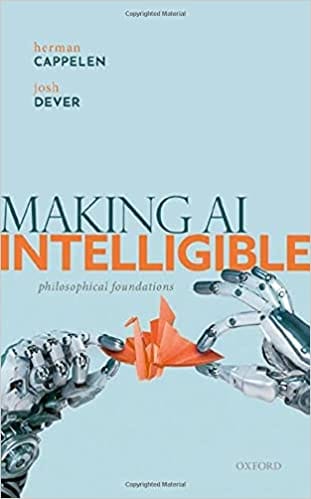
9780192894724 61bc75fa258e9c7933261380 Making Ai Intelligible Philosophical Foundations https://www.midlandbookshop.com/s/607fe93d7eafcac1f2c73ea4/61bc76cc036a338b45d0fe82/41cdcljfins-_sx309_bo1-204-203-200_.jpg
Can humans and artificial intelligences share concepts and communicate? Making AI Intelligible shows that philosophical work on the metaphysics of meaning can help answer these questions. Herman Cappelen and Josh Dever use the externalist tradition in philosophy to create models of how AIs and humans can understand each other. In doing so, they illustrate ways in which that philosophical tradition can be improved.

The questions addressed in the book are not only theoretically interesting, but the answers have pressing practical implications. Many important decisions about human life are now influenced by AI. In giving that power to AI, we presuppose that AIs can track features of the world that we care about (for example, creditworthiness, recidivism, cancer, and combatants). If AIs can share our concepts, that will go some way towards justifying this reliance on AI. This ground-breaking study offers insight into how to take some first steps towards achieving Interpretable AI.


Review

a thought-provoking overview of the resources available in the contemporary philosophy of language, and their potential application to the interpretation of AI systems. - Paul Dicken, Los Angeles Review of Books

About the Author

Herman Cappelen is chair Professor of Philosophy at The University of Hong Kong. He has written and co-authored several books and works in all areas of systematic philosophy. Josh Dever is Professor of Philosophy at the University of Texas at Austin and Professorial Fellow at the Arche Research Centre at the University of St Andrews.

9780192894724
out of stock INR 1036
1 1
Making Ai Intelligible Philosophical Foundations

Making Ai Intelligible Philosophical Foundations

ISBN: 9780192894724
₹1,036
₹1,295   (20% OFF)


Back In Stock Shortly - Fill The Book Request Form

Details
  • ISBN: 9780192894724
  • Author: Herman Cappelen Josh Dever
  • Publisher: Oxford
  • Pages: 192
  • Format: Hardback
SHARE PRODUCT

Book Description

Can humans and artificial intelligences share concepts and communicate? Making AI Intelligible shows that philosophical work on the metaphysics of meaning can help answer these questions. Herman Cappelen and Josh Dever use the externalist tradition in philosophy to create models of how AIs and humans can understand each other. In doing so, they illustrate ways in which that philosophical tradition can be improved.

The questions addressed in the book are not only theoretically interesting, but the answers have pressing practical implications. Many important decisions about human life are now influenced by AI. In giving that power to AI, we presuppose that AIs can track features of the world that we care about (for example, creditworthiness, recidivism, cancer, and combatants). If AIs can share our concepts, that will go some way towards justifying this reliance on AI. This ground-breaking study offers insight into how to take some first steps towards achieving Interpretable AI.


Review

a thought-provoking overview of the resources available in the contemporary philosophy of language, and their potential application to the interpretation of AI systems. - Paul Dicken, Los Angeles Review of Books

About the Author

Herman Cappelen is chair Professor of Philosophy at The University of Hong Kong. He has written and co-authored several books and works in all areas of systematic philosophy. Josh Dever is Professor of Philosophy at the University of Texas at Austin and Professorial Fellow at the Arche Research Centre at the University of St Andrews.

User reviews

  0/5