A DELECTABLE HISTORY OF THE KING OF FRUITS
From the royal Alphonso to the lip-smacking Chausa, nothing can beat the rush of pleasure from biting into a ripe mango. With its endless varieties, differing in colour, size and flavour, the fruit inspires an astounding cultural devotion.
The mango is the Indian subcontinent’s gift to the world – its roots in northeast India expanding globally over 60 million years. Appearing in the verses of Hindu epics and Ghalib’s poetry; the food habits of the Harappans and the travelogues of Ibn Battuta; the horticultural experiments of Mughal emperors and Jesuit priests, the mango has shaped South Asian culture far beyond its culinary uses. Its long history is intertwined with European colonization and the transatlantic slave trade, even gaining symbolic importance during Mao Zedong’s Cultural Revolution, and continues to drive innovation in food sustainability and preservation.
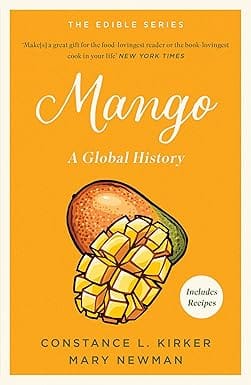
Plunge into the juicy details and surrender to the summery nostalgia of this beloved fruit with Mango: A Global History. Complete with beautiful illustrations and recipes, this is a flavourful journey across epochs of human civilization.
Review
Praise for the Series
‘The Edible series of little yellow hardbacks has established itself as the backbone of the food history section ... Well-researched and illustrated with a pleasing balance of anecdote and serious history’ The Bookseller
‘An appetizing bunch’ Los Angeles Times
‘These are food memoirs, salacious and exotic, colorful, powdered, sweet, greasy and globe-trotting ... sharp and speedy little reads’ Chicago Tribune
‘Enjoyable and admirable’ Gastronomica
About the Author
Constance L. Kirker is an American food historian, writer, and educator known for her engaging work on culinary history, food culture, and the science behind everyday ingredients. She has a strong academic background and has taught at institutions such as the Culinary Institute of America, where she inspired students to explore the historical and cultural contexts of food. Kirker is best recognized for co-authoring books that delve into the origins, uses, and global significance of staple foods, combining meticulous research with an accessible and engaging writing style. Her work often bridges the gap between scholarly research and popular readership, making complex food histories easy to understand and enjoyable to read. With a passion for storytelling and gastronomy, Constance L. Kirker continues to contribute to the appreciation of food as both a cultural artifact and a vital part of human history