Shop No.20, Aurobindo Palace Market, Hauz Khas, Near Church +91 9818282497 | 011 26867121 110016 New Delhi IN
Midland The Book Shop ™
Shop No.20, Aurobindo Palace Market, Hauz Khas, Near Church +91 9818282497 | 011 26867121 New Delhi, IN
+919871604786 https://www.midlandbookshop.com/s/607fe93d7eafcac1f2c73ea4/69591829db7aed90e0608dfb/without-tag-line-480x480.png" [email protected]
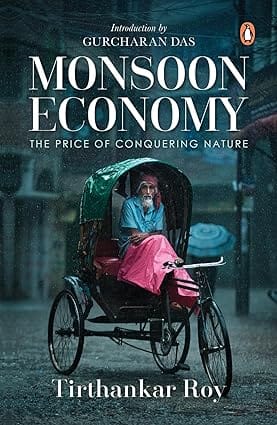
9780143463948 65803b3ec0510caf7ad505f7 Monsoon Economy The Price Of Conquering Nature https://www.midlandbookshop.com/s/607fe93d7eafcac1f2c73ea4/65803b40c0510caf7ad5061c/71c6vbfkull-_sy425_.jpg

In the monsoon regions of South Asia, the rainy season sustains life but brings with it the threat of floods, followed by a long stretch when little gainful work is possible and the threat of famine looms too. Beginning in the late nineteenth century, a series of interventions by the Indian government and other actors mitigated these conditions, thus enabling agricultural growth, encouraging urbanization and bringing about a permanent decrease in death rates. But these actions-largely efforts to ensure wider access to water-came at a cost to environmental sustainability. In Monsoon Economy, Tirthankar Roy explores the interaction between the environment and the economy in the emergence of modern India.

Roy argues that the tropical monsoon climate makes economic and population growth contingent on water security. But in a water-scarce world, the means used to increase water security not only created environmental stresses but also made political conflict more likely. Highlighting the importance of water as a public good, the author critically analyses issues such as water quality in cities, the shift from impounding river water in dams and reservoirs to exploring groundwater, and the seasonality of a monsoon economy. He also draws economic lessons from India for a world facing environmental degradation.


About the Author

Tirthankar Roy is professor of economic history at the London School of Economics and Political Science. He is the author of The Economic History of India, 1857–2010The East India Company: The World’s Most Powerful Corporation, The Crafts and Capitalism: Handloom Weaving Industry in Colonial India and co-author of The Economic History of Colonialism, and Law and the Economy in a Young Democracy.

9780143463948
in stockINR 399
1 1
Monsoon Economy The Price Of Conquering Nature

Monsoon Economy The Price Of Conquering Nature

ISBN: 9780143463948
₹399
₹499   (20% OFF)


Details
  • ISBN: 9780143463948
  • Author: Tirthankar Roy
  • Publisher: Penguin Business
  • Pages: 224
  • Format: Paperback
SHARE PRODUCT

Book Description

In the monsoon regions of South Asia, the rainy season sustains life but brings with it the threat of floods, followed by a long stretch when little gainful work is possible and the threat of famine looms too. Beginning in the late nineteenth century, a series of interventions by the Indian government and other actors mitigated these conditions, thus enabling agricultural growth, encouraging urbanization and bringing about a permanent decrease in death rates. But these actions-largely efforts to ensure wider access to water-came at a cost to environmental sustainability. In Monsoon Economy, Tirthankar Roy explores the interaction between the environment and the economy in the emergence of modern India.

Roy argues that the tropical monsoon climate makes economic and population growth contingent on water security. But in a water-scarce world, the means used to increase water security not only created environmental stresses but also made political conflict more likely. Highlighting the importance of water as a public good, the author critically analyses issues such as water quality in cities, the shift from impounding river water in dams and reservoirs to exploring groundwater, and the seasonality of a monsoon economy. He also draws economic lessons from India for a world facing environmental degradation.


About the Author

Tirthankar Roy is professor of economic history at the London School of Economics and Political Science. He is the author of The Economic History of India, 1857–2010The East India Company: The World’s Most Powerful Corporation, The Crafts and Capitalism: Handloom Weaving Industry in Colonial India and co-author of The Economic History of Colonialism, and Law and the Economy in a Young Democracy.
User reviews

  0/5