From the Inside Flap
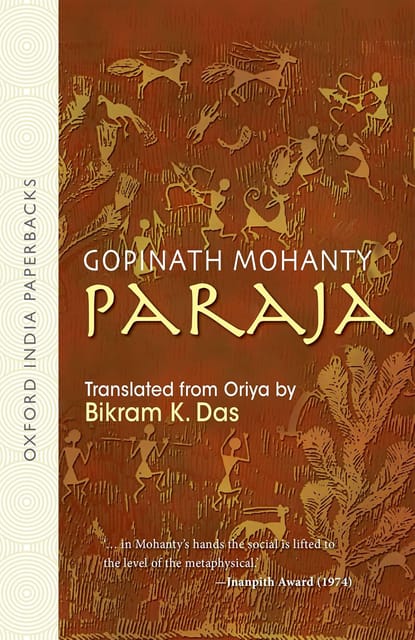
Written originally in Oriya in 1945 and translated here for the first time, Paraja is a classic of modern Indian fiction. It tells on an epic scale the story of a tribal patriarch and his family in the mountainous jungles of Orissa. The slow decline in the fortunes of this family - from the quiet prosperity of a subsistence livelihood towards bondage to the local moneylender - is both poignantly individualized as well as symbolic of the erosion of a whole way of life within peasant communities. The novel, furthermore, transcends what it documents because its characters are not merely primitive tribesmen ensnared by a predatory moneylender. Mohanty's protagonists are also quintessentially men and women waging heroic but futile war against a hostile universe. As the citation of the Jnanpith Award of 1974 put it - 'in Mohanty's hands the social is lifted to the level of the metaphysical.'.
From the Back Cover
Written originally in Oriya in 1945 and translated here for the first time, Paraja is a classic of modern Indian fiction. It tells on an epic scale the story of a tribal patriarch and his family in the mountainous jungles of Orissa. The slow decline in the fortunes of this family- from the quiet prosperity of a subsistence livelihood towards bondage to the local moneylender- is both poignantly individualized as well as symbolic of the erosion of a whole way of life within peasant communities.
About the Author
Gopinath Mohanty, winner of the Jnanpith award, and the first winner of the National Sahitya Akademi Award in 1955 - for his novel, Amrutara Santana - was a prolific Odia writer of the mid-twentieth century.








 +91 9818282497
(2).png)