Shop No.20, Aurobindo Palace Market, Hauz Khas, Near Church +91 9818282497 | 011 26867121 110016 New Delhi IN
Midland The Book Shop ™
Shop No.20, Aurobindo Palace Market, Hauz Khas, Near Church +91 9818282497 | 011 26867121 New Delhi, IN
+919871604786 https://www.midlandbookshop.com/s/607fe93d7eafcac1f2c73ea4/69591829db7aed90e0608dfb/without-tag-line-480x480.png" [email protected]
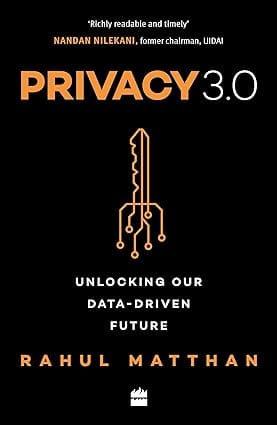
9789362130747 6655d530bef925f83a847be0 Privacy 3.0 Unlocking Our Data-driven Future https://www.midlandbookshop.com/s/607fe93d7eafcac1f2c73ea4/6655d532bef925f83a847c3b/61yps3sayyl-_sy425_.jpg
Our personal space is dear to us all. We live our lives in full public view on social media - posting photos of the food we just ate or even expressing intimate feelings for our loved ones - but there are still things we would rather not share with the world. Indeed, it is privacy that sets man apart from the animals who must stick together in the wild for their own safety. But mankind was not born private. Our primitive ancestors too lived in large groups, every member of which knew all there was to know about the others. Privacy evolved over time as man developed technologies to wall himself off, even as he remained part of the society at large. But just as some technologies enhanced privacy, others - such as the printing press or the portable camera - chipped away at it. Every time this happened, man opposed the technology at first but made his peace with it eventually to benefit from the obvious good it could do. We are at a similar crossroads today with data technologies. Aadhaar is one example of the many ways in which we have begun to use data in everything we do. While it has made it far easier to avail of services from the government and private enterprises than ever before, there are those who rightly worry about people's private data being put to ill use - and, worse, without consent. But this anxiety is no different from that which we felt during the teething troubles of every previous technology we adopted. What we really need is a new framework that unlocks the full potential of a data-driven future while still safeguarding what we hold most dear - our privacy. In this pioneering work, technology lawyer Rahul Matthan traces the changing notions of privacy from the earliest times to its evolution through landmark cases in the UK, US and India. In the process, he re-imagines the way we should be thinking about privacy today if we are to take full advantage of modern data technologies, cautioning against getting so obsessed with their potential harms that we design our laws to prevent us from benefiting from them at all.


About the Author

Rahul Matthan is a partner with the law firm Trilegal and heads its TMT (technology, media and telecommunications) practice.He has been working on issues relating to technology law for over two decades and has been involved in a number of policy initiatives at the intersection of law, society and technology.

9789362130747
in stockINR 399
1 1
Privacy 3.0 Unlocking Our Data-driven Future

Privacy 3.0 Unlocking Our Data-driven Future

ISBN: 9789362130747
₹399
₹499   (20% OFF)


Details
  • ISBN: 9789362130747
  • Author: Rahul Matthan
  • Publisher: Harper Collins
  • Pages: 240
  • Format: Paperback
SHARE PRODUCT

Book Description

Our personal space is dear to us all. We live our lives in full public view on social media - posting photos of the food we just ate or even expressing intimate feelings for our loved ones - but there are still things we would rather not share with the world. Indeed, it is privacy that sets man apart from the animals who must stick together in the wild for their own safety. But mankind was not born private. Our primitive ancestors too lived in large groups, every member of which knew all there was to know about the others. Privacy evolved over time as man developed technologies to wall himself off, even as he remained part of the society at large. But just as some technologies enhanced privacy, others - such as the printing press or the portable camera - chipped away at it. Every time this happened, man opposed the technology at first but made his peace with it eventually to benefit from the obvious good it could do. We are at a similar crossroads today with data technologies. Aadhaar is one example of the many ways in which we have begun to use data in everything we do. While it has made it far easier to avail of services from the government and private enterprises than ever before, there are those who rightly worry about people's private data being put to ill use - and, worse, without consent. But this anxiety is no different from that which we felt during the teething troubles of every previous technology we adopted. What we really need is a new framework that unlocks the full potential of a data-driven future while still safeguarding what we hold most dear - our privacy. In this pioneering work, technology lawyer Rahul Matthan traces the changing notions of privacy from the earliest times to its evolution through landmark cases in the UK, US and India. In the process, he re-imagines the way we should be thinking about privacy today if we are to take full advantage of modern data technologies, cautioning against getting so obsessed with their potential harms that we design our laws to prevent us from benefiting from them at all.


About the Author

Rahul Matthan is a partner with the law firm Trilegal and heads its TMT (technology, media and telecommunications) practice.He has been working on issues relating to technology law for over two decades and has been involved in a number of policy initiatives at the intersection of law, society and technology.

User reviews

  0/5