Shop No.20, Aurobindo Palace Market, Hauz Khas, Near Church +91 9818282497 | 011 26867121 110016 New Delhi IN
Midland The Book Shop ™
Shop No.20, Aurobindo Palace Market, Hauz Khas, Near Church +91 9818282497 | 011 26867121 New Delhi, IN
+919871604786 https://www.midlandbookshop.com/s/607fe93d7eafcac1f2c73ea4/69591829db7aed90e0608dfb/without-tag-line-480x480.png" [email protected]
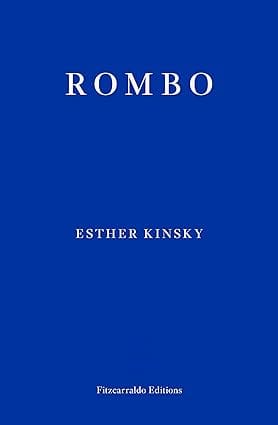
9781804270035 659beb6ddd6a7fe79e16ce44 Rombo https://www.midlandbookshop.com/s/607fe93d7eafcac1f2c73ea4/659beb6edd6a7fe79e16ce5e/51mf3fekapl-_sy425_.jpg

In Rombo, seven inhabitants of a remote mountain village in Friuli talk about the impact of the the 1976 earthquake that has left marks they are slowly learning to name.

Review

‘In Kinsky’s novel, the land speaks...Kinsky expertly animates the natural world around her while removing her human hand. Kinsky lets nature uphold its own intractable logic… If trauma is the inability to redescribe, Rombo offers a powerful antidote in language and the infinite possibilities of description; like the trembling Friulian landscape, forever writing itself anew.’
?Matthew Janney, Financial Times


‘Esther Kinsky has more eyes than most; in her novel Rombo she evokes the entire life of an Italian village before, during, and after the two devastating earthquakes of 1976, but each plant and animal central to the village is also a character, and the most important character of all is the landscape itself. The book becomes as much about the futures as the past, for our natural disasters are increasingly man-made, and we need more than ever this reminder of universal impermanence and the marks of memory we leave in its wake.’
? Mary Ruefle, author of Madness, Rack, and Honey


‘A tragic travelogue to the underworld-turned-world that recasts a newly lost Italian past with a climate-wise chorus straight out of the most harrowing Greek drama.’
? Joshua Cohen, author of The Netanyahus


‘In Esther Kinsky’s new novel, language becomes the highest form of compassion and solidarity – not only with us human beings, but with the whole world, organic, non-organic, speaking out with many mouths and living voices. A miracle of a book; should be shining when it gets dark.’
? Maria Stepanova, author of In Memory of Memory


‘Esther Kinsky has created a literary oeuvre of impressive stylistic brilliance, thematic diversity and stubborn originality. ... It is always clear that for her the only landscape worth describing is the one in which she is currently situated. Far from “eco-dreaming”, without sorrow or critique, Kinsky’s novels and poems position humanity in relation to the ruins it has produced and what still remains of nature.’
? 2022 Kleist Prize jury


‘[Kinsky] has a poet’s ear for rhythm and precision, elegantly rendered in Caroline Schmidt’s translation. The author has a great gift for describing landscape; she lingers meticulously over rocks and ridges and the ancient formation of mountains.’
? Charlie Lee, Times Literary Supplement


‘While the narrator offers insights about collective trauma and the transformative impact of nature’s whims on one’s sense of home, the book is filled with the voices of the landscape’s inhabitants.’
? New Yorker


‘In Esther Kinsky, German literature has an author whose books are full of poetic intelligence. ... A brilliant new novel.’
?  Neue Zürcher Zeitung


Rombo is staggering. There is something epic about it… It’s about how we make places habitable ? homes, memories, the past ? and carry on.’
? Magnus Rena, Review 31


About the Author

Esther Kinsky grew up by the river Rhine and lived in London for twelve years. She is the author of six volumes of poetry, five novels (Summer ResortBanatskoRiverGroveRombo), numerous essays on language, poetry and translation and three children’s books. She has translated many notable English (John Clare, Henry David Thoreau, Iain Sinclair) and Polish (Joanna Bator, Miron Bia?oszewski, Magdalena Tulli) authors into German. Both River and Grove won numerous literary prizes in Germany. Rombo was awarded the newly founded W.-G.-Sebald-Literaturpreis 2020. In 2022, Kinsky was awarded the prestigious Kleist Prize for her oeuvre.


Caroline Schmidt was born in Princeton. She translated Esther Kinsky’s Grove, and has translated poetry by Friederike Mayröcker, and art historical essays, museum catalogues and exhibition texts for Albertina in Vienna and Pinakothek der Moderne in Munich, among others. She lives in Berlin.

 

9781804270035
in stockINR 719
1 1
Rombo

Rombo

ISBN: 9781804270035
₹719
₹899   (20% OFF)


Details
  • ISBN: 9781804270035
  • Author: Esther Kinsky
  • Publisher: Fitzcarraldo Editions
  • Pages: 232
  • Format: Paperback
SHARE PRODUCT

Book Description

In Rombo, seven inhabitants of a remote mountain village in Friuli talk about the impact of the the 1976 earthquake that has left marks they are slowly learning to name.

Review

‘In Kinsky’s novel, the land speaks...Kinsky expertly animates the natural world around her while removing her human hand. Kinsky lets nature uphold its own intractable logic… If trauma is the inability to redescribe, Rombo offers a powerful antidote in language and the infinite possibilities of description; like the trembling Friulian landscape, forever writing itself anew.’
?Matthew Janney, Financial Times


‘Esther Kinsky has more eyes than most; in her novel Rombo she evokes the entire life of an Italian village before, during, and after the two devastating earthquakes of 1976, but each plant and animal central to the village is also a character, and the most important character of all is the landscape itself. The book becomes as much about the futures as the past, for our natural disasters are increasingly man-made, and we need more than ever this reminder of universal impermanence and the marks of memory we leave in its wake.’
? Mary Ruefle, author of Madness, Rack, and Honey


‘A tragic travelogue to the underworld-turned-world that recasts a newly lost Italian past with a climate-wise chorus straight out of the most harrowing Greek drama.’
? Joshua Cohen, author of The Netanyahus


‘In Esther Kinsky’s new novel, language becomes the highest form of compassion and solidarity – not only with us human beings, but with the whole world, organic, non-organic, speaking out with many mouths and living voices. A miracle of a book; should be shining when it gets dark.’
? Maria Stepanova, author of In Memory of Memory


‘Esther Kinsky has created a literary oeuvre of impressive stylistic brilliance, thematic diversity and stubborn originality. ... It is always clear that for her the only landscape worth describing is the one in which she is currently situated. Far from “eco-dreaming”, without sorrow or critique, Kinsky’s novels and poems position humanity in relation to the ruins it has produced and what still remains of nature.’
? 2022 Kleist Prize jury


‘[Kinsky] has a poet’s ear for rhythm and precision, elegantly rendered in Caroline Schmidt’s translation. The author has a great gift for describing landscape; she lingers meticulously over rocks and ridges and the ancient formation of mountains.’
? Charlie Lee, Times Literary Supplement


‘While the narrator offers insights about collective trauma and the transformative impact of nature’s whims on one’s sense of home, the book is filled with the voices of the landscape’s inhabitants.’
? New Yorker


‘In Esther Kinsky, German literature has an author whose books are full of poetic intelligence. ... A brilliant new novel.’
?  Neue Zürcher Zeitung


Rombo is staggering. There is something epic about it… It’s about how we make places habitable ? homes, memories, the past ? and carry on.’
? Magnus Rena, Review 31


About the Author

Esther Kinsky grew up by the river Rhine and lived in London for twelve years. She is the author of six volumes of poetry, five novels (Summer ResortBanatskoRiverGroveRombo), numerous essays on language, poetry and translation and three children’s books. She has translated many notable English (John Clare, Henry David Thoreau, Iain Sinclair) and Polish (Joanna Bator, Miron Bia?oszewski, Magdalena Tulli) authors into German. Both River and Grove won numerous literary prizes in Germany. Rombo was awarded the newly founded W.-G.-Sebald-Literaturpreis 2020. In 2022, Kinsky was awarded the prestigious Kleist Prize for her oeuvre.


Caroline Schmidt was born in Princeton. She translated Esther Kinsky’s Grove, and has translated poetry by Friederike Mayröcker, and art historical essays, museum catalogues and exhibition texts for Albertina in Vienna and Pinakothek der Moderne in Munich, among others. She lives in Berlin.
 

User reviews

  0/5