Shop No.20, Aurobindo Palace Market, Hauz Khas, Near Church +91 9818282497 | 011 26867121 110016 New Delhi IN
Midland The Book Shop ™
Shop No.20, Aurobindo Palace Market, Hauz Khas, Near Church +91 9818282497 | 011 26867121 New Delhi, IN
+919871604786 https://www.midlandbookshop.com/s/607fe93d7eafcac1f2c73ea4/677cda367903fd013d69b606/without-tag-line-480x480.png" [email protected]
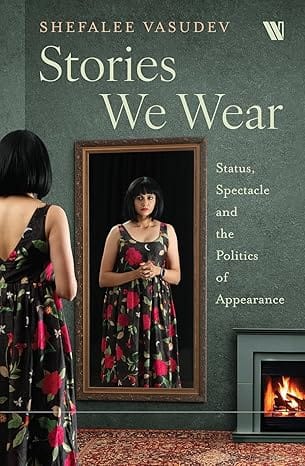
9789371970624 694151aeb6852a9d888821bd Stories We Wear Status, Spectacle And The Politics Of Appearance https://www.midlandbookshop.com/s/607fe93d7eafcac1f2c73ea4/694151afb6852a9d888821c5/71cq0nqiebl-_sy466_.jpg
About the Book

A CROSS-SECTIONAL VIEW OF INDIAN SOCIETY THROUGH THE LENS OF CLOTHING AND STYLE.
Stories We Wear is a compelling exploration of the lives we pass by-and the stories stitched into their silence. With a journalist's eye and a storyteller's heart, Shefalee Vasudev uncovers narratives hidden in plain sight, spanning cremation grounds and coffee shops, khadi debates and airport lounges.
From political style to its deliberate erasure, Vasudev reveals how clothing, culture and context become quiet carriers of identity.

About the Author

Shefalee Vasudev is a journalist, cultural commentator and narrative psychotherapist. The editor-in-chief of The Voice of Fashion and the first editor of Marie Claire India, she has spent three decades writing and editing across news and lifestyle media. This is her second book.
 

Review

'Shefalee writes about Masaba's uncanny ability to create stories about the right representation, that through the minority resonate with the majority. As a fellow strategist, let me tell you that creating desire through strategy is probably the highest form of creativity. — Sabyasachi Mukherjee, fashion designer, on 'Masaba: Lovechild of the Instagram Era'

'Every day, there is bland reportage of death, loss of lives. These narratives and statistics do not capture the personal meaning of loss nor what individuals experience as breath ebbs away. Shefalee's chapter places a prism against death. It uses memory and personal experience-like a prism that refracts light-to transform and gain perspective on the many faces of death.' — Dr Shekhar Seshadri, psychiatrist, on 'Last Rights'

'In "Wearing Politics", Shefalee Vasudev examines how India's political class constructs its public image through clothing. Politicians are acutely aware of the semiotics of attire. Every kurta, sari, dhoti and angavastram is deliberate, chosen to reinforce ideology or evoke religious symbolism, and tailored to resonate with specific constituencies. In politics, clothes are less personal expression than carefully managed performance.' — David Abraham, designer, creative director Abraham & Thakore, on 'Wearing Politics'

'In this hauntingly vivid chapter, Shefalee shares images, stories and personal memories associated with death and those who stand witness to its finality. They are the ones who deal with its aftermath: families, children, caregivers, relatives, friends, professional organisers of the last rites. You realise as you read on how despite a proliferation of literature on mortality and our own lifelong obsessions with dying, nothing prepares you for the tragic complexity of death. Long after you have finished it this chapter will remind of you of the reporter's personal pathos, her muted compassion and the exquisitely tender portrayal of threads that bind a daughter to her father.' 

9789371970624
in stockINR 559
1 1
Stories We Wear Status, Spectacle And The Politics Of Appearance

Stories We Wear Status, Spectacle And The Politics Of Appearance

ISBN: 9789371970624
₹559
₹699   (20% OFF)


Details
  • ISBN: 9789371970624
  • Author: Shefalee Vasudev
  • Publisher: Westland Non Fiction
  • Pages: 288
  • Format: Hardback
SHARE PRODUCT

Book Description

About the Book

A CROSS-SECTIONAL VIEW OF INDIAN SOCIETY THROUGH THE LENS OF CLOTHING AND STYLE.
Stories We Wear is a compelling exploration of the lives we pass by-and the stories stitched into their silence. With a journalist's eye and a storyteller's heart, Shefalee Vasudev uncovers narratives hidden in plain sight, spanning cremation grounds and coffee shops, khadi debates and airport lounges.
From political style to its deliberate erasure, Vasudev reveals how clothing, culture and context become quiet carriers of identity.

About the Author

Shefalee Vasudev is a journalist, cultural commentator and narrative psychotherapist. The editor-in-chief of The Voice of Fashion and the first editor of Marie Claire India, she has spent three decades writing and editing across news and lifestyle media. This is her second book.
 

Review

'Shefalee writes about Masaba's uncanny ability to create stories about the right representation, that through the minority resonate with the majority. As a fellow strategist, let me tell you that creating desire through strategy is probably the highest form of creativity. — Sabyasachi Mukherjee, fashion designer, on 'Masaba: Lovechild of the Instagram Era'

'Every day, there is bland reportage of death, loss of lives. These narratives and statistics do not capture the personal meaning of loss nor what individuals experience as breath ebbs away. Shefalee's chapter places a prism against death. It uses memory and personal experience-like a prism that refracts light-to transform and gain perspective on the many faces of death.' — Dr Shekhar Seshadri, psychiatrist, on 'Last Rights'

'In "Wearing Politics", Shefalee Vasudev examines how India's political class constructs its public image through clothing. Politicians are acutely aware of the semiotics of attire. Every kurta, sari, dhoti and angavastram is deliberate, chosen to reinforce ideology or evoke religious symbolism, and tailored to resonate with specific constituencies. In politics, clothes are less personal expression than carefully managed performance.' — David Abraham, designer, creative director Abraham & Thakore, on 'Wearing Politics'

'In this hauntingly vivid chapter, Shefalee shares images, stories and personal memories associated with death and those who stand witness to its finality. They are the ones who deal with its aftermath: families, children, caregivers, relatives, friends, professional organisers of the last rites. You realise as you read on how despite a proliferation of literature on mortality and our own lifelong obsessions with dying, nothing prepares you for the tragic complexity of death. Long after you have finished it this chapter will remind of you of the reporter's personal pathos, her muted compassion and the exquisitely tender portrayal of threads that bind a daughter to her father.' 
User reviews

  0/5