Shop No.20, Aurobindo Palace Market, Hauz Khas, Near Church +91 9818282497 | 011 26867121 110016 New Delhi IN
Midland The Book Shop ™
Shop No.20, Aurobindo Palace Market, Hauz Khas, Near Church +91 9818282497 | 011 26867121 New Delhi, IN
+919871604786 https://www.midlandbookshop.com/s/607fe93d7eafcac1f2c73ea4/69591829db7aed90e0608dfb/without-tag-line-480x480.png" [email protected]
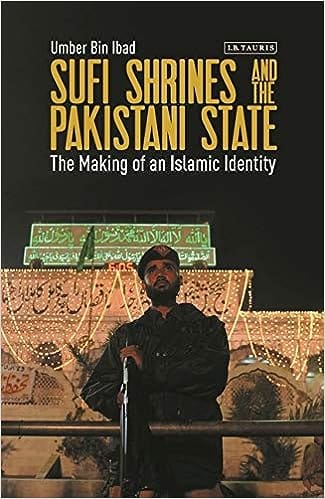
9781788311816 64ce3b4ee887e6c855e7efbe Sufi Shrines And The Pakistani State The End Of Religious Pluralism Vol.3 https://www.midlandbookshop.com/s/607fe93d7eafcac1f2c73ea4/64ce3b4ee887e6c855e7efec/516t0o1fanl-_sx323_bo1-204-203-200_.jpg
After the creation of Pakistan in 1947, Sufi shrines became highly contested. Considered deviant and `un-Islamic', they soon fell under government control as part of a state-led strategy to create an `official', more unified, Islamic identity. This book, the first to address the political history of Sufi shrines in Pakistan, explores the various ways in which the postcolonial state went about controlling their activities. Of key significance, Umber Bin Ibad shows, was the `West Pakistan Waqf Properties Ordinance', a governmental decree issued in 1959. Formed when General Ayub Khan assumed the role of Chief Martial Law Administrator, this allowed the state to take over shrines as `waqf property'. According to Islamic law, a waqf, or charitable endowment, had to be used for charitable or religious purposes and the state created a separate Auqaf department to control the finances and activities of all the shrines which were now under a state sponsored waqf system. Focusing on the Punjab - famous for its large number of shrines - the book is based on extensive primary research including newspapers, archival sources, interviews, court records and the official reports of the Auqaf department. At a time when Sufi shrines are being increasingly targeted by Islamist extremists, who view Sufism as heretical, this book sheds light on the shrines' contentious historical relationship with the state. An original contribution to South Asian Studies, the book will also be relevant to scholars of Colonial and Post-Colonial History and Sufism Studies.


About the Author

Umber Bin Ibad is Assistant Professor in the History Department at Forman Christian College University, Lahore, Pakistan.
9781788311816
out of stock INR 8832
1 1
Sufi Shrines And The Pakistani State The End Of Religious Pluralism Vol.3

Sufi Shrines And The Pakistani State The End Of Religious Pluralism Vol.3

ISBN: 9781788311816
₹8,832
₹11,040   (20% OFF)


Back In Stock Shortly - Fill The Book Request Form

Details
  • ISBN: 9781788311816
  • Author: Umber Bin Ibad
  • Publisher: I B Tauris
  • Pages: 264
  • Format: Hardback
SHARE PRODUCT

Book Description

After the creation of Pakistan in 1947, Sufi shrines became highly contested. Considered deviant and `un-Islamic', they soon fell under government control as part of a state-led strategy to create an `official', more unified, Islamic identity. This book, the first to address the political history of Sufi shrines in Pakistan, explores the various ways in which the postcolonial state went about controlling their activities. Of key significance, Umber Bin Ibad shows, was the `West Pakistan Waqf Properties Ordinance', a governmental decree issued in 1959. Formed when General Ayub Khan assumed the role of Chief Martial Law Administrator, this allowed the state to take over shrines as `waqf property'. According to Islamic law, a waqf, or charitable endowment, had to be used for charitable or religious purposes and the state created a separate Auqaf department to control the finances and activities of all the shrines which were now under a state sponsored waqf system. Focusing on the Punjab - famous for its large number of shrines - the book is based on extensive primary research including newspapers, archival sources, interviews, court records and the official reports of the Auqaf department. At a time when Sufi shrines are being increasingly targeted by Islamist extremists, who view Sufism as heretical, this book sheds light on the shrines' contentious historical relationship with the state. An original contribution to South Asian Studies, the book will also be relevant to scholars of Colonial and Post-Colonial History and Sufism Studies.


About the Author

Umber Bin Ibad is Assistant Professor in the History Department at Forman Christian College University, Lahore, Pakistan.

User reviews

  0/5