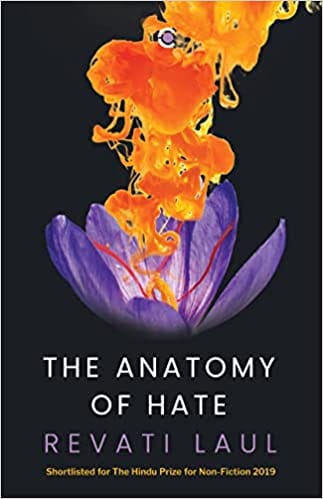
About the Book
A DEVASTATING ACCOUNT OF THE WAY IN WHICH VIOLENCE AFFECTS LIVES IN MODERN INDIA
What makes a man stand by and watch violence being done to another? What does a woman do after her husband has killed a pregnant stranger? What latent tensions and complexes did the instigators of violence draw upon to unleash the carnage of 28 February 2002?
Investigations into mass violence in India, and Gujarat 2002 in particular, have focused on the consequences, the victims, the political apparatus. The mob has always been a faceless, unidimensional machine. But the act of turning around and looking at individuals from that crowd changes everything. If we see the mob as amorphous and their hate as shifting, given to complex personal motivations and vulnerabilities, we are much closer to understanding it—and to opening up conversations that can lead to change.
Revati Laul’s unforgettable narrative, built on a decade’s worth of research and interviews, is the very first account of the perpetrators of 2002—and a crucial new addition to the literature on violence.
About the Author
Revati Laul is an independent journalist and activist. She started her career in television with NDTV, then shifted to print, writing for publications like Tehelka, The Quint and the Hindustan Times. As an outcome of her work on political violence, she created the Sarfaroshi Foundation in the district of Shamli in Uttar Pradesh, where she now lives. This is her first book.
Review
'This is a rare book, brave and fiercely honest, unsettling, deeply troubling. Those who worry about the future of India cannot afford to miss it.’ — Harsh Mander, The Hindu
'Like all serious books on serious subjects, it doesn’t answer all the questions, but Laul challenges the reader to read more on and around it. The book sets a robust standard for journalistic non-fiction in India.’ — Rahul Jayaram, Scroll.in
‘Besides its beautifully crafted beginning and end, Laul’s book has an extraordinary middle, too, that holds important lessons for India’s future. The middle is when the violence deep inside these people and societies begins to morph.’ — Seema Chishti, The Indian Express
‘The Anatomy of Hate is an important contribution to our understanding of the political role of hate, rage, anger, violence and, of course, love.’ — Rakesh Shukla, Himal Southasian
‘Gripping, agonising, stomach churning. The Anatomy of Hate is all of these, while also holding up a subtle, insightful and illuminating mirror to modern-day Indian society.’ — Govindan Nair, The Book Review Literary Trust
‘The author’s narrative forces readers to confront their own prejudices and identifications with the perpetrator-protagonists, thus unsettling the voyeuristic gaze with which even the progressive reader in India consumes stories of violence.’ — Bhavinee Singh, Konina Mandal, Jindal Global Law Review
‘Laul’s book is invaluable, especially today, as we witness a resurgence of vigilante mobs and still possess inadequate knowledge in containing our very own — the 80 per cent that can be swayed in any direction.’ — Radhika Dutt, Millennium Post
‘With a strong narrative and extensive research, The Anatomy of Hate provides one with the closest insight into the 2002 Gujarat riots.’ — The Times of India
About the Author
Revati Laul is an independent journalist and activist. She started her career in television with NDTV, then shifted to print, writing for publications like Tehelka, The Quint and the Hindustan Times. As an outcome of her work on political violence, she created the Sarfaroshi Foundation in the district of Shamli in Uttar Pradesh, where she now lives. This is her first book.









 +91 9818282497
(2).png)