
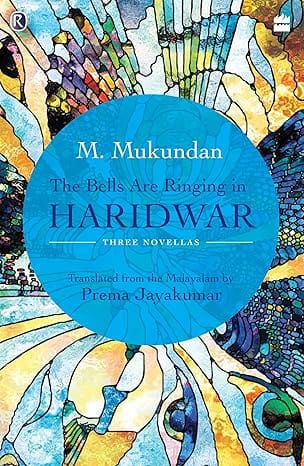
The Bells Are Ringing In Haridwar
ISBN:
9789369891764
₹319
₹399
(20% OFF)
Back In Stock Shortly - Fill The Book Request Form
Details
- ISBN: 9789369891764
- Author: M Mukundan
- Publisher: Harper Perennial
- Pages: 232
- Format: Paperback
Book Description
Haridwaril Manikal Muzhangunnu was published in 1972 to great acclaim, for it spoke to the alienated youth of the late 1960s and early 1970s. Yet the criticism against it was even greater, as the collection seemed to glorify the use of drugs and a way of life that was considered immoral then.
With Ramesh and Suja, we travel to ancient Haridwar where the Ganga came to earth, where the marks made by Bhageeratha's chariot wheels can still be seen and Bhima's sweat can still be tasted in the water of the pond he dug-and where Ramesh finds himself unable to resist the call of the bells ...
The other two novellas take us back to Mayyazhi, that small area in Keralan which is still French at heart and where time has stood still for decades. Meetheledath Ravunni is led astray by the sight of the girdle that encircles Savitri's slim waist and descends to an animal-like existence. As for Kunhikrishnan Thampuran, the honeyed skin of the oil-miller's wife reduces him to an innocence that is child-like, unselfconscious. Simple and immersive, the stories in The Bells Are Ringing in Haridwar are a stark reminder of the socio-cultural breakdown of the 1960s and 1970s.
About the Author
Maniyambath Mukundan (born 10 September 1942) worked asa cultural attaché at the Embassy of France in Delhi from1961 to 2004, while concurrently working as an author. Many of his early worksare set in Mahe (Mayyazhi), his homeland, which earned him themoniker ‘Mayyazhiyude Kathakaaran' (Mayyazhi's storyteller). He is known to be one of the pioneers of modernity in Malayalam literature.
Mukundan has been awarded the Ezhuthachan Puraskaram, theh ighest literary honour given by the Government of Kerala, the Crossword BookAward twice, first in 1999 for On the Banks of the Mayyazhi andagain in 2006 for Kesavan's Lamentations, the Sahitya Akademi awardand N.V. Puraskaram for Daivathinte Vikrithikal (God's Mischief), and the 2023 JCB Prize for Literature for Delhi: A Soliloquy. His stories and novels have been widely translated into various Indian languages, Englishand French, and four of his books have been adapted into award-winning films. He is also a recipient of the Chevalier des Arts et des Lettres ofthe Government of France.






 +91 9818282497
(2).png)