Shop No.20, Aurobindo Palace Market, Hauz Khas, Near Church +91 9818282497 | 011 26867121 110016 New Delhi IN
Midland The Book Shop ™
Shop No.20, Aurobindo Palace Market, Hauz Khas, Near Church +91 9818282497 | 011 26867121 New Delhi, IN
+919871604786 https://www.midlandbookshop.com/s/607fe93d7eafcac1f2c73ea4/69591829db7aed90e0608dfb/without-tag-line-480x480.png" [email protected]
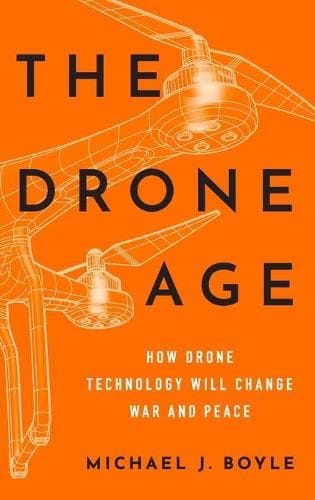
9780190635862 62162db0dced416464d895ea The Drone Age How Drone Technology Will Change War And Peace https://www.midlandbookshop.com/s/607fe93d7eafcac1f2c73ea4/62162db2dced416464d89622/019063586x-01-_sclzzzzzzz_sx500_.jpg
Over the last decade, the rapid pace of innovation with drone technology has led to dozens of new and innovative commercial and scientific applications, from Amazon drone deliveries to the patrolling of national parks with drones. But what is less understood is how the spread of unmanned technology will change the patterns of war and peace in the future. Will the use of drones produce a more stable world or will it lead to more conflict? Will drones gradually replace humans on the battlefield or will they empower soldiers to act more precisely, and humanely, in crisis situations? How will drones change surveillance around the world and at home?

In The Drone Age, Michael J. Boyle examines how unmanned technology alters the decision-making and risk calculus of its users both on and off the battlefield. It shows that the introduction of drones changes the dynamics of wars, humanitarian crises and peacekeeping missions, empowering some actors while making others more vulnerable to surveillance and even attack. The spread of drones is also reordering geopolitical fault lines and providing new ways for states to test the nerves and strategic commitments of their rivals. Drones are also allowing terrorist groups like the Islamic State to take to the skies and to level the playing field against their enemies. Across the world, the low financial cost of drones and the reduced risks faced by pilots is making drone technology an essential tool for militaries, peacekeeping forces and even private companies. From large surveillance drones to insect-like micro-drones, unmanned technology is revolutionizing the way that states and non-state actors compete with each other and is providing game-changing benefits to those who can most rapidly adapt unmanned technology to their own purposes.

An essential guide to a potentially disruptive force in modern world politics, The Drone Age shows how the mastery of drone technology will become central to the ways that governments and non-state actors seek power and influence in the coming decades.


Review

A concise and comprehensive overview of the world the drone made. - New Scientist (Books of the Year)

A seminal work of impressively thoughtful and thought-provoking scholarship, "The Drone Age: How Drone Technology Will Change War and Peace" is an extraordinary, timely, and unreservedly recommended addition to both community and college/university library drone technology collections and supplemental curriculum studies. It should be noted for the personal reading lists of students, academia, governmental policy makers, and non-specialist general readers with an interest in the subject. - Michael Dunford, Midwest Book Review

A must read...The book is just as valuable on surveillance, the rise of information warfare and the way that the best intentions can turn the world we knew on its head. But, ultimately, if you read only one book about drones, this should be it. - Simon Ing, New Scientist

A highly informative treatment of the current role and future potential of drones. - Kirkus, Starred Review

What Boyle offers in the place of righteous condemnation is a quiet moral clarity. When writing about armed drones like the Reaper and Predator, he is careful to take note of the horror of continuously fearing death from above. When describing the work of commanding the drones, his sympathies clearly lie with the pilots, a third of whom experience burnout and more than a sixth of whom contend with clinical mental distress. - Eoin O'Carroll, Christian Science Monitor

About the Author

Michael J. Boyle is an Associate Professor and Chair of Political Science at La Salle University. He is also a Senior Fellow at the Foreign Policy Research Institute (FPRI) in Philadelphia. His previous books include Violence after War: Explaining Instability in Post-Conflict StatesLegal and Ethical Implications of Drone Warfare, and Non-Western Responses to Terrorism.

9780190635862
out of stock INR 1000
1 1
The Drone Age How Drone Technology Will Change War And Peace

The Drone Age How Drone Technology Will Change War And Peace

ISBN: 9780190635862
₹1,000
₹1,250   (20% OFF)


Back In Stock Shortly - Fill The Book Request Form

Details
  • ISBN: 9780190635862
  • Author: Michael J Boyle
  • Publisher: Oxford
  • Pages: 336
  • Format: Hardback
SHARE PRODUCT

Book Description

Over the last decade, the rapid pace of innovation with drone technology has led to dozens of new and innovative commercial and scientific applications, from Amazon drone deliveries to the patrolling of national parks with drones. But what is less understood is how the spread of unmanned technology will change the patterns of war and peace in the future. Will the use of drones produce a more stable world or will it lead to more conflict? Will drones gradually replace humans on the battlefield or will they empower soldiers to act more precisely, and humanely, in crisis situations? How will drones change surveillance around the world and at home?

In The Drone Age, Michael J. Boyle examines how unmanned technology alters the decision-making and risk calculus of its users both on and off the battlefield. It shows that the introduction of drones changes the dynamics of wars, humanitarian crises and peacekeeping missions, empowering some actors while making others more vulnerable to surveillance and even attack. The spread of drones is also reordering geopolitical fault lines and providing new ways for states to test the nerves and strategic commitments of their rivals. Drones are also allowing terrorist groups like the Islamic State to take to the skies and to level the playing field against their enemies. Across the world, the low financial cost of drones and the reduced risks faced by pilots is making drone technology an essential tool for militaries, peacekeeping forces and even private companies. From large surveillance drones to insect-like micro-drones, unmanned technology is revolutionizing the way that states and non-state actors compete with each other and is providing game-changing benefits to those who can most rapidly adapt unmanned technology to their own purposes.

An essential guide to a potentially disruptive force in modern world politics, The Drone Age shows how the mastery of drone technology will become central to the ways that governments and non-state actors seek power and influence in the coming decades.


Review

A concise and comprehensive overview of the world the drone made. - New Scientist (Books of the Year)

A seminal work of impressively thoughtful and thought-provoking scholarship, "The Drone Age: How Drone Technology Will Change War and Peace" is an extraordinary, timely, and unreservedly recommended addition to both community and college/university library drone technology collections and supplemental curriculum studies. It should be noted for the personal reading lists of students, academia, governmental policy makers, and non-specialist general readers with an interest in the subject. - Michael Dunford, Midwest Book Review

A must read...The book is just as valuable on surveillance, the rise of information warfare and the way that the best intentions can turn the world we knew on its head. But, ultimately, if you read only one book about drones, this should be it. - Simon Ing, New Scientist

A highly informative treatment of the current role and future potential of drones. - Kirkus, Starred Review

What Boyle offers in the place of righteous condemnation is a quiet moral clarity. When writing about armed drones like the Reaper and Predator, he is careful to take note of the horror of continuously fearing death from above. When describing the work of commanding the drones, his sympathies clearly lie with the pilots, a third of whom experience burnout and more than a sixth of whom contend with clinical mental distress. - Eoin O'Carroll, Christian Science Monitor

About the Author

Michael J. Boyle is an Associate Professor and Chair of Political Science at La Salle University. He is also a Senior Fellow at the Foreign Policy Research Institute (FPRI) in Philadelphia. His previous books include Violence after War: Explaining Instability in Post-Conflict StatesLegal and Ethical Implications of Drone Warfare, and Non-Western Responses to Terrorism.
User reviews

  0/5