Shop No.20, Aurobindo Palace Market, Hauz Khas, Near Church +91 9818282497 | 011 26867121 110016 New Delhi IN
Midland The Book Shop ™
Shop No.20, Aurobindo Palace Market, Hauz Khas, Near Church +91 9818282497 | 011 26867121 New Delhi, IN
+919871604786 https://www.midlandbookshop.com/s/607fe93d7eafcac1f2c73ea4/69591829db7aed90e0608dfb/without-tag-line-480x480.png" [email protected]
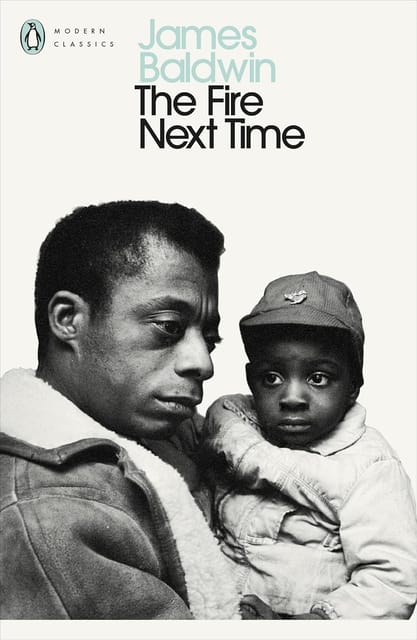
9780140182750 69f09461613f2f2f473f5c33 The fire next time https://www.midlandbookshop.com/s/607fe93d7eafcac1f2c73ea4/69f090429fbbdefd91023e5a/81la7k6gvml-_sl1500_.jpg

Sermon, ultimatum, confession, deposition, testament, and chronicle ... all presented in searing, brilliant prose'' The New York Times Book Review

We, the black and the white, deeply need each other here if we are really to become a nation

James Baldwin''s impassioned plea to ''end the racial nightmare'' in America was a bestseller when it appeared in 1963, galvanising a nation and giving voice to the emerging civil rights movement. Told in the form of two intensely personal ''letters'', 
The Fire Next Time is at once a powerful evocation of Baldwin''s early life in Harlem and an excoriating condemnation of the terrible legacy of racial injustice.

''A seminal meditation on race by one of our greatest writers'' Barack Obama

''Baldwin writes with great passion ... it reeks of truth, as the ghettoes of New York and London, Chicago and Manchester reek of our hypocrisy'' Sunday Times

''The great poet-prophet of the civil rights movement ... his seminal work'' 
Guardian

About the author


James Baldwin (1924-1987) was a novelist, essayist, playwright, poet, and social critic, and one of America's foremost writers. His essays, such as "Notes of a Native Son" (1955), explore palpable yet unspoken intricacies of racial, sexual, and class distinctions in Western societies, most notably in mid-twentieth-century America. A Harlem, New York, native, he primarily made his home in the south of France. 

His novels include Giovanni's Room (1956), about a white American expatriate who must come to terms with his homosexuality, and Another Country (1962), about racial and gay sexual tensions among New York intellectuals. His inclusion of gay themes resulted in much savage criticism from the black community. Going to Meet the Man (1965) and Tell Me How Long the Train's Been Gone (1968) provided powerful descriptions of American racism. As an openly gay man, he became increasingly outspoken in condemning discrimination against lesbian and gay people.


9780140182750
in stockINR 399
James Baldwin
1 1
The fire next time

The fire next time

ISBN: 9780140182750
₹399
₹499   (20% OFF)


Details
  • ISBN : 9780140182750
  • Author: James Baldwin
  • Format: Paperback
  • Publisher: Penguin
  • Publication Date: 1990
SHARE PRODUCT

Book Description

Sermon, ultimatum, confession, deposition, testament, and chronicle ... all presented in searing, brilliant prose'' The New York Times Book Review

We, the black and the white, deeply need each other here if we are really to become a nation

James Baldwin''s impassioned plea to ''end the racial nightmare'' in America was a bestseller when it appeared in 1963, galvanising a nation and giving voice to the emerging civil rights movement. Told in the form of two intensely personal ''letters'', 
The Fire Next Time is at once a powerful evocation of Baldwin''s early life in Harlem and an excoriating condemnation of the terrible legacy of racial injustice.

''A seminal meditation on race by one of our greatest writers'' Barack Obama

''Baldwin writes with great passion ... it reeks of truth, as the ghettoes of New York and London, Chicago and Manchester reek of our hypocrisy'' Sunday Times

''The great poet-prophet of the civil rights movement ... his seminal work'' 
Guardian

About the author


James Baldwin (1924-1987) was a novelist, essayist, playwright, poet, and social critic, and one of America's foremost writers. His essays, such as "Notes of a Native Son" (1955), explore palpable yet unspoken intricacies of racial, sexual, and class distinctions in Western societies, most notably in mid-twentieth-century America. A Harlem, New York, native, he primarily made his home in the south of France. 

His novels include Giovanni's Room (1956), about a white American expatriate who must come to terms with his homosexuality, and Another Country (1962), about racial and gay sexual tensions among New York intellectuals. His inclusion of gay themes resulted in much savage criticism from the black community. Going to Meet the Man (1965) and Tell Me How Long the Train's Been Gone (1968) provided powerful descriptions of American racism. As an openly gay man, he became increasingly outspoken in condemning discrimination against lesbian and gay people.

User reviews

  0/5