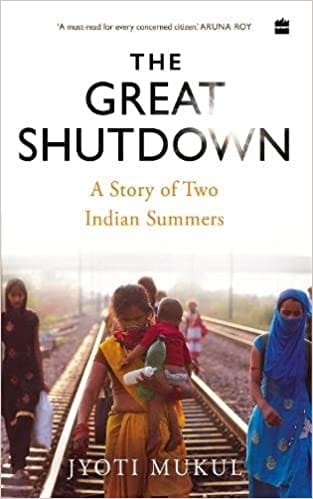
On 24 March 2020, after the outbreak of the coronavirus pandemic, a complete nationwide lockdown was announced in India. In addition to other restrictions, which included suspension of air travel and long- and short-distance modes of transport, it was decided that the Indian Railways would no longer operate. The shutting down of the almost 68,000 kilometre-long railway network severed, in many cases, the only link for people with their home states.
The Great Shutdown closely examines the repercussions of these decisions, the resultant uncertainty and emotional crisis for millions of people, especially migrant workers, who were separated from their families at a time when the threat of an unknown disease loomed large. It chronicles the COVID-19 regulations that were enforced during the lockdown, the different phases of unlocking and the second wave, and their humanitarian challenges. It also talks about the alternatives that could have been explored to keep travel going, which would have saved countless people a lot of suffering.
Jyoti Mukul is a policy analyst and a former journalist who has worked with the Business Standard, the Asian Age, and Indian Express, Dainik Bhaskar and Deccan Chronicle groups. A commentator on the Indian economy, transport and infrastructure sectors, she has widely travelled to rural heartlands and energy installations in India during the course of her reporting career. She lives in Gurugram with her husband, Akshaya, daughter, Jahnavi and pet, Bella.

On 24 March 2020, after the outbreak of the coronavirus pandemic, a complete nationwide lockdown was announced in India. In addition to other restrictions, which included suspension of air travel and long- and short-distance modes of transport, it was decided that the Indian Railways would no longer operate. The shutting down of the almost 68,000 kilometre-long railway network severed, in many cases, the only link for people with their home states.
The Great Shutdown closely examines the repercussions of these decisions, the resultant uncertainty and emotional crisis for millions of people, especially migrant workers, who were separated from their families at a time when the threat of an unknown disease loomed large. It chronicles the COVID-19 regulations that were enforced during the lockdown, the different phases of unlocking and the second wave, and their humanitarian challenges. It also talks about the alternatives that could have been explored to keep travel going, which would have saved countless people a lot of suffering.
Jyoti Mukul is a policy analyst and a former journalist who has worked with the Business Standard, the Asian Age, and Indian Express, Dainik Bhaskar and Deccan Chronicle groups. A commentator on the Indian economy, transport and infrastructure sectors, she has widely travelled to rural heartlands and energy installations in India during the course of her reporting career. She lives in Gurugram with her husband, Akshaya, daughter, Jahnavi and pet, Bella.
Subscribe to get Email Updates!
Thanks for subscribing.
Your response has been recorded.

"We Believe In The Power of Books" Our mission is to make books accessible to everyone, and to cultivate a culture of reading and learning. We strive to provide a wide range of books, from classic literature, sci-fi and fantasy, to graphic novels, biographies and self-help books, so that everyone can find something to read.
Whether you’re looking for your next great read, a gift for someone special, or just browsing, Midland is here to make your book-buying experience easy and enjoyable.