Shop No.20, Aurobindo Palace Market, Hauz Khas, Near Church +91 9818282497 | 011 26867121 110016 New Delhi IN
Midland The Book Shop ™
Shop No.20, Aurobindo Palace Market, Hauz Khas, Near Church +91 9818282497 | 011 26867121 New Delhi, IN
+919871604786 https://www.midlandbookshop.com/s/607fe93d7eafcac1f2c73ea4/69591829db7aed90e0608dfb/without-tag-line-480x480.png" [email protected]
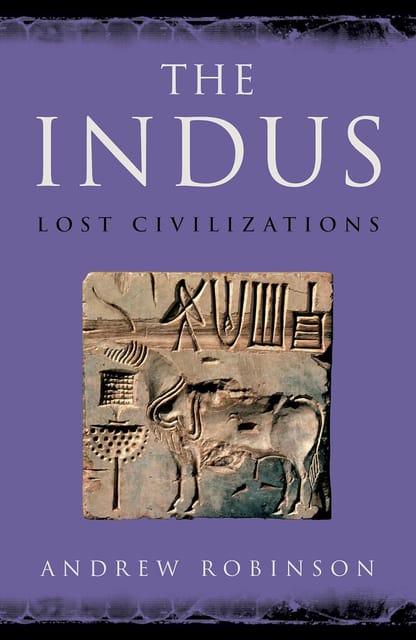
9789361135330 69d649271f01090a83fe8e47 The Indus Lost Civilizations https://www.midlandbookshop.com/s/607fe93d7eafcac1f2c73ea4/69d649281f01090a83fe8e69/71xm1snlcrl-_sl1500_.jpg

The Indus valley civilization, one of the oldest in Central and South Asia, flourished for half a millennium from about 2600 to 1900 BC, when it mysteriously declined and vanished from view. It remained invisible for almost four thousand years, until its ruins were discovered in the 1920s by British and Indian archaeologists. Today, after almost a century of excavation, it is regarded as the earliest Indian civilization.

More than a thousand Indus settlements covered at least 800,000 square kilometres of what is now Pakistan and India: it was the most extensive urban culture of its age, with a vigorous maritime export trade to the Persian Gulf and cities such as Ur. The two largest Indus cities, Harappa and Mohenjo-daro a UNESCO World Heritage Site boasted street planning and house drainage worthy of the twentieth century, including the world s first toilets, along with complex stone weights, finely drilled gemstone necklaces and an exquisite part-pictographic writing system, which was carved on seal stones and has defied numerous attempts at decipherment. Astonishingly, there is no evidence of armies or warfare.

The Indus: Lost Civilizations is an accessible introduction to every significant aspect of an extraordinary and tantalizing lost civilization, which apparently combined artistic excellence, technological sophistication and economic vigour with social egalitarianism, political freedom and religious moderation. The book also discusses the vital legacy of the Indus civilization in modern India and Pakistan.

About the Author

Andrew Robinson is the author of some 25 books on the arts and sciences, and writes for Current World Archaeology, The Lancet, Nature and Science. His recent books include Lost Languages: The Enigma of the World s Undeciphered Scripts (2009), Earthquake: Nature and Culture (2012) and India: A Short History (2014). He has been a Visiting Fellow at the University of Cambridge and is a Fellow of the Royal Asiatic Society.
9789361135330
in stockINR 319
1 1
The Indus Lost Civilizations

The Indus Lost Civilizations

ISBN: 9789361135330
₹319
₹399   (20% OFF)


Details
  • ISBN: 9789361135330
  • Author: Andrew Robinson
  • Publisher: Pan Macmillan
  • Pages: 208
  • Format: Paperback
SHARE PRODUCT

Book Description

The Indus valley civilization, one of the oldest in Central and South Asia, flourished for half a millennium from about 2600 to 1900 BC, when it mysteriously declined and vanished from view. It remained invisible for almost four thousand years, until its ruins were discovered in the 1920s by British and Indian archaeologists. Today, after almost a century of excavation, it is regarded as the earliest Indian civilization.

More than a thousand Indus settlements covered at least 800,000 square kilometres of what is now Pakistan and India: it was the most extensive urban culture of its age, with a vigorous maritime export trade to the Persian Gulf and cities such as Ur. The two largest Indus cities, Harappa and Mohenjo-daro a UNESCO World Heritage Site boasted street planning and house drainage worthy of the twentieth century, including the world s first toilets, along with complex stone weights, finely drilled gemstone necklaces and an exquisite part-pictographic writing system, which was carved on seal stones and has defied numerous attempts at decipherment. Astonishingly, there is no evidence of armies or warfare.

The Indus: Lost Civilizations is an accessible introduction to every significant aspect of an extraordinary and tantalizing lost civilization, which apparently combined artistic excellence, technological sophistication and economic vigour with social egalitarianism, political freedom and religious moderation. The book also discusses the vital legacy of the Indus civilization in modern India and Pakistan.

About the Author

Andrew Robinson is the author of some 25 books on the arts and sciences, and writes for Current World Archaeology, The Lancet, Nature and Science. His recent books include Lost Languages: The Enigma of the World s Undeciphered Scripts (2009), Earthquake: Nature and Culture (2012) and India: A Short History (2014). He has been a Visiting Fellow at the University of Cambridge and is a Fellow of the Royal Asiatic Society.

User reviews

  0/5