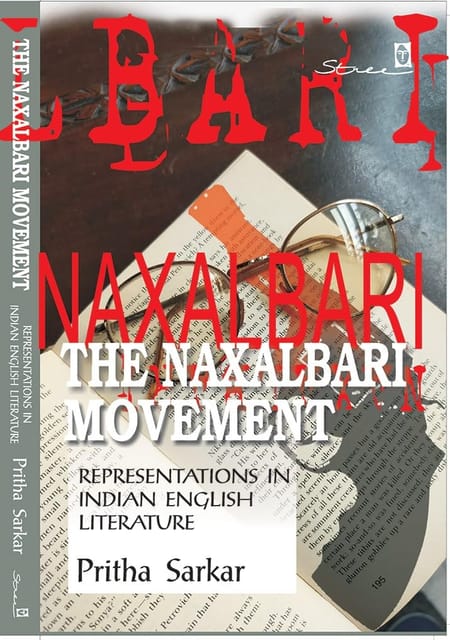
This book explores how one of post-independence India's most significant political movements has been imagined, interpreted, and remembered in Indian English literature. While the Naxalbari movement (1965 1975) has inspired extensive writing in regional languages, its literary representation in English has received little sustained scholarly attention. This book addresses that gap through an interdisciplinary approach that brings together literary criticism, history, and sociology. Pritha Sarkar examines the movement through four interrelated lenses class, gender, violence, and caste offering close readings of works by Asif Currimbhoy, Khwaja Ahmad Abbas, Jhumpa Lahiri, Neel Mukherjee, Dipitendra Raychaudhuri, and Abhijit Das. By placing middle-class participation at the centre while recovering the voices of peasants, women, Dalits, and other marginalised communities, the book reveals the complexities and contradictions that shaped both the movement and its literary afterlife. Combining rigorous scholarship with accessible prose, this pioneering study expands the field of Indian English literary studies and contributes to wider debates on social movements, memory, and cultural representation. It will be an essential resource for students, researchers, and readers interested in modern Indian literature, history, and politics.
Subscribe to get Email Updates!
Thanks for subscribing.
Your response has been recorded.
"We Believe In The Power of Books" Our mission is to make books accessible to everyone, and to cultivate a culture of reading and learning. We strive to provide a wide range of books, from classic literature, sci-fi and fantasy, to graphic novels, biographies and self-help books, so that everyone can find something to read.
Whether you’re looking for your next great read, a gift for someone special, or just browsing, Midland is here to make your book-buying experience easy and enjoyable.
(2).png)