‘I don’t know. It’s always been like this, son. Your father knew. But we got to survive, didn’t we? Can’t fight the whole village!’ she’d say…whenever Kalu asked her how she and Udho coped with [the] insults.
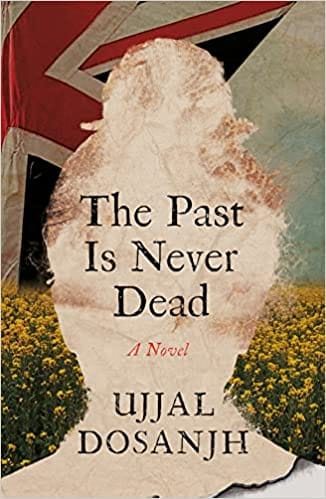
In the year 1952, Kalu escaped Banjhan Kalan in Punjab’s Hoshiarpur for Bedford in the British Midlands, hoping to find a life of dignity that he had been denied because of his caste. He was in his late teens and had grown up believing in Sikhism’s tenet of equality preached by Guru Nanak and Ravidas, a principle the villagers never sincerely practised. They had maimed his father, accusing him of stealing a zamindar’s ox; they had thrown father and son out of a Quit India rally; they had mercilessly thrashed young Kalu himself for daring to enter a temple. He had never been allowed to forget—even by his schoolmates—that he was a Chamar, destined to skin dead cattle like his ancestors.
England promised a new life of respect and opportunity. But Kalu’s fellow expatriates had brought caste along when they came to that country, and he would be forced to adhere to its degrading rules just as he was in Banjhan. Determined not to bend—as he had refused to do back home—Kalu fights back, but his resoluteness in the struggle will put him and his family at serious risk.
The Past Is Never Dead is not only the story of a rural Punjabi family’s search for a better life, it is also a powerful depiction of the stranglehold of caste over Sikh immigrants in Britain. But even as it exposes the horror and obstinacy of caste, the novel pays tribute to the courage and tenacity of the human spirit and its capacity for hope.
About the Author
Ujjal Dosanjh was born in the Jalandhar district of Punjab in 1946. He emigrated to the UK in 1964 and from there to Canada in 1968. He was Premier of British Columbia from 2000 to 2001 and a Liberal Party of Canada Member of Parliament from 2004 to 2011, including a period as Minister of Health and Minister Responsible for Multiculturalism, Human Rights and Immigration. In 2003 he was awarded the Pravasi Bharatiya Samman, the highest honour conferred by the Government of India on overseas Indians.








 +91 9818282497
(2).png)