Shop No.20, Aurobindo Palace Market, Hauz Khas, Near Church +91 9818282497 | 011 26867121 110016 New Delhi IN
Midland The Book Shop ™
Shop No.20, Aurobindo Palace Market, Hauz Khas, Near Church +91 9818282497 | 011 26867121 New Delhi, IN
+919871604786 https://www.midlandbookshop.com/s/607fe93d7eafcac1f2c73ea4/69591829db7aed90e0608dfb/without-tag-line-480x480.png" [email protected]
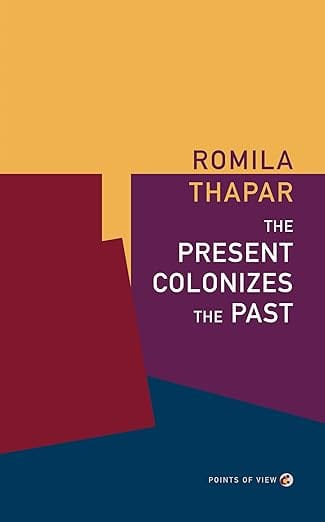
9781803096612 6974c3ea447c452139613193 The Present Colonizes The Past https://www.midlandbookshop.com/s/607fe93d7eafcac1f2c73ea4/6974c3eb447c45213961319b/51xnno70cll-_sy522_.jpg

How does the present reshape what a society chooses to remember as its past? Recent interpretations of India's history have replaced careful inquiry with narratives that mirror contemporary anxieties and ambitions, sidelining the evidence, debate and plurality that once characterized India’s long intellectual tradition. At stake is a shift from understanding history as a method to treating it as a tool of identity and authority. In The Present Colonizes the Past, Romila Thapar asks: How have cultural and religious identities evolved through interaction rather than isolation? How have dissent and accommodation shaped social change? How have education and public discourse influenced what is accepted as knowledge? And, most urgently, how might weakened institutions and selective pasts redefine our heritage and citizenship?
9781803096612
in stockINR 319
1 1
The Present Colonizes The Past

The Present Colonizes The Past

ISBN: 9781803096612
₹319
₹399   (20% OFF)


Details
  • ISBN: 9781803096612
  • Author: Romila Thapar
  • Publisher: Seagull Books
  • Pages: 96
  • Format: Paperback
SHARE PRODUCT

Book Description

How does the present reshape what a society chooses to remember as its past? Recent interpretations of India's history have replaced careful inquiry with narratives that mirror contemporary anxieties and ambitions, sidelining the evidence, debate and plurality that once characterized India’s long intellectual tradition. At stake is a shift from understanding history as a method to treating it as a tool of identity and authority. In The Present Colonizes the Past, Romila Thapar asks: How have cultural and religious identities evolved through interaction rather than isolation? How have dissent and accommodation shaped social change? How have education and public discourse influenced what is accepted as knowledge? And, most urgently, how might weakened institutions and selective pasts redefine our heritage and citizenship?
User reviews

  0/5