Shop No.20, Aurobindo Palace Market, Hauz Khas, Near Church +91 9818282497 | 011 26867121 110016 New Delhi IN
Midland The Book Shop ™
Shop No.20, Aurobindo Palace Market, Hauz Khas, Near Church +91 9818282497 | 011 26867121 New Delhi, IN
+919871604786 https://www.midlandbookshop.com/s/607fe93d7eafcac1f2c73ea4/69591829db7aed90e0608dfb/without-tag-line-480x480.png" [email protected]
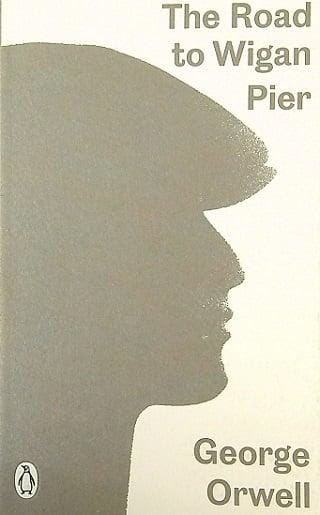
9780241605790 691c66b43529426bbb6630eb The Road To Wigan Pier https://www.midlandbookshop.com/s/607fe93d7eafcac1f2c73ea4/691c66b53529426bbb6630f3/image-url-httpspercent3apercent2fpercent2fimages-bookoutlet-compercent2fcoverspercent2flargepercent2fisbn978024percent2f9780241605790-l.jpg

Before he authored the dystopian 1984 and the allegorical Animal Farm, George Orwell was a journalist, reporting on England's working class — an investigation that led him to examine democratic socialism. In the 1930s, the Left Book Club, a socialist group in England, sent George Orwell to investigate the poverty and mass unemployment in the industrial north of England. Once there, he went beyond the requests of the book club, to investigate the employed as well. Orwell chose to live as the coal miners did — sleeping in foul lodgings, subsisting on a meager diet, struggling to feed a family on a dismal wage, and going down into the hellish, backbreaking mines. What Orwell saw clarified his feelings about socialism, and in The Road to Wigan Pier, he pointedly tells why socialism, the only remedy to the shocking conditions he had witnessed, repelled "so many normal decent people." "Orwell's code was a simple one, based on truth and 'deceny'; he was important — and original — because he insisted on applying that code to his own Socialist comrades as well as to the class enemy...It is the best sociological reporting I know."—The New Yorker


About the Author

Eric Arthur Blair (1903-1950), better known by his pen-name, George Orwell, was born in India, where his father worked for the Civil Service. An author and journalist, Orwell was one of the most prominent and influential figures in twentieth-century literature. His unique political allegory Animal Farm was published in 1945, and it was this novel, together with the dystopia of Nineteen Eighty-Four (1949), which brought him world-wide fame. His novels and non-fiction include Burmese Days, Down and Out in Paris and London, The Road to Wigan Pier and Homage to Catalonia.
9780241605790
in stockINR 559
1 1
The Road To Wigan Pier

The Road To Wigan Pier

ISBN: 9780241605790
₹559
₹699   (20% OFF)


Details
  • ISBN: 9780241605790
  • Author: George Orwell
  • Publisher: Penguin Books
  • Pages: 202
  • Format: Paperback
SHARE PRODUCT

Book Description

Before he authored the dystopian 1984 and the allegorical Animal Farm, George Orwell was a journalist, reporting on England's working class — an investigation that led him to examine democratic socialism. In the 1930s, the Left Book Club, a socialist group in England, sent George Orwell to investigate the poverty and mass unemployment in the industrial north of England. Once there, he went beyond the requests of the book club, to investigate the employed as well. Orwell chose to live as the coal miners did — sleeping in foul lodgings, subsisting on a meager diet, struggling to feed a family on a dismal wage, and going down into the hellish, backbreaking mines. What Orwell saw clarified his feelings about socialism, and in The Road to Wigan Pier, he pointedly tells why socialism, the only remedy to the shocking conditions he had witnessed, repelled "so many normal decent people." "Orwell's code was a simple one, based on truth and 'deceny'; he was important — and original — because he insisted on applying that code to his own Socialist comrades as well as to the class enemy...It is the best sociological reporting I know."—The New Yorker


About the Author

Eric Arthur Blair (1903-1950), better known by his pen-name, George Orwell, was born in India, where his father worked for the Civil Service. An author and journalist, Orwell was one of the most prominent and influential figures in twentieth-century literature. His unique political allegory Animal Farm was published in 1945, and it was this novel, together with the dystopia of Nineteen Eighty-Four (1949), which brought him world-wide fame. His novels and non-fiction include Burmese Days, Down and Out in Paris and London, The Road to Wigan Pier and Homage to Catalonia.

User reviews

  0/5