Shop No.20, Aurobindo Palace Market, Hauz Khas, Near Church +91 9818282497 | 011 26867121 110016 New Delhi IN
Midland The Book Shop ™
Shop No.20, Aurobindo Palace Market, Hauz Khas, Near Church +91 9818282497 | 011 26867121 New Delhi, IN
+919871604786 https://www.midlandbookshop.com/s/607fe93d7eafcac1f2c73ea4/69591829db7aed90e0608dfb/without-tag-line-480x480.png" [email protected]
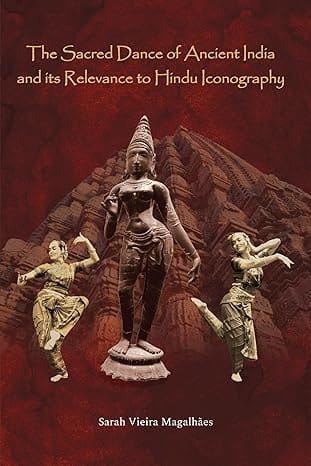
9788182905689 68d68024ec4525f96b87fe56 The Sacred Dance Of Ancient India And Its Relevance To Hindu Iconography https://www.midlandbookshop.com/s/607fe93d7eafcac1f2c73ea4/68d68025ec4525f96b87fe5e/81qljy7ck-l-_sy466_.jpg

This book offers a comprehensive analysis of Indian arts, with the tradition of dance as a central element which links several streams of artistic expressions. However, dance is not the exclusive subject, but rather a critical element within a more extensive investigation of Indian artistic heritage. While the initial chapters focus on the Na?yasastra and dance traditions, the study proceeds to explore the enduring signifi cance of the philosophical aspects of Indian arts in their entirety. The uniqueness of this book is its study of the kara?a-s, the primary dance movements described in the Na?yasastra, extending beyond a purely dance-related interpretation. Rather, the text off ers a philosophical perspective on the kara?a-s as instruments for self-knowledge, emphasizing their spiritual and yogic dimensions. It unveils their role in self-transformation, and their connection to the Agamic tradition and temple worship in South India. Through this vast study, the book reveals the infl uence of dance traditions on Indian sculptural art and its relevance to the gradual development of Hindu iconography.

9788182905689
in stock INR 2396
1 5

The Sacred Dance Of Ancient India And Its Relevance To Hindu Iconography

ISBN: 9788182905689
₹2,396
₹2,995   (20% OFF)


Details
  • ISBN: 9788182905689
  • Author: Sarah Vieira Magalhaes
  • Publisher: Shubhi Publications
  • Pages: 232
  • Format: Hardback
SHARE PRODUCT

Book Description

This book offers a comprehensive analysis of Indian arts, with the tradition of dance as a central element which links several streams of artistic expressions. However, dance is not the exclusive subject, but rather a critical element within a more extensive investigation of Indian artistic heritage. While the initial chapters focus on the Na?yasastra and dance traditions, the study proceeds to explore the enduring signifi cance of the philosophical aspects of Indian arts in their entirety. The uniqueness of this book is its study of the kara?a-s, the primary dance movements described in the Na?yasastra, extending beyond a purely dance-related interpretation. Rather, the text off ers a philosophical perspective on the kara?a-s as instruments for self-knowledge, emphasizing their spiritual and yogic dimensions. It unveils their role in self-transformation, and their connection to the Agamic tradition and temple worship in South India. Through this vast study, the book reveals the infl uence of dance traditions on Indian sculptural art and its relevance to the gradual development of Hindu iconography.

User reviews

  0/5

1 Review

userimage
The book delves into the origins of dance as ritualistic art in ancient and medieval India, with a particular focus on the karanas, the sculptured dance poses found in ancient temples, which are the fundamental units of dance movement and dramatic action. It investigates the influence of dance tradition, particularly the role of the karanas, on stimulating the development of Hindu iconography and the sculptural art, becoming thus, a medium for visually expressing the cultural and spiritual ethos of Hindu Tradition. Drawing upon a Perennialist perspective, the book aims to re-situate the karanas beyond the field of dance alone, while proposing a broader cultural and philosophical context. It seeks to answer questions about the purpose of the karanas in temple life and their connection to esoteric practices. By examining the karanas as a multifaceted phenomenon encompassing ritual, yoga, and artistic expression, the author seeks to illuminate their role in transmitting the spiritual ethos of Hinduism. Proposing a yogic perspective rooted in Lord Shiva's cosmic dance, the author analyzes the symbolism of the karanas that embody the creative and transformative forces of the universe, as expressions of the everlasting reviving force of Hindu tradition.
Sarah Magalhães
Mar 20, 2026 3:48:24 PM