Shop No.20, Aurobindo Palace Market, Hauz Khas, Near Church +91 9818282497 | 011 26867121 110016 New Delhi IN
Midland The Book Shop ™
Shop No.20, Aurobindo Palace Market, Hauz Khas, Near Church +91 9818282497 | 011 26867121 New Delhi, IN
+919871604786 https://www.midlandbookshop.com/s/607fe93d7eafcac1f2c73ea4/69591829db7aed90e0608dfb/without-tag-line-480x480.png" [email protected]
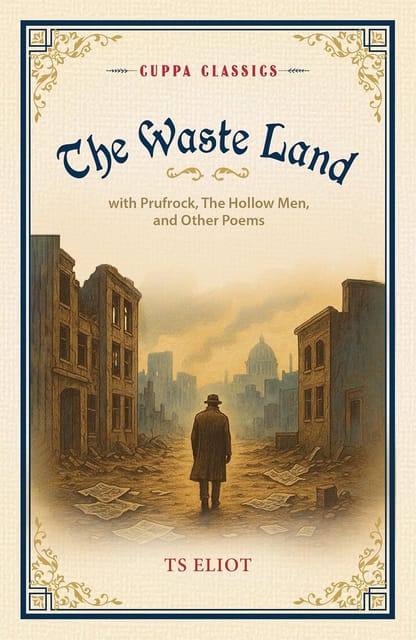
9789349042568 69a96b90e681f272d5a942f6 The Waste Land https://www.midlandbookshop.com/s/607fe93d7eafcac1f2c73ea4/69a96b93e681f272d5a94331/81c1jt3cjjl-_sl1500_.jpg

'He who was living is now dead We who were living are now dying With a little patience.'

This volume gathers the poems in which TS Eliot responds to a world losing its sense of direction. Across these pages, modern life feels rushed and unstable, marked by empty conversations, emotional distance, and restlessness. Traces of older beliefs and stories move through everyday scenes, threading faith, myth, and memory into modern streets and private lives. At the centre stands The Waste Land, a long poem built from broken voices and memory, where the damage of war and disbelief gathers into one stark landscape.

The collection closes on a vision stripped back and unresolved, where language itself begins to fail under what it must carry. Taken together, these poems offer no comfort or conclusion—only recognition: a record of a mind and a century trying to endure change.
9789349042568
in stockINR 120
1 1
The Waste Land

The Waste Land

ISBN: 9789349042568
₹120
₹150   (20% OFF)


Details
  • ISBN: 9789349042568
  • Author: T S Eliot
  • Publisher: The Browser
  • Pages: 64
  • Format: Paperback
SHARE PRODUCT

Book Description

'He who was living is now dead We who were living are now dying With a little patience.'

This volume gathers the poems in which TS Eliot responds to a world losing its sense of direction. Across these pages, modern life feels rushed and unstable, marked by empty conversations, emotional distance, and restlessness. Traces of older beliefs and stories move through everyday scenes, threading faith, myth, and memory into modern streets and private lives. At the centre stands The Waste Land, a long poem built from broken voices and memory, where the damage of war and disbelief gathers into one stark landscape.

The collection closes on a vision stripped back and unresolved, where language itself begins to fail under what it must carry. Taken together, these poems offer no comfort or conclusion—only recognition: a record of a mind and a century trying to endure change.
User reviews

  0/5