Shop No.20, Aurobindo Palace Market, Hauz Khas, Near Church +91 9818282497 | 011 26867121 110016 New Delhi IN
Midland The Book Shop ™
Shop No.20, Aurobindo Palace Market, Hauz Khas, Near Church +91 9818282497 | 011 26867121 New Delhi, IN
+919871604786 https://www.midlandbookshop.com/s/607fe93d7eafcac1f2c73ea4/69591829db7aed90e0608dfb/without-tag-line-480x480.png" [email protected]
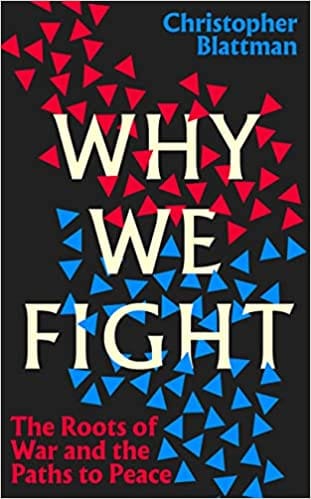
9780241444511 62750a35c7bdd4ab9577f191 Why We Fight The Roots Of War And The Paths To Peace https://www.midlandbookshop.com/s/607fe93d7eafcac1f2c73ea4/62750a37c7bdd4ab9577f1be/51yr9i7watl-_sx309_bo1-204-203-200_.jpg

An acclaimed expert on violence and seasoned peacebuilder explains the five reasons why conflict (rarely) blooms into war, and how to interrupt that deadly process.

It's easy to overlook the underlying strategic forces of war, to see it solely as a series of errors, accidents, and emotions gone awry. It's also easy to forget that war shouldn't happen-and most of the time it doesn't. Around the world there are millions of hostile rivalries, yet only a tiny fraction erupt into violence. Too many accounts of conflict forget this.

With a counterintuitive approach, Blattman reminds us that most rivals loathe one another in peace. That's because war is too costly to fight. Enemies almost always find it better to split the pie than spoil it or struggle over thin slices. So, in those rare instances when fighting ensues, we should ask: what kept rivals from compromise?

Why We Fight draws on decades of economics, political science, psychology, and real-world interventions to lay out the root causes and remedies for war, showing that violence is not the norm; that there are only five reasons why conflict wins over compromise; and how peacemakers turn the tides through tinkering, not transformation.

From warring states to street gangs, ethnic groups and religious sects to political factions, there are common dynamics to heed and lessons to learn. Along the way, we meet vainglorious European monarchs, African dictators, Indian mobs, Nazi pilots, British football hooligans, ancient Greeks, and fanatical Americans.

What of remedies that shift incentives away from violence and get parties back to deal-making? Societies are surprisingly good at interrupting and ending violence when they want to-even the gangs of Medellín, Columbia do it. Realistic and optimistic, this is book that lends new meaning to the old adage, "Give peace a chance."


Review

Wise, intriguing, imaginative -- Rory Stewart, author of The Places In Between

A great storyteller with important insights for us all -- Richard Thaler, co-author of Nudge

Nothing could be more relevant today than war and peace. Why We Fight by Christopher Blattman is an outstanding and original book on this topic. Blattman turns what most of us think about violence on its head. It is not frequent; it is rare. There are thousands of potential conflicts. But mostly they do not become violent, because fighting is costly and the outcome is unpredictable. It is far better to rub along together in mutual loathing than raise arms against one another -- Martin Wolf - Financial Times

Captivating and intelligent -- Tim Harford, author of The Undercover Economist

Avoiding the useless dichotomies that either claim violence is an inseparable part of human nature or declare that humanity has all but conquered its proclivity to war, Blattman explains how human communities make use of many different strategies to resolve conflicts, and why these efforts sometimes stumble -- Daron Acemoglu, co-author of Why Nations Fail

Essential for understanding the world we live in today -- James A. Robinson, co-author of Why Nations Fail

Brings together the passion of the activist and the cool head of the economist to offer practical solutions to one of humanity's most intractable problems -- Ian Morris, author of Why the West Rules – for Now

Timely, powerful, hopeful -- Paul Collier, author of The Bottom Billion

Important, readable, radical -- David Miliband, President and CEO, International Rescue Committee

About the Author

Christopher Blattman is the Ramalee E. Pearson Professor of Global Conflict Studies at the University of Chicago in the Harris School of Public Policy and The Pearson Institute. As a young man, he met his future wife in a Kenyan internet café, where she set him on a path to working on conflict and international development. He's now done so for 21 years. Through his academic work he has witnessed (and helped to stem) violence around the world. Blattman writes regularly for The New York TimesVoxForeign Policy and Foreign Affairs, among others. For 13 years he has run one of the most popular blogs on international affairs and global development, and is one of the 25 most followed economists on Twitter. This is his first trade book.

9780241444511
out of stock INR 639
1 1
Why We Fight The Roots Of War And The Paths To Peace

Why We Fight The Roots Of War And The Paths To Peace

ISBN: 9780241444511
₹639
₹799   (20% OFF)


Back In Stock Shortly - Fill The Book Request Form

Details
  • ISBN: 9780241444511
  • Author: Christopher Blattman
  • Publisher: Penguin Viking
  • Pages: 400
  • Format: Paperback
SHARE PRODUCT

Book Description

An acclaimed expert on violence and seasoned peacebuilder explains the five reasons why conflict (rarely) blooms into war, and how to interrupt that deadly process.

It's easy to overlook the underlying strategic forces of war, to see it solely as a series of errors, accidents, and emotions gone awry. It's also easy to forget that war shouldn't happen-and most of the time it doesn't. Around the world there are millions of hostile rivalries, yet only a tiny fraction erupt into violence. Too many accounts of conflict forget this.

With a counterintuitive approach, Blattman reminds us that most rivals loathe one another in peace. That's because war is too costly to fight. Enemies almost always find it better to split the pie than spoil it or struggle over thin slices. So, in those rare instances when fighting ensues, we should ask: what kept rivals from compromise?

Why We Fight draws on decades of economics, political science, psychology, and real-world interventions to lay out the root causes and remedies for war, showing that violence is not the norm; that there are only five reasons why conflict wins over compromise; and how peacemakers turn the tides through tinkering, not transformation.

From warring states to street gangs, ethnic groups and religious sects to political factions, there are common dynamics to heed and lessons to learn. Along the way, we meet vainglorious European monarchs, African dictators, Indian mobs, Nazi pilots, British football hooligans, ancient Greeks, and fanatical Americans.

What of remedies that shift incentives away from violence and get parties back to deal-making? Societies are surprisingly good at interrupting and ending violence when they want to-even the gangs of Medellín, Columbia do it. Realistic and optimistic, this is book that lends new meaning to the old adage, "Give peace a chance."


Review

Wise, intriguing, imaginative -- Rory Stewart, author of The Places In Between

A great storyteller with important insights for us all -- Richard Thaler, co-author of Nudge

Nothing could be more relevant today than war and peace. Why We Fight by Christopher Blattman is an outstanding and original book on this topic. Blattman turns what most of us think about violence on its head. It is not frequent; it is rare. There are thousands of potential conflicts. But mostly they do not become violent, because fighting is costly and the outcome is unpredictable. It is far better to rub along together in mutual loathing than raise arms against one another -- Martin Wolf - Financial Times

Captivating and intelligent -- Tim Harford, author of The Undercover Economist

Avoiding the useless dichotomies that either claim violence is an inseparable part of human nature or declare that humanity has all but conquered its proclivity to war, Blattman explains how human communities make use of many different strategies to resolve conflicts, and why these efforts sometimes stumble -- Daron Acemoglu, co-author of Why Nations Fail

Essential for understanding the world we live in today -- James A. Robinson, co-author of Why Nations Fail

Brings together the passion of the activist and the cool head of the economist to offer practical solutions to one of humanity's most intractable problems -- Ian Morris, author of Why the West Rules – for Now

Timely, powerful, hopeful -- Paul Collier, author of The Bottom Billion

Important, readable, radical -- David Miliband, President and CEO, International Rescue Committee

About the Author

Christopher Blattman is the Ramalee E. Pearson Professor of Global Conflict Studies at the University of Chicago in the Harris School of Public Policy and The Pearson Institute. As a young man, he met his future wife in a Kenyan internet café, where she set him on a path to working on conflict and international development. He's now done so for 21 years. Through his academic work he has witnessed (and helped to stem) violence around the world. Blattman writes regularly for The New York TimesVoxForeign Policy and Foreign Affairs, among others. For 13 years he has run one of the most popular blogs on international affairs and global development, and is one of the 25 most followed economists on Twitter. This is his first trade book.

User reviews

  0/5