Shop No.20, Aurobindo Palace Market, Hauz Khas, Near Church +91 9818282497 | 011 26867121 110016 New Delhi IN
Midland The Book Shop ™
Shop No.20, Aurobindo Palace Market, Hauz Khas, Near Church +91 9818282497 | 011 26867121 New Delhi, IN
+919871604786 https://www.midlandbookshop.com/s/607fe93d7eafcac1f2c73ea4/69591829db7aed90e0608dfb/without-tag-line-480x480.png" [email protected]
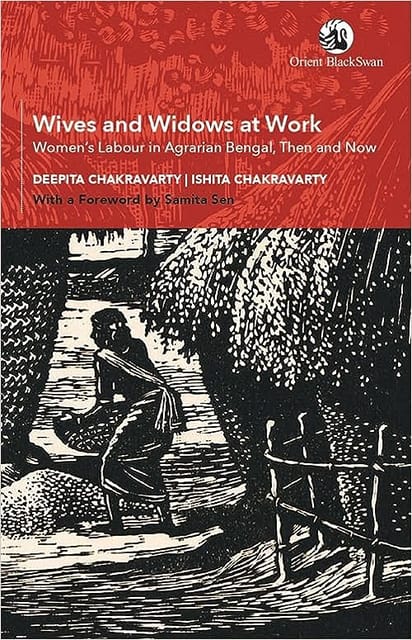
9789354424458 64e8a13a134d0c7efdd853eb Wives And Widows At Work Womens Labour In Agrarian Bengal, Then And Now https://www.midlandbookshop.com/s/607fe93d7eafcac1f2c73ea4/64e8a13b134d0c7efdd85428/61j1vacorvl-_sx498_bo1-204-203-200_.jpg
History seems to stand still in Bengal, a province which once played a pioneering role in the nineteenth-century social reform movement. For over a century now, in spite of the drastic politico-economic changes and social upheavals that Bengal has witnessed, important indicators of women’s well-being continue to display alarming trends in the region. Colonial censuses as well as recent data indicate low work participation rates of women, along with very high incidences of underage marriage and widowhood in agrarian Bengal—higher than most other parts of India. The study of marriage practices in India has hitherto been relegated to the realm of culture, whereas work is viewed as an economic issue and rarely studied in relation to marriage. Adopting a new approach, Wives and Widows at Work links these diverging critical concerns and explores the possible relationship between women’s productive labour in a rice-cultivating small-peasant economy like rural Bengal on the one hand, and women’s wifedom/widowhood on the other. Both historical and contemporary developments in the related issues of women’s work, marriage and widowhood are traced using an inter-regional comparative framework, which includes other major rice-cultivating states of India as well, such as Uttar Pradesh, Odisha, Tamil Nadu and former Andhra Pradesh, among others. The authors seek answers to key questions: Are cultural explanations sufficient to interpret the under-reporting of women’s work in general and in West Bengal in particular? Or are specific structural factors, such as the very nature of the agrarian economy, responsible for the varying patterns in household economics and women’s labour use in different regions of India? Scholars of development studies, gender studies and history, and government/non-governmental organisations working in the field of development and gender will find this volume enlightening.
 
9789354424458
out of stock INR 1032
1 1
Wives And Widows At Work Womens Labour In Agrarian Bengal, Then And Now

Wives And Widows At Work Womens Labour In Agrarian Bengal, Then And Now

ISBN: 9789354424458
₹1,032
₹1,290   (20% OFF)


Back In Stock Shortly - Fill The Book Request Form

Details
  • ISBN: 9789354424458
  • Author: Deepita Chakravarty
  • Publisher: Orient Black Swan
  • Pages: 288
  • Format: Paperback
SHARE PRODUCT

Book Description

History seems to stand still in Bengal, a province which once played a pioneering role in the nineteenth-century social reform movement. For over a century now, in spite of the drastic politico-economic changes and social upheavals that Bengal has witnessed, important indicators of women’s well-being continue to display alarming trends in the region. Colonial censuses as well as recent data indicate low work participation rates of women, along with very high incidences of underage marriage and widowhood in agrarian Bengal—higher than most other parts of India. The study of marriage practices in India has hitherto been relegated to the realm of culture, whereas work is viewed as an economic issue and rarely studied in relation to marriage. Adopting a new approach, Wives and Widows at Work links these diverging critical concerns and explores the possible relationship between women’s productive labour in a rice-cultivating small-peasant economy like rural Bengal on the one hand, and women’s wifedom/widowhood on the other. Both historical and contemporary developments in the related issues of women’s work, marriage and widowhood are traced using an inter-regional comparative framework, which includes other major rice-cultivating states of India as well, such as Uttar Pradesh, Odisha, Tamil Nadu and former Andhra Pradesh, among others. The authors seek answers to key questions: Are cultural explanations sufficient to interpret the under-reporting of women’s work in general and in West Bengal in particular? Or are specific structural factors, such as the very nature of the agrarian economy, responsible for the varying patterns in household economics and women’s labour use in different regions of India? Scholars of development studies, gender studies and history, and government/non-governmental organisations working in the field of development and gender will find this volume enlightening.
 

User reviews

  0/5