Shop No.20, Aurobindo Palace Market, Hauz Khas, Near Church +91 9818282497 | 011 26867121 110016 New Delhi IN
Midland The Book Shop ™
Shop No.20, Aurobindo Palace Market, Hauz Khas, Near Church +91 9818282497 | 011 26867121 New Delhi, IN
+919871604786 https://www.midlandbookshop.com/s/607fe93d7eafcac1f2c73ea4/69591829db7aed90e0608dfb/without-tag-line-480x480.png" [email protected]
9789363364486 6a27fa029d5d48be9481ed79 A Matter of Life and Death https://www.midlandbookshop.com/s/607fe93d7eafcac1f2c73ea4/6a27f9269d22db745f532f9a/a-matter-of-life-and-death.jpg

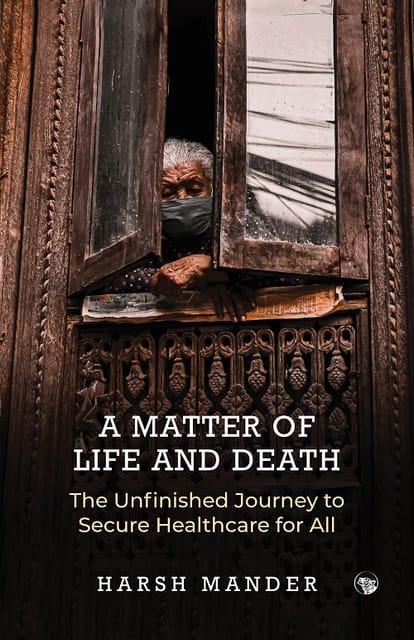
In this book—easily among the most important for India and the world today—the acclaimed social and human rights activist Harsh Mander shows us how active neglect and deliberate anti-poor policies have denied adequate healthcare to over half the world’s population. As he writes, ‘Approximately 4.5 billion people lack full access to essential health services. Two billion face financial hardship Approximately 4.8 million children under 5 died in 2023, mostly from preventable causes. These include neonatal complications, pneumonia, diarrhoea, malaria and malnutrition-related illness. Around 50% of these deaths were preventable with existing low-cost interventions.’

The problem, Mander points out, is not just the absence of healthcare services. A total of 1.4 million people die annually from unsafe water, inadequate sanitation and hygiene, and air pollution. The problem is most acute in developing economies—in India, for instance, over 2 million people die every year because of malnutrition and morbidity. In today’s world, with its scientific wherewithal and financial resources, almost all these deaths are preventable. The reason they are not, is deep and structured inequality, at the base of which are neo-liberal and discriminatory politics; capture of the world’s resources by big capital; rampant privatization; and the retreat of the upper and middle classes from the larger society in pursuit of affluence.

Having shown us the magnitude of the failure of both policy and conscience, Mander argues for the right to health as a fundamental human right. Universal basic healthcare, he insists, is achievable, and shows not only how it can be enforced legally, but also how it can be funded.

About The Author

Harsh Mander is an Indian author, columnist, researcher, teacher, and social activist known for his work on social justice, human rights, and the welfare of marginalized communities. A former officer of the Indian Administrative Service (IAS), he served for nearly two decades in Madhya Pradesh and Chhattisgarh before leaving the civil service in 2002. He is the founder of the Centre for Equity Studies and the Karwan-e-Mohabbat campaign, which promotes solidarity with victims of communal violence and hate crimes. Mander has worked extensively on issues related to hunger, homelessness, child rights, caste discrimination, and social inclusion. He has also served as a Special Commissioner to the Supreme Court of India in the Right to Food case and as a member of the National Advisory Council. A prolific writer, he has authored numerous books and articles that explore inequality, democracy, communal harmony, and the rights and dignity of disadvantaged people in India.
9789363364486
in stock INR 479
1 1

A Matter of Life and Death

ISBN: 9789363364486
₹479
₹599   (20% OFF)


Details
  • ISBN: 9789363364486
  • Author: Harsh Mander
  • Format: Paperback
  • Publisher: Speaking Tiger
SHARE PRODUCT

Book Description

In this book—easily among the most important for India and the world today—the acclaimed social and human rights activist Harsh Mander shows us how active neglect and deliberate anti-poor policies have denied adequate healthcare to over half the world’s population. As he writes, ‘Approximately 4.5 billion people lack full access to essential health services. Two billion face financial hardship Approximately 4.8 million children under 5 died in 2023, mostly from preventable causes. These include neonatal complications, pneumonia, diarrhoea, malaria and malnutrition-related illness. Around 50% of these deaths were preventable with existing low-cost interventions.’

The problem, Mander points out, is not just the absence of healthcare services. A total of 1.4 million people die annually from unsafe water, inadequate sanitation and hygiene, and air pollution. The problem is most acute in developing economies—in India, for instance, over 2 million people die every year because of malnutrition and morbidity. In today’s world, with its scientific wherewithal and financial resources, almost all these deaths are preventable. The reason they are not, is deep and structured inequality, at the base of which are neo-liberal and discriminatory politics; capture of the world’s resources by big capital; rampant privatization; and the retreat of the upper and middle classes from the larger society in pursuit of affluence.

Having shown us the magnitude of the failure of both policy and conscience, Mander argues for the right to health as a fundamental human right. Universal basic healthcare, he insists, is achievable, and shows not only how it can be enforced legally, but also how it can be funded.

About The Author

Harsh Mander is an Indian author, columnist, researcher, teacher, and social activist known for his work on social justice, human rights, and the welfare of marginalized communities. A former officer of the Indian Administrative Service (IAS), he served for nearly two decades in Madhya Pradesh and Chhattisgarh before leaving the civil service in 2002. He is the founder of the Centre for Equity Studies and the Karwan-e-Mohabbat campaign, which promotes solidarity with victims of communal violence and hate crimes. Mander has worked extensively on issues related to hunger, homelessness, child rights, caste discrimination, and social inclusion. He has also served as a Special Commissioner to the Supreme Court of India in the Right to Food case and as a member of the National Advisory Council. A prolific writer, he has authored numerous books and articles that explore inequality, democracy, communal harmony, and the rights and dignity of disadvantaged people in India.

User reviews

  0/5