WELCOME TO MIDLAND BOOK SHOP!
SHOP FOR
-
Non-ficton
- Non-ficton
-
Contemporary Fiction
- Contemporary Fiction
-
Children
- Children
-
Comics & Graphic Novels
- Comics & Graphic Novels
-
Non-Fiction
- Non-Fiction
-
Fiction
- Fiction

Shop No.20, Aurobindo Palace Market, Hauz Khas, Near Church +91 9818282497 | 011 26867121
110016
New Delhi
IN
Midland The Book Shop ™
Shop No.20, Aurobindo Palace Market, Hauz Khas, Near Church +91 9818282497 | 011 26867121
New Delhi,
IN
+919871604786
https://www.midlandbookshop.com/s/607fe93d7eafcac1f2c73ea4/69591829db7aed90e0608dfb/without-tag-line-480x480.png"
[email protected]
9788194717560
60f0279c66c56f20e47203be
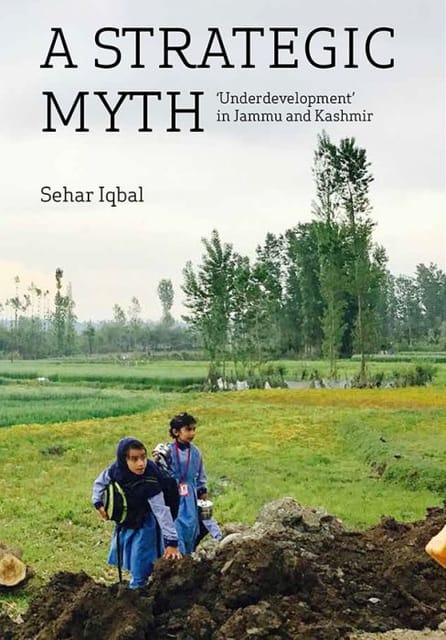
A Strategic Myth Underdevelopment in Jammu and Kashmir
https://www.midlandbookshop.com/s/607fe93d7eafcac1f2c73ea4/60f027aa96ff0b204c169745/a_strategic_myth_-_front_cover.jpeg
9788194717560
Despite being in the news near-constantly, Jammu and Kashmir has been woefully misrepresented – whether by liberal politicians in India who have portrayed the erstwhile state as a dangerous frontier state in need of a strong security response, or by right-wing politicians who have been spinning a narrative about the land being plagued by underdevelopment. The first of these stems from a top–down version of security that gives precedence to the promotion of state security at the expense of human security. The second comes from a redefining of corporate interests as development concerns, which has become ubiquitous. Both are wrong-headed. This study challenges commonly held misconceptions about the region and brings to light its achievements during the state-led developmental process of Jammu and Kashmir from 1948 to 1988, thus bridging a gap in scholarship concerning this process and the relationship between the political history and social development of the region. Contextualizing development in Jammu and Kashmir since 1947 when it became free from princely rule, the study augments the macroeconomic view with village studies documenting the human experience of policy changes. It puts forward a composite picture of development, directly challenging the politically motivated, false narrative of underdevelopment. The book also sheds further light on the adverse effects of the crackdown since 5 August 2019 on civil liberties and the internet, on the economy, and on education and health. With the Covid-19-induced lockdown adding to these obstructions, it is clear that direct rule by the central government is no panacea for development in Jammu and Kashmir. Instead, it is a blatant assault on the gains in economic and social development Jammu and Kashmir has achieved so far.
SEHAR IQBAL
SEHAR IQBAL is an independent researcher working at the intersection between research and grassroot development work in Jammu and Kashmir. She completed her PhD in Development Economics in 2018 under the supervision of Professor Jean Drèze. Her doctoral research was on Human Development Indicators in Jammu and Kashmir. For her work on reducing infant deaths in the Kashmir valley she received the Women’s Scholarship at the University of Oxford, where she is currently researching solutions for delivering quality education to children of nomadic communities in Jammu and Kashmir. She is a founding Fellow of the India Pakistan Regional Young Leaders Initiative (IPRYLI) administered by the Asia Society, Rockefeller Foundation – a programme that encourages youth in the two countries to work together on public service delivery projects. Sehar Iqbal is the mother of two sons and lives in Budgam, Kashmir.
in stock
INR
476
1
1
Email ID already exists!
Your Current password is incorrect
Password Updated Successfully
Thanks for your Feedback
- Home
- A Strategic Myth Underdevelopment in Jammu and Kashmir
A Strategic Myth Underdevelopment in Jammu and Kashmir
ISBN:
9788194717560
₹476
₹595
(20% OFF)
SIZE GUIDE
Sold By:
Hauz Khas - Aurobindo Market
Details
- ISBN 9788194717560
- No. of Pages 200
- Format Hardback
- Publisher Tulika Books
Book Description
Despite being in the news near-constantly, Jammu and Kashmir has been woefully misrepresented – whether by liberal politicians in India who have portrayed the erstwhile state as a dangerous frontier state in need of a strong security response, or by right-wing politicians who have been spinning a narrative about the land being plagued by underdevelopment. The first of these stems from a top–down version of security that gives precedence to the promotion of state security at the expense of human security. The second comes from a redefining of corporate interests as development concerns, which has become ubiquitous. Both are wrong-headed. This study challenges commonly held misconceptions about the region and brings to light its achievements during the state-led developmental process of Jammu and Kashmir from 1948 to 1988, thus bridging a gap in scholarship concerning this process and the relationship between the political history and social development of the region. Contextualizing development in Jammu and Kashmir since 1947 when it became free from princely rule, the study augments the macroeconomic view with village studies documenting the human experience of policy changes. It puts forward a composite picture of development, directly challenging the politically motivated, false narrative of underdevelopment. The book also sheds further light on the adverse effects of the crackdown since 5 August 2019 on civil liberties and the internet, on the economy, and on education and health. With the Covid-19-induced lockdown adding to these obstructions, it is clear that direct rule by the central government is no panacea for development in Jammu and Kashmir. Instead, it is a blatant assault on the gains in economic and social development Jammu and Kashmir has achieved so far.
SEHAR IQBAL
SEHAR IQBAL is an independent researcher working at the intersection between research and grassroot development work in Jammu and Kashmir. She completed her PhD in Development Economics in 2018 under the supervision of Professor Jean Drèze. Her doctoral research was on Human Development Indicators in Jammu and Kashmir. For her work on reducing infant deaths in the Kashmir valley she received the Women’s Scholarship at the University of Oxford, where she is currently researching solutions for delivering quality education to children of nomadic communities in Jammu and Kashmir. She is a founding Fellow of the India Pakistan Regional Young Leaders Initiative (IPRYLI) administered by the Asia Society, Rockefeller Foundation – a programme that encourages youth in the two countries to work together on public service delivery projects. Sehar Iqbal is the mother of two sons and lives in Budgam, Kashmir.
User reviews
NEWSLETTER
Subscribe to get Email Updates!
Thanks for subscribing.
Your response has been recorded.

India's Iconic & Independent Book Store offering a vast selection of books across a variety of genres Since 1978.
"We Believe In The Power of Books" Our mission is to make books accessible to everyone, and to cultivate a culture of reading and learning. We strive to provide a wide range of books, from classic literature, sci-fi and fantasy, to graphic novels, biographies and self-help books, so that everyone can find something to read.
Whether you’re looking for your next great read, a gift for someone special, or just browsing, Midland is here to make your book-buying experience easy and enjoyable.
We are shipping pan India and across the world.
For Bulk Order / Corporate Gifting
 +91 9818282497 |
  [email protected]
Click To Know More
(2).png)

INFORMATION
POLICIES
ACCOUNT
QUICK LINKS
ADDRESS
Midland Book Shop - Hauz Khas
Shop No.20, Aurobindo Palace Market, Near Church, New Delhi
Shop No.20, Aurobindo Palace Market, Near Church, New Delhi