Shop No.20, Aurobindo Palace Market, Hauz Khas, Near Church +91 9818282497 | 011 26867121 110016 New Delhi IN
Midland The Book Shop ™
Shop No.20, Aurobindo Palace Market, Hauz Khas, Near Church +91 9818282497 | 011 26867121 New Delhi, IN
+919871604786 https://www.midlandbookshop.com/s/607fe93d7eafcac1f2c73ea4/69591829db7aed90e0608dfb/without-tag-line-480x480.png" [email protected]
9781787305724 6a9289c107562ad6b5ee1491 Abandoning a Cat https://www.midlandbookshop.com/s/607fe93d7eafcac1f2c73ea4/6a928918161b96e05cb65adb/91aadkjasll-_sl1500_.jpg
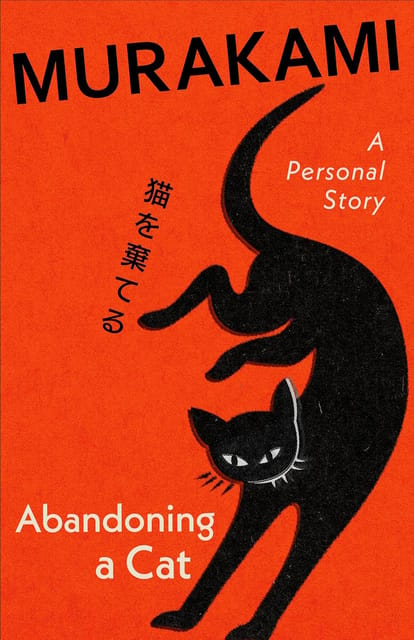
A moving reflection on the author's father - plus a cat! - this is a beautiful short work of family history from one of our most beloved, iconic writers. Originally published in the New Yorker in 2019, and now presented in a full, unabridged form, Abandoning a Cat is a poignant, self-reflective work by Haruki Murakami. Here he writes about his father, the son of a priest who might have become a priest himself had a clerical error not sent him into the second world war. Murakami's father wrote accomplished haiku and eventually became a teacher. As Haruki grew older and became an adult and then a writer, he and his father found they had little in common. They were later estranged for twenty years, only reconciling on his father's deathbed. This haunting personal essay is a reflection on what it means to be a father and what it means to be a son - on what it means to be loved and to be abandoned - and also on a particular moment of Japanese history, through the aftermath of the second world war on into the present. Murakami fans may find common themes from beloved novels such as Kafka on the Shore and The Wind-Up Bird Chronicle - but will also be surprised by the raw honesty of this beautiful autobiographical piece. 'Haunting' New York Times

About the Author

In 1978, Haruki Murakami was twenty-nine and running a jazz bar in downtown Tokyo. One April day, the impulse to write a novel came to him suddenly while watching a baseball game. That first novel, Hear the Wind Sing, won a new writers' award and was published the following year. More followed, including A Wild Sheep Chase and Hard-Boiled Wonderland and the End of the World, but it was Norwegian Wood, published in 1987, that turned Murakami from a writer into a phenomenon.

In works such as The Wind-Up Bird Chronicle1Q84, What I Talk About When I Talk About RunningFirst Person Singular and The City and Its Uncertain Walls Murakami's distinctive blend of the mysterious and the everyday, of melancholy and humour, continues to enchant readers, ensuring his place as one of the world's most acclaimed and well-loved writers.


Philip Gabriel has translated many novels and short stories by Haruki Murakami and other modern Japanese writers. He is a recipient of the Japan-U.S. Friendship Commission Prize for the Translation of Japanese Literature, and the 2006 PEN/Book-of-the-Month Club Translation Prize for his translation of Kafka on the Shore. Other acclaimed translations by Philip Gabriel include Lonely Castle in the Mirror and The Travelling Cat Chronicles

9781787305724
in stock INR 719
1 1

Abandoning a Cat

ISBN: 9781787305724
₹719
₹899   (20% OFF)


Details
  • ISBN: 9781787305724
  • Author: Haruki Murakami
  • Format: Hardcover
  • Publisher: Harvill
  • Publication Date: 20 October 2026
SHARE PRODUCT

Book Description

A moving reflection on the author's father - plus a cat! - this is a beautiful short work of family history from one of our most beloved, iconic writers. Originally published in the New Yorker in 2019, and now presented in a full, unabridged form, Abandoning a Cat is a poignant, self-reflective work by Haruki Murakami. Here he writes about his father, the son of a priest who might have become a priest himself had a clerical error not sent him into the second world war. Murakami's father wrote accomplished haiku and eventually became a teacher. As Haruki grew older and became an adult and then a writer, he and his father found they had little in common. They were later estranged for twenty years, only reconciling on his father's deathbed. This haunting personal essay is a reflection on what it means to be a father and what it means to be a son - on what it means to be loved and to be abandoned - and also on a particular moment of Japanese history, through the aftermath of the second world war on into the present. Murakami fans may find common themes from beloved novels such as Kafka on the Shore and The Wind-Up Bird Chronicle - but will also be surprised by the raw honesty of this beautiful autobiographical piece. 'Haunting' New York Times

About the Author

In 1978, Haruki Murakami was twenty-nine and running a jazz bar in downtown Tokyo. One April day, the impulse to write a novel came to him suddenly while watching a baseball game. That first novel, Hear the Wind Sing, won a new writers' award and was published the following year. More followed, including A Wild Sheep Chase and Hard-Boiled Wonderland and the End of the World, but it was Norwegian Wood, published in 1987, that turned Murakami from a writer into a phenomenon.

In works such as The Wind-Up Bird Chronicle1Q84, What I Talk About When I Talk About RunningFirst Person Singular and The City and Its Uncertain Walls Murakami's distinctive blend of the mysterious and the everyday, of melancholy and humour, continues to enchant readers, ensuring his place as one of the world's most acclaimed and well-loved writers.


Philip Gabriel has translated many novels and short stories by Haruki Murakami and other modern Japanese writers. He is a recipient of the Japan-U.S. Friendship Commission Prize for the Translation of Japanese Literature, and the 2006 PEN/Book-of-the-Month Club Translation Prize for his translation of Kafka on the Shore. Other acclaimed translations by Philip Gabriel include Lonely Castle in the Mirror and The Travelling Cat Chronicles
User reviews

  0/5