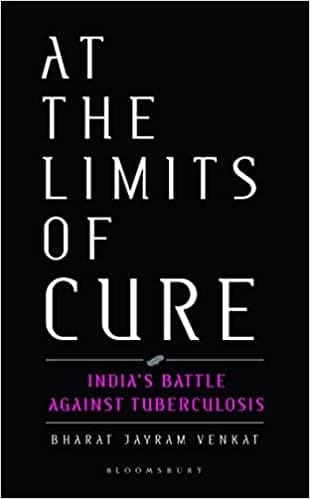
Can a history of cure be more than a history of how disease comes to an end? In 1950s Madras, an international team of researchers demonstrated that antibiotics were effective in treating tuberculosis. But just half a century later, reports out of Mumbai stoked fears about the spread of totally drug-resistant strains of the disease. Had the curable become incurable? Through an anthropological history of tuberculosis treatment in India, Bharat Jayram Venkat examines what it means to be cured, and what it means for a cure to come undone.
At the Limits of Cure tells a story that stretches from the colonial period-a time of sanatoria, travel cures, and gold therapy-into a postcolonial present marked by antibiotic miracles and their failures. Venkat juxtaposes the unraveling of cure across a variety of sites: in idyllic hill stations and crowded prisons, aboard ships and on the battlefield, and through research trials and clinical encounters. If cure is frequently taken as an ending (of illness, treatment, and suffering more generally), Venkat provides a foundation for imagining cure otherwise in a world of fading antibiotic efficacy.
Review
How does one narrate a story of endings? At the Limits of Cure chronicles the fantasies of ending tuberculosis and the end of disease itself. Tying evocative histories of science to nuanced ethnography, Bharat Jayram Venkat reveals the attachments to curative reason that bind the clinic, the nation, and the globe. This electric and stunningly original book is infused with curiosity. - Harris Solomon, author of Metabolic Living: Food, Fat, and the Absorption of Illness in India
At the Limits of Cure is a work of art. Its medium includes historical and biographical narrative, medical journals, mythology, film, literature, and the keenest of ethnography. Thinking cure this carefully?not as an object, but as a desire and praxis?proves to be both a magical and a melancholic endeavor, riven with failures, false starts, and incurable imagination. Readers, specialists, and dreamers in cultural and medical anthropology, South Asian studies, and science and technology studies will love this highly original book. - Naisargi N. Dave, author of Queer Activism in India: A Story in the Anthropology of Ethics
This superbly written book weaves together a remarkable tale of tuberculosis in India. It is at once a transnational history of medical science and technology, an ethnohistory of the experience of disease, an ethnography of medicine, a history of India through the lens of public health, and, at its core, a compelling discussion of the complex, cultural discourse on the concept of 'cure,' not only in the history of medicine, but in the desires of doctors and governments, the self-understanding of patients, and even in Hindu mythology. - Joseph W. Elder Prize Committee
Book Description
Examines what it means to be cured and what it means for a cure to come undone.
About the Author
Dr. Bharat Jayram Venkat is an assistant professor at UCLA's Institute for Society & Genetics with a joint appointment in the Department of History. He is also affiliated with the UCLA Center for India & South Asia, the Program in Digital Humanities, and the Urban Humanities Initiative. His research focuses broadly on questions related to science & medicine, ethics, race, environment, and design.













 +91 9818282497
(2).png)