
Shop No.20, Aurobindo Palace Market, Hauz Khas, Near Church +91 9818282497 | 011 26867121 110016 New Delhi IN
Midland The Book Shop ™
Shop No.20, Aurobindo Palace Market, Hauz Khas, Near Church +91 9818282497 | 011 26867121 New Delhi, IN
+919871604786 https://www.midlandbookshop.com/s/607fe93d7eafcac1f2c73ea4/69453da445ba84d539b38f9a/black-yellow-simple-bold-youtube-channel-logo-400-x-100-px-1--480x480.png" [email protected]
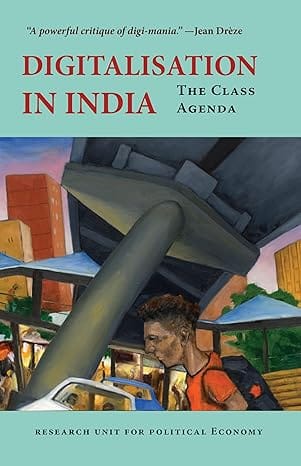
9789383968480 6945436c5b542ec63baa600a Digitalisation In India The Class Agenda By Research Unit For Political Economy https://www.midlandbookshop.com/s/607fe93d7eafcac1f2c73ea4/6945436d5b542ec63baa6012/71dorhuubxl-_sy466_.jpg

Bill Gates, Nandan Nilekani, the IMF, the World Bank, and the World Economic Forum are all agreed: India’s digitalisation process is transformational. Digitalisation saves the Indian government money, ensures the poor get their payments, enables healthcare, spreads education, empowers the once-excluded, raises productivity and turbo-charges consumption. Indeed it sets a blueprint for other countries to follow. The authors of this collection of essays eschew such magical thinking and look at the actual process of digitalisation in India: its effects on growth, employment, welfare, healthcare, education, urban planning, financial services and agriculture. They find that, while digitalisation fails on its promises of delivering greater prosperity, well-being, and inclusion, it succeeds abundantly in tightening the grip of corporations over various sectors of the economy, and the grip of global tech giants over India.


9789383968480
in stock INR 600
1 1

Digitalisation In India The Class Agenda By Research Unit For Political Economy

ISBN: 9789383968480
₹600
₹750   (20% OFF)


Details
  • ISBN: 9789383968480
  • Author: Jean Dreze
  • Publisher: Three Essays Collective
  • Pages: 320
  • Format: Paperback
SHARE PRODUCT

Book Description

Bill Gates, Nandan Nilekani, the IMF, the World Bank, and the World Economic Forum are all agreed: India’s digitalisation process is transformational. Digitalisation saves the Indian government money, ensures the poor get their payments, enables healthcare, spreads education, empowers the once-excluded, raises productivity and turbo-charges consumption. Indeed it sets a blueprint for other countries to follow. The authors of this collection of essays eschew such magical thinking and look at the actual process of digitalisation in India: its effects on growth, employment, welfare, healthcare, education, urban planning, financial services and agriculture. They find that, while digitalisation fails on its promises of delivering greater prosperity, well-being, and inclusion, it succeeds abundantly in tightening the grip of corporations over various sectors of the economy, and the grip of global tech giants over India.


User reviews

  0/5