Shop No.20, Aurobindo Palace Market, Hauz Khas, Near Church +91 9818282497 | 011 26867121 110016 New Delhi IN
Midland The Book Shop ™
Shop No.20, Aurobindo Palace Market, Hauz Khas, Near Church +91 9818282497 | 011 26867121 New Delhi, IN
+919871604786 https://www.midlandbookshop.com/s/607fe93d7eafcac1f2c73ea4/677cda367903fd013d69b606/without-tag-line-480x480.png" [email protected]
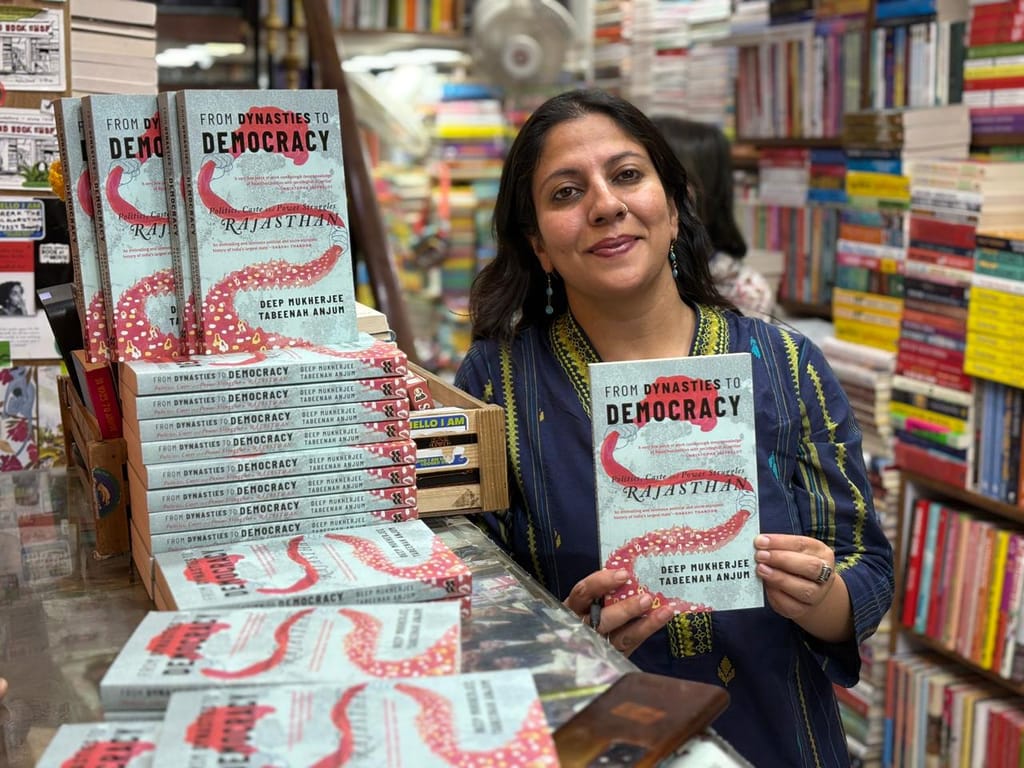
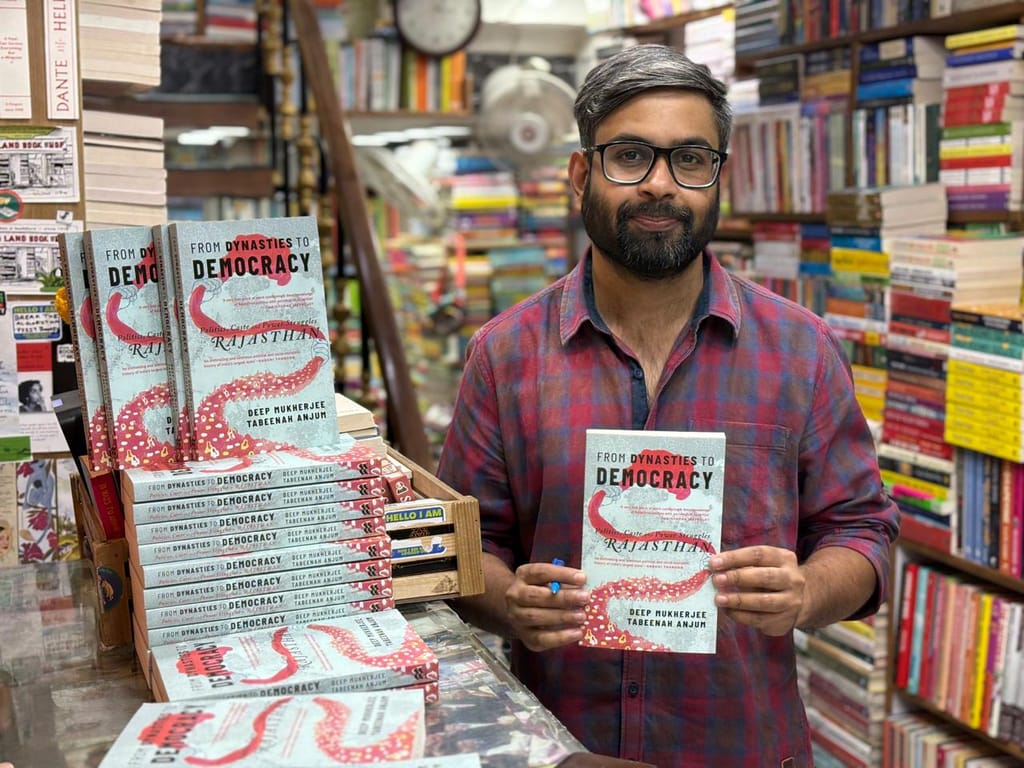
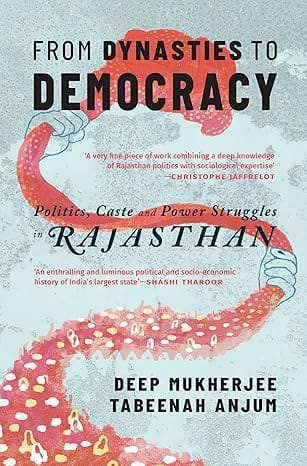
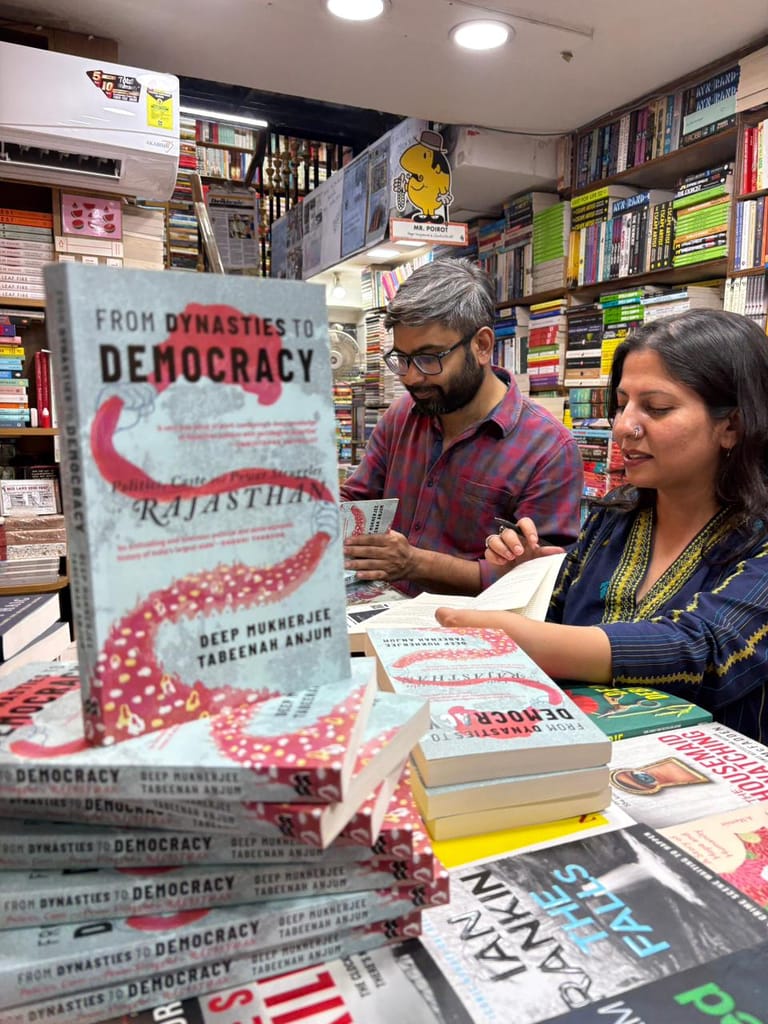
9789361135842 69317ef1d5c9d59384567f0e From Dynasties To Democracy https://www.midlandbookshop.com/s/607fe93d7eafcac1f2c73ea4/69317ef1d5c9d59384567f16/91lpoop8avl-_sy466_.jpg

A compelling unveiling of the transformation of Rajasthan from a feudal society into a vibrant democracy

Rajasthan, India’s largest state, is often imagined as a land of sweeping deserts, majestic forts and colourful traditions. Yet, beneath this picturesque surface lies a complex reality shaped by centuries-old feudal systems, deep-seated social divisions, the lingering influence of royal families and a volatile political landscape.

In this insightful narrative, journalists Tabeenah Anjum and Deep Mukherjee offer a comprehensive look at Rajasthan’s political evolution from a feudal state ruled by kings and jagirdars to a dynamic electoral democracy. They delve beyond common perceptions to chart Rajasthan’s political journey from its formation in 1949 to the 2024 Lok Sabha elections and beyond. They meticulously examine crucial historical moments – the rise of kisan sabhas and praja mandals, caste violence and Dalit agitations, Adivasi self-assertion and episodes of unrest, riots and lynchings. Extensive firsthand reporting and rigorous archival research illuminate the power struggles between the BJP and the Congress, the pervasive influence of the RSS, persistent infighting within political parties and the formidable challenges faced by prominent leaders like Bhairon Singh Shekhawat, Baldev Ram Mirdha, Ashok Gehlot, Sachin Pilot, Vasundhara Raje and others.

Scholarly and lucid, this account fills a crucial gap in our understanding of Rajasthan’s political history.


Review

‘A very fine piece of work combining a deep knowledge of Rajasthan politics with sociological expertise’ Christophe Jaffrelot

‘An enthralling and luminous political and socio-economic history of India’s largest state’ Shashi Tharoor

‘A riveting account of a complex state’ Rajdeep Sardesai

'Insightful, nuanced and in-depth’ Namita Gokhale

‘Engaging and essential ... (with) rare insights’ Sankarshan Thakur

About the Author

Deep Mukherjee is a senior journalist, presently associated with The Wire as an assistant editor. He has long served as the Rajasthan correspondent for The Indian Express and has also worked with Hindustan Times and DNA. He covers issues of national importance, pertaining primarily to politics, human rights, gender, atrocities against marginalized communities, impact of government policies and schemes, labour and farmer suicides. A UNICEF Development Journalism Fellowship awardee, Deep has highlighted the plight of child labourers working in the lac bangle industry in Jaipur and stone quarries of Rajasthan through his investigative reportage. He constantly strives to illuminate those perspectives that usually remain confined to the periphery or get lost in the din of the mainstream, especial

9789361135842
in stockINR 479
1 1
From Dynasties To Democracy

From Dynasties To Democracy

ISBN: 9789361135842
₹479
₹599   (20% OFF)


Details
  • ISBN: 9789361135842
  • Author: Deep Mukherjee Tabeenah Anjum
  • Publisher: Pan Macmillan
  • Pages: 277
  • Format: Paperback
SHARE PRODUCT

Book Description

A compelling unveiling of the transformation of Rajasthan from a feudal society into a vibrant democracy

Rajasthan, India’s largest state, is often imagined as a land of sweeping deserts, majestic forts and colourful traditions. Yet, beneath this picturesque surface lies a complex reality shaped by centuries-old feudal systems, deep-seated social divisions, the lingering influence of royal families and a volatile political landscape.

In this insightful narrative, journalists Tabeenah Anjum and Deep Mukherjee offer a comprehensive look at Rajasthan’s political evolution from a feudal state ruled by kings and jagirdars to a dynamic electoral democracy. They delve beyond common perceptions to chart Rajasthan’s political journey from its formation in 1949 to the 2024 Lok Sabha elections and beyond. They meticulously examine crucial historical moments – the rise of kisan sabhas and praja mandals, caste violence and Dalit agitations, Adivasi self-assertion and episodes of unrest, riots and lynchings. Extensive firsthand reporting and rigorous archival research illuminate the power struggles between the BJP and the Congress, the pervasive influence of the RSS, persistent infighting within political parties and the formidable challenges faced by prominent leaders like Bhairon Singh Shekhawat, Baldev Ram Mirdha, Ashok Gehlot, Sachin Pilot, Vasundhara Raje and others.

Scholarly and lucid, this account fills a crucial gap in our understanding of Rajasthan’s political history.


Review

‘A very fine piece of work combining a deep knowledge of Rajasthan politics with sociological expertise’ Christophe Jaffrelot

‘An enthralling and luminous political and socio-economic history of India’s largest state’ Shashi Tharoor

‘A riveting account of a complex state’ Rajdeep Sardesai

'Insightful, nuanced and in-depth’ Namita Gokhale

‘Engaging and essential ... (with) rare insights’ Sankarshan Thakur

About the Author

Deep Mukherjee is a senior journalist, presently associated with The Wire as an assistant editor. He has long served as the Rajasthan correspondent for The Indian Express and has also worked with Hindustan Times and DNA. He covers issues of national importance, pertaining primarily to politics, human rights, gender, atrocities against marginalized communities, impact of government policies and schemes, labour and farmer suicides. A UNICEF Development Journalism Fellowship awardee, Deep has highlighted the plight of child labourers working in the lac bangle industry in Jaipur and stone quarries of Rajasthan through his investigative reportage. He constantly strives to illuminate those perspectives that usually remain confined to the periphery or get lost in the din of the mainstream, especial
User reviews

  0/5