Shop No.20, Aurobindo Palace Market, Hauz Khas, Near Church +91 9818282497 | 011 26867121 110016 New Delhi IN
Midland The Book Shop ™
Shop No.20, Aurobindo Palace Market, Hauz Khas, Near Church +91 9818282497 | 011 26867121 New Delhi, IN
+919871604786 https://www.midlandbookshop.com/s/607fe93d7eafcac1f2c73ea4/69591829db7aed90e0608dfb/without-tag-line-480x480.png" [email protected]
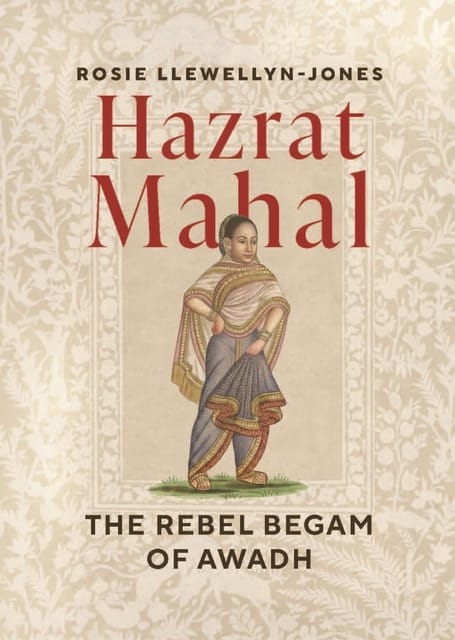
9789361132483 6a771fe6cf6c0e35fc1d0631 Hazrat Mahal The Rebel Begam Of Awadh https://www.midlandbookshop.com/s/607fe93d7eafcac1f2c73ea4/6a771fe8cf6c0e35fc1d0639/71ypoukicpl-_sl1445_.jpg

BEGAM HAZRAT MAHAL (c. 1820 1879) is an elusive figure in Indian history her origins and destiny have remained shrouded in ambiguity. The daughter of a slave likely of African ancestry and a domestic servant, her birth name is unknown. What is known is that she entered Prince Wajid Ali Shah s Pari Khana as a courtesan and was renamed thrice before emerging as Hazrat Mahal, one of his many wives. She gave birth to the prince s son Birjis Qadr in 1844 and, after Wajid Ali inherited the throne, briefly enjoyed the position of a favourite. By the end of the decade, however, the two were divorced.

In 1856, the East India Company annexed Awadh and deposed Wajid Ali Shah. The takeover was sudden and brutal, igniting fear and dissatisfaction among the people. At the same time, the events now known as the First War of Independence were stirring across India. With Wajid Ali exiled and eventually imprisoned in Calcutta, thirteen-year-old Birjis Qadr became the royal figurehead of Awadh s rebel opposition and his mother, the begam, its de facto leader. Hazrat Mahal appeared immune to prejudice in her attempts to unite the fragmented rebels: powerful landowners, nawabi elite, religious leaders, enraged soldiers and citizenry. Despite her lack of education and experience, she devised military strategy, dealing with two, sometimes three, groups of soldiers with conflicting ideas, and negotiated with an unimaginably powerful enemy, the East India Company itself. And at the centre of her brief rule is one of the most dramatic episodes in the history of British India: the siege of the Lucknow Residency.

Drawing from decades of meticulous research and previously undiscovered archival material Indian and British acclaimed historian Rosie Llewellyn-Jones rescues this ruler from obscurity and renders the complexities of nineteenth-century Awadh through the story of its fiercest, most unlikely leader.

About the Author

Rosie Llewellyn-Jones, MBE, studied Urdu and Hindi at the School of Oriental and African Studies (SOAS), University of London. Her PhD thesis was published as A Fatal Friendship: The Nawabs, the British and the City of Lucknow in 1985.

She is a prolific author, specializing in colonial India during the eighteenth and nineteenth centuries. Her books include a trilogy on Major General Claude Martin, founder of La Martini re Schools, and histories of the Uprising of 1857.

Rosie was archivist at the Royal Society for Asian Affairs for ten years and a Council Member of the Royal Asiatic Society. She was awarded an MBE in 2015 for services to the British Association for Cemeteries in South Asia (BACSA) and British Indian studies.

9789361132483
in stock INR 639
1 1

Hazrat Mahal The Rebel Begam Of Awadh

ISBN: 9789361132483
₹639
₹799   (20% OFF)


Details
  • ISBN: 9789361132483
  • Author: Rosie Llewellyn-jones
  • Publisher: Pan Macmillan
  • Pages: 273
  • Format: Hardback
SHARE PRODUCT

Book Description

BEGAM HAZRAT MAHAL (c. 1820 1879) is an elusive figure in Indian history her origins and destiny have remained shrouded in ambiguity. The daughter of a slave likely of African ancestry and a domestic servant, her birth name is unknown. What is known is that she entered Prince Wajid Ali Shah s Pari Khana as a courtesan and was renamed thrice before emerging as Hazrat Mahal, one of his many wives. She gave birth to the prince s son Birjis Qadr in 1844 and, after Wajid Ali inherited the throne, briefly enjoyed the position of a favourite. By the end of the decade, however, the two were divorced.

In 1856, the East India Company annexed Awadh and deposed Wajid Ali Shah. The takeover was sudden and brutal, igniting fear and dissatisfaction among the people. At the same time, the events now known as the First War of Independence were stirring across India. With Wajid Ali exiled and eventually imprisoned in Calcutta, thirteen-year-old Birjis Qadr became the royal figurehead of Awadh s rebel opposition and his mother, the begam, its de facto leader. Hazrat Mahal appeared immune to prejudice in her attempts to unite the fragmented rebels: powerful landowners, nawabi elite, religious leaders, enraged soldiers and citizenry. Despite her lack of education and experience, she devised military strategy, dealing with two, sometimes three, groups of soldiers with conflicting ideas, and negotiated with an unimaginably powerful enemy, the East India Company itself. And at the centre of her brief rule is one of the most dramatic episodes in the history of British India: the siege of the Lucknow Residency.

Drawing from decades of meticulous research and previously undiscovered archival material Indian and British acclaimed historian Rosie Llewellyn-Jones rescues this ruler from obscurity and renders the complexities of nineteenth-century Awadh through the story of its fiercest, most unlikely leader.

About the Author

Rosie Llewellyn-Jones, MBE, studied Urdu and Hindi at the School of Oriental and African Studies (SOAS), University of London. Her PhD thesis was published as A Fatal Friendship: The Nawabs, the British and the City of Lucknow in 1985.

She is a prolific author, specializing in colonial India during the eighteenth and nineteenth centuries. Her books include a trilogy on Major General Claude Martin, founder of La Martini re Schools, and histories of the Uprising of 1857.

Rosie was archivist at the Royal Society for Asian Affairs for ten years and a Council Member of the Royal Asiatic Society. She was awarded an MBE in 2015 for services to the British Association for Cemeteries in South Asia (BACSA) and British Indian studies.
User reviews

  0/5