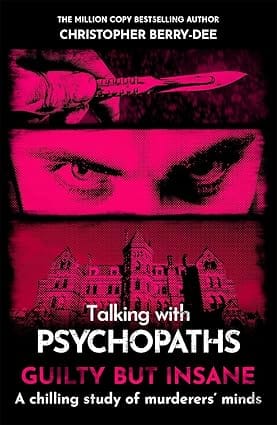
The plea of insanity in criminal cases can be traced back at least to the Babylonian Code of Hammurabi, which dates from 1755-1759 BC. It is a complicated defence, and its origins in modern law lie with the 'M'Naghten Rules' of 1843, formulated by British judges as a jury instruction in cases where a plea of insanity had been entered. Daniel M'Naghten shot and killed one Edward Drummond, believing him to be the British Prime Minister, Sir Robert Peel, and was acquitted on the grounds of insanity, and the M'Naghten Rules still exert considerable influence over defences today.
Clearly a plea of insanity in murder cases is of critical importance when the death penalty is still applied, and even today it may still be the difference between a life sentence in a high-security prison, or an indeterminate one in a secure psychiatric hospital. Meanwhile, 27 of the USA's 50 states have retained or readopted the death penalty, and at least 54 other countries, including China, Russia, India, Iran and Saudi Arabia, also retain it.
Naturally, a criminal who was liable to swing for murder could, and sometimes did, make every attempt to appear insane, and this book examines some of these cases, as well as trials in which the accused was indeed judged to be insane. The failure rate is high; of seven American serial killers who deployed the defence in their trials, only two were successful, ending their days in secure psychiatric facilities; two were executed, and the other three either died or were killed while serving full-life sentences, or are still in gaol.
About the Author
A noted writer and criminologist, Christopher Berry-Dee's recent books include Talking with Psychopaths and Savages: A journey into the evil mind, the UK's bestselling true-crime title of 2017, and Talking with Psychopaths and Savages: Letters from Killers (2023). He is the country's No. 1 true-crime author.










 +91 9818282497
(2).png)