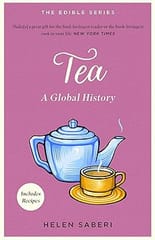
The captivating history of the world’s most adaptable beverage
Tea is sipped, whisked, boiled, iced, flavoured, spiced, mixed with milk and sugar, or enjoyed with salt and butter across various geographies. It is an essential element of both ceremony and leisure in various cultures – a universal symbol of harmony and hospitality.
But do not be deceived by its unassuming appearances, food historian Helen Saberi warns us – tea has a rich and vivid history steeped in ritual and religion, adventure and enterprise, smuggling and revolution, literature and social change. From its legendary beginnings in China to the role of India in bringing this prized plant to the world; how it came to symbolize the American pursuit for independence, and finally, the myriad varieties of tea being cultivated everywhere from Argentina to Zimbabwe today – tea has truly established itself as a binding global cultural force.
This concise volume maps the evolution of tea-drinking and hospitality, tracing the history of its trade along ancient caravan routes, its arrival in the West aboard clipper ships, the various traditions around tea gardens, teahouses, tea dances and the British afternoon tea, the invention of tea bags and iced tea, and the newest addition to this marvellous legacy – the bubble tea. With vivid illustrations and recipes from around the world, Tea is a rejuvenating treat for curious minds
About the Author
Constance L. Kirker is an American food historian, writer, and educator known for her engaging work on culinary history, food culture, and the science behind everyday ingredients. She has a strong academic background and has taught at institutions such as the Culinary Institute of America, where she inspired students to explore the historical and cultural contexts of food. Kirker is best recognized for co-authoring books that delve into the origins, uses, and global significance of staple foods, combining meticulous research with an accessible and engaging writing style. Her work often bridges the gap between scholarly research and popular readership, making complex food histories easy to understand and enjoyable to read. With a passion for storytelling and gastronomy, Constance L. Kirker continues to contribute to the appreciation of food as both a cultural artifact and a vital part of human history.