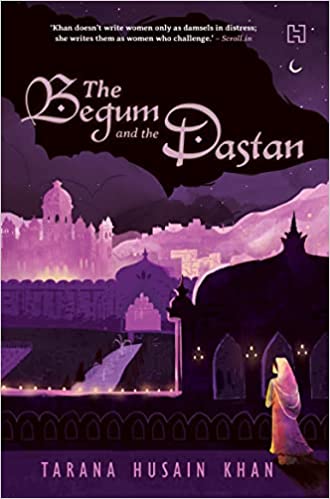
Review 'Straddling themes of gender and sectarianism, of royal autocracy and republican apathy, The Begum and the Dastan resurrects the lives of women behind the purdah, telling a moving, even tragic tale of pride, loss, courage and determination, as well as that unyielding human capacity to subvert tyranny through art and the power of stories.' – Manu Pillai, author of The Ivory Throne and Rebel Sultans 'Tarana Khan weaves a tale full of Razm, ishq, ayyari aur tilism, war, love, trickery and magic – and takes us on a fascinating journey into the life of a nineteenth-century Begum. The author's familiarity with the male-centric, feudal milieu and her meticulous research of the period brings to life a story of a woman and her story of love, loss and betrayal. The dastan with its use of two timelines keeps the reader in its grip throughout as it brings out the lives of a young girl in present times hearing the story of her ancestress.' – Rana Safvi, author of Tears of the Begums and In Search of the Divine 'A captivating novel that shows Tarana Khan's masterful insight into the human heart, complexities of love and tragedy. Framed through published and oral histories and dastans, the novel introduces Feroza Begum, a highly memorable heroine, through whose life we are pulled into the richly regimented life of the nineteenth-century Nawabi culture.' – Musharraf Ali Farooqi, author of Between Clay and Dust and The Story of a Widow 'Evocative writing that summons the soul of the feudal past, rich with history and romance and heartbreak.' – Namita Gokhale, author and Sahitya Akademi awardee, 2021 'A moving and affectionate account of a late 19th-century heroine, both shackled and emboldened by life in a North Indian court. The novel skillfully shows how the modern, in this colonial era, could take the form of a violent conservatism, especially in relation to women. The shattering and often cunning refashioning of women's lives is Tarana Husain Khan's fascinating subject.' – Anjum Hasan, author of A Day in the Life 'The story prompts the question: How can one write history without condoning it? In The Begum and the Dastan, history is an inspiration, a tool and an anchor, but it is not a justification.' – Scroll.in '[Khan] has done an incredible job of combining fiction and history with a delicate hand of imagination. The story lives with you long after you have read it.' – The Daily Guardian 'Her novel sought to present historical fiction not from the perspective of the man as most dominant narratives do, but strived to represent the tale from the voice of female characters and their version of history. Khan ardently elaborated on the prejudices faced by women in the 19th century, the ones that women are still victims to today and the need for the rise of consciousness in these turbulent times.' – The Telegraph 'A magical realism journey into the old feudal nawabi culture weaving two eras... The magic of the novel will surely survive for long.' – Salman Khurshid, The Wire 'This is an immersive novel, remarkable for the thoroughly Muslim world it creates.' – Anil Menon, The Hindu 'With Feroza Begum, Khan seeks to examine how women thrust into this life of purdah, filled as much with glamour as with subversion, found the will to love and rebel, and sharply questions how far we have stepped out of similar oppressive structures in the present context.' – Firstpost '...Khan accomplishes much: A flavour of Nawabi daily life, Rohilla military culture, the Sunni-Shia tensions mixed in with colonial influence, and, ultimately, the women representing each of these categories.' – Deccan Chronicle '...rhythmic, mellifluous and near hypnotic quality of prose. Khan's smooth grafting of the flamboyance of Urdu Dastan to the Anglophone narrative lends Feroza Begum's tale a compelling power. It is an exquisitely rendered, splendid story which you can read at leisure. The book, indeed, is an unputdownable page-turner.' – The Book Review 'The Begum and the Dastan by Tarana Husain Khan has the ability to create enchantment with her words... Characters sparkle with such brilliance.' – Frontlist 'Document[s] the stories of women history forgot, who lived in Rampur and shaped the history of the town.' – SheThePeople '...a haunting tale of a grand city and its women unfolding in three main narrative strands from the 19th century until the present.' – Desi Books 'This is a novel of parallels... Despite the glitz and the glamour, Khan's take on history remains unflinching.' – For Reading Addicts, UK 'Tarana Husain Khan is a master of imagery; her writing is imbued with elaborate descriptions of resplendent soirees, gloomy dungeons and busy bazaars, that sweep you into the glamour and delusion of court life. Just as quickly, she will steer you through time and bring you face-to-face with the subversion of women's empowerment in present times... [Tarana] leaves her readers in a literary stupor, dizzy and yearning for more.' – The Daily Star '[Tarana Husain Khan] herself had to go through archives, diaries, historical writings and, of course, oral history in order to tell the tale. In the book, the Begum's granddaughter tells the story to her granddaughter, making it through five generations.' – Moneycontrol 'This one's a gem for historical fiction readers with a passion for detail and atmosphere.' – GQ India
Review
'Straddling themes of gender and sectarianism, of royal autocracy and republican apathy, The Begum and the Dastan resurrects the lives of women behind the purdah, telling a moving, even tragic tale of pride, loss, courage and determination, as well as that unyielding human capacity to subvert tyranny through art and the power of stories.' – Manu Pillai, author of The Ivory Throne and Rebel Sultans
'Tarana Khan weaves a tale full of Razm, ishq, ayyari aur tilism, war, love, trickery and magic – and takes us on a fascinating journey into the life of a nineteenth-century Begum. The author's familiarity with the male-centric, feudal milieu and her meticulous research of the period brings to life a story of a woman and her story of love, loss and betrayal. The dastan with its use of two timelines keeps the reader in its grip throughout as it brings out the lives of a young girl in present times hearing the story of her ancestress.' – Rana Safvi, author of Tears of the Begums and In Search of the Divine
'A captivating novel that shows Tarana Khan's masterful insight into the human heart, complexities of love and tragedy. Framed through published and oral histories and dastans, the novel introduces Feroza Begum, a highly memorable heroine, through whose life we are pulled into the richly regimented life of the nineteenth-century Nawabi culture.' – Musharraf Ali Farooqi, author of Between Clay and Dust and The Story of a Widow
'Evocative writing that summons the soul of the feudal past, rich with history and romance and heartbreak.' – Namita Gokhale, author and Sahitya Akademi awardee, 2021
A moving and affectionate account of a late 19th-century heroine, both shackled and emboldened by life in a North Indian court. The novel skillfully shows how the modern, in this colonial era, could take the form of a violent conservatism, especially in relation to women. The shattering and often cunning refashioning of women's lives is Tarana Husain Khan's fascinating subject.' – Anjum Hasan, author of A Day in the Life
The story prompts the question: How can one write history without condoning it? In The Begum and the Dastan, history is an inspiration, a tool and an anchor, but it is not a justification.' – Scroll.in
'[Khan] has done an incredible job of combining fiction and history with a delicate hand of imagination. The story lives with you long after you have read it.' – The Daily Guardian
'Her novel sought to present historical fiction not from the perspective of the man as most dominant narratives do, but strived to represent the tale from the voice of female characters and their version of history. Khan ardently elaborated on the prejudices faced by women in the 19th century, the ones that women are still victims to today and the need for the rise of consciousness in these turbulent times.' – The Telegraph
'A magical realism journey into the old feudal nawabi culture weaving two eras... The magic of the novel will surely survive for long.' – Salman Khurshid, The Wire
'This is an immersive novel, remarkable for the thoroughly Muslim world it creates.' – Anil Menon, The Hindu
With Feroza Begum, Khan seeks to examine how women thrust into this life of purdah, filled as much with glamour as with subversion, found the will to love and rebel, and sharply questions how far we have stepped out of similar oppressive structures in the present context.' – Firstpost
'...Khan accomplishes much: A flavour of Nawabi daily life, Rohilla military culture, the Sunni-Shia tensions mixed in with colonial influence, and, ultimately, the women representing each of these categories.' – Deccan Chronicle
'...rhythmic, mellifluous and near hypnotic quality of prose. Khan's smooth grafting of the flamboyance of Urdu Dastan to the Anglophone narrative lends Feroza Begum's tale a compelling power. It is an exquisitely rendered, splendid story which you can read at leisure. The book, indeed, is an unputdownable page-turner.' – The Book Review
'The Begum and the Dastan by Tarana Husain Khan has the ability to create enchantment with her words... Characters sparkle with such brilliance.' – Frontlist
'Document[s] the stories of women history forgot, who lived in Rampur and shaped the history of the town.' – SheThePeople
'...a haunting tale of a grand city and its women unfolding in three main narrative strands from the 19th century until the present.' – Desi Books
'This is a novel of parallels... Despite the glitz and the glamour, Khan's take on history remains unflinching.' – For Reading Addicts, UK
'Tarana Husain Khan is a master of imagery; her writing is imbued with elaborate descriptions of resplendent soirees, gloomy dungeons and busy bazaars, that sweep you into the glamour and delusion of court life. Just as quickly, she will steer you through time and bring you face-to-face with the subversion of women's empowerment in present times... [Tarana] leaves her readers in a literary stupor, dizzy and yearning for more.' – The Daily Star
'[Tarana Husain Khan] herself had to go through archives, diaries, historical writings and, of course, oral history in order to tell the tale. In the book, the Begum's granddaughter tells the story to her granddaughter, making it through five generations.' – Moneycontrol
'This one's a gem for historical fiction readers with a passion for detail and atmosphere.' – GQ India
About the Author
Tarana Husain Khan is a writer and cultural historian. Her writings on the oral history, culture and the famed cuisine of the erstwhile princely state of Rampur have appeared in prominent publications such as Scroll.in, Eaten magazine, The Wire, Al Jazeera and in the anthologies Desi Delicacies (Pan Macmillan, India) and Dastarkhwan: Food Writing from South Asia and Diaspora (Beacon Books, UK). She hosts and curates a website on Rampur culture and oral history. She lives between Rampur and Nainital with her husband.






 +91 9818282497
(2).png)