Shop No.20, Aurobindo Palace Market, Hauz Khas, Near Church +91 9818282497 | 011 26867121 110016 New Delhi IN
Midland The Book Shop ™
Shop No.20, Aurobindo Palace Market, Hauz Khas, Near Church +91 9818282497 | 011 26867121 New Delhi, IN
+919871604786 https://www.midlandbookshop.com/s/607fe93d7eafcac1f2c73ea4/69591829db7aed90e0608dfb/without-tag-line-480x480.png" [email protected]
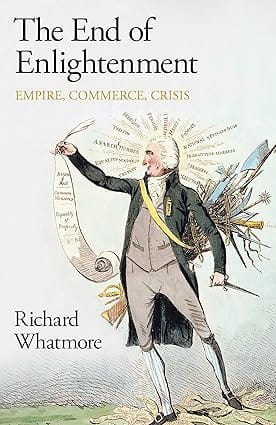
9780241523421 6586ce8f7c58f8cacfbb4086 The End Of Enlightenment Empire, Commerce, Crisis https://www.midlandbookshop.com/s/607fe93d7eafcac1f2c73ea4/6586ce907c58f8cacfbb40b5/91-pvooj-yl-_sy425_.jpg

Review

In a study with chilling modern resonance, the history don contends that the age of reason was betrayed by the greed, corruption and barbarism of Britain’s ruling elite. . . A nuanced history. . . Enlightenment, for Whatmore and the thinkers he so engagingly profiles, had an objective, namely to overcome superstition that had soaked 17th-century Europe in blood - Guardian

This book shows brilliantly how an idea, though it may travel across the centuries, can still be historically located, just like the people who invented it. Invigorating. . . the Enlightenment in Whatmore’s telling is not a staid, steady procession of pompous ideas, but a vital intellectual exercise in making the best of a bad hand. And that’s a lesson for the 21st century too - Evening Standard

Highly intelligent and sensitively written, The End of Enlightenment focuses on post-1750 British and Irish contributors to the movement -- Linda Colley - Financial Times

In this lucid and beautifully written book, Richard Whatmore evokes the darkening vision of the 18th century thinkers forced to confront the failure of Enlightenment. Instead of achieving perpetual peace and progress, they saw Europe fragment into a collection of warmongering states teetering on the brink of bankruptcy and global turmoil. Whatmore carefully reconstructs the historical context for the failure of Enlightenment and presents it as a powerful echo chamber for our own troubled times. This is a fascinating and important book -- Ruth Scurr

The Enlightenment had seemed to promise a limitless bounty of peace, prosperity, rational inquiry and mutual tolerance to a Europe long ravaged by religious fanaticism and war. Why did it come to end in the extreme violence and continental bloodshed of the French Revolution, and how could another such disaster be avoided? Richard Whatmore charts the response to these concerns of many of the greatest thinkers of the 18th century, from Smith and Burke to Wollstonecraft. His book is panoramic in scope, always fresh and deep in its analysis, but with a polemical edge for today’s readers fearful again for our global future -- Jesse Norman

A brilliant work of intellectual interpretation by our foremost historian of Enlightenment ideas. Whatmore rescues the Enlightenment from today's circular debates and places it where it belongs: in the pulsing, chaotic era of its genesis and demise -- Christopher de Bellaigue

As the eighteenth century progressed it was increasingly apparent that the Enlightenment was failing. If religious bigotry was in retreat, new evils advanced: revolution, terror, and greed, fuelling war, exploitation and imperial expansion. Richard Whatmore shows how thinkers from David Hume to Mary Wollstonecraft strove to find solutions to such challenges. This intellectually exhilarating book is particularly relevant today, when liberal democracy is facing new dangers which threaten to drag us back into the darkness once more -- Adam Sisman

Whatmore approaches the Enlightenment on its own terms. . . There is buried treasure in his account of how figures from different intellectual backgrounds negotiated the Enlightenment crisis. . . Whatmore is to be applauded - History Today

About the Author

Richard Whatmore is Professor of Modern History at the University of St Andrews and Co-Director of the Institute of Intellectual History. He is the author of several acclaimed contributions to intellectual history and eighteenth-century scholarship, including The History of Political ThoughtTerrorists, Anarchists and Republicans and Against War and Empire.

9780241523421
out of stock INR 1039
1 1
The End Of Enlightenment Empire, Commerce, Crisis

The End Of Enlightenment Empire, Commerce, Crisis

ISBN: 9780241523421
₹1,039
₹1,299   (20% OFF)


Back In Stock Shortly - Fill The Book Request Form

Details
  • ISBN: 9780241523421
  • Author: Richard Whatmore
  • Publisher: Allen Lane
  • Pages: 320
  • Format: Hardback
SHARE PRODUCT

Book Description

Review

In a study with chilling modern resonance, the history don contends that the age of reason was betrayed by the greed, corruption and barbarism of Britain’s ruling elite. . . A nuanced history. . . Enlightenment, for Whatmore and the thinkers he so engagingly profiles, had an objective, namely to overcome superstition that had soaked 17th-century Europe in blood - Guardian

This book shows brilliantly how an idea, though it may travel across the centuries, can still be historically located, just like the people who invented it. Invigorating. . . the Enlightenment in Whatmore’s telling is not a staid, steady procession of pompous ideas, but a vital intellectual exercise in making the best of a bad hand. And that’s a lesson for the 21st century too - Evening Standard

Highly intelligent and sensitively written, The End of Enlightenment focuses on post-1750 British and Irish contributors to the movement -- Linda Colley - Financial Times

In this lucid and beautifully written book, Richard Whatmore evokes the darkening vision of the 18th century thinkers forced to confront the failure of Enlightenment. Instead of achieving perpetual peace and progress, they saw Europe fragment into a collection of warmongering states teetering on the brink of bankruptcy and global turmoil. Whatmore carefully reconstructs the historical context for the failure of Enlightenment and presents it as a powerful echo chamber for our own troubled times. This is a fascinating and important book -- Ruth Scurr

The Enlightenment had seemed to promise a limitless bounty of peace, prosperity, rational inquiry and mutual tolerance to a Europe long ravaged by religious fanaticism and war. Why did it come to end in the extreme violence and continental bloodshed of the French Revolution, and how could another such disaster be avoided? Richard Whatmore charts the response to these concerns of many of the greatest thinkers of the 18th century, from Smith and Burke to Wollstonecraft. His book is panoramic in scope, always fresh and deep in its analysis, but with a polemical edge for today’s readers fearful again for our global future -- Jesse Norman

A brilliant work of intellectual interpretation by our foremost historian of Enlightenment ideas. Whatmore rescues the Enlightenment from today's circular debates and places it where it belongs: in the pulsing, chaotic era of its genesis and demise -- Christopher de Bellaigue

As the eighteenth century progressed it was increasingly apparent that the Enlightenment was failing. If religious bigotry was in retreat, new evils advanced: revolution, terror, and greed, fuelling war, exploitation and imperial expansion. Richard Whatmore shows how thinkers from David Hume to Mary Wollstonecraft strove to find solutions to such challenges. This intellectually exhilarating book is particularly relevant today, when liberal democracy is facing new dangers which threaten to drag us back into the darkness once more -- Adam Sisman

Whatmore approaches the Enlightenment on its own terms. . . There is buried treasure in his account of how figures from different intellectual backgrounds negotiated the Enlightenment crisis. . . Whatmore is to be applauded - History Today

About the Author

Richard Whatmore is Professor of Modern History at the University of St Andrews and Co-Director of the Institute of Intellectual History. He is the author of several acclaimed contributions to intellectual history and eighteenth-century scholarship, including The History of Political ThoughtTerrorists, Anarchists and Republicans and Against War and Empire.
User reviews

  0/5