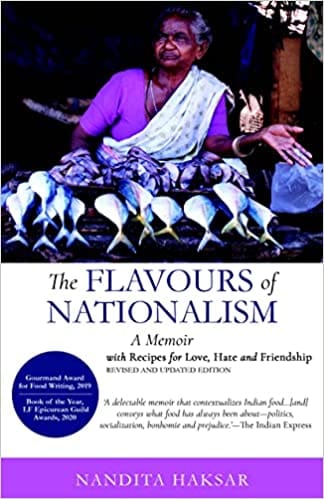
In this extraordinary memoir, Nandita Haksar uses memories and ideas of food to ask fundamental questions about what we eat, who we eat with, who starves and who feasts, which foods are forbidden or denigrated—and what all this says about our country. Starting with her childhood in the 1950s,Haksar takes us on a fascinating journey through India, from wedding feasts in her Kashmiri Pandit family settled in Old Delhi and Lucknow, to humanrights activism on behalf of Nagas in Manipur; from listening to testimonies of women working in Kerala’s fisheries, to witnessing the impact of a globalized food industry on livelihoods in Goa. She examines how our tastes and attitudes to food are shaped by caste, class, religion, race and gender, and she addresses the recent controversies over beef-eating, and ‘Hindu’ vs ‘Muslim’ food. Scattered through the book are brilliant anecdotes—by turns startling, amusing and moving—about culinary rituals and curiosities, and memorable recipes from the many people Haksar has eaten with. And always at the heart of the narrative is a fundamental question: How can a people who won’t eat together, as equals, stay united?
About the Author
Nandita Haksar is a human-rights lawyer, teacher, campaigner and writer.She has represented the victims of army atrocities in Northeast India, Kashmiris framed in terrorism cases, migrant workers and refugees seeking asylum in India. She is the author of several books, including Nagaland File: A Question of Human Rights; The Judgement That Never Came: Army Rule in Northeast India; Across the Chicken Neck: Travels in Northeast India; The Many Faces of Kashmir Nationalism; and Kuknalim—Naga Armed Resistance: Testimonies of Leaders, Pastors, Healers and Soldiers.


 +91 9818282497
(2).png)