The first English translation of Himaranya, one of the earliest modern Bengali accounts of travels to Tibet in the late nineteenth century.
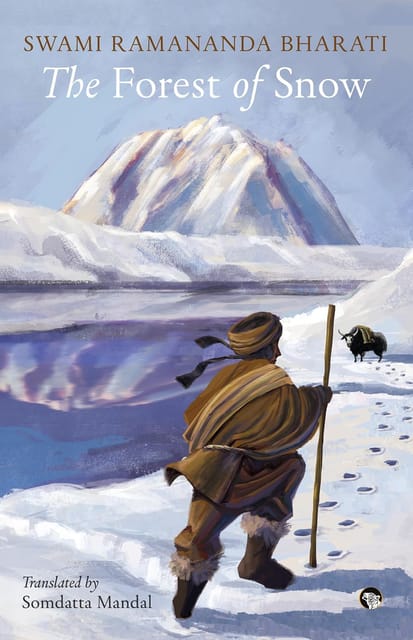
In 1898, the wandering saint Swami Ramananda Bharati set out from the Garhwal Himalayas towards one of the most remote and revered destinations in the world: Mount Kailash and Manas Sarovar in Tibet. Travelling through perilous mountain passes, glacial valleys and isolated border villages, Bharati journeyed not merely as a pilgrim in search of divine grace, but as an observant traveller deeply attentive to the people, landscapes and contradictions of the Himalayan world.
The Forest of Snow chronicles this extraordinary expedition across the high Himalayas through Joshimath, Niti, Hoti Pass and beyond capturing the majesty of snowbound peaks, roaring rivers and sacred shrines, alongside the hardships of life at the edge of empire.
Bharati writes vividly of Bhutia traders preparing for their annual caravans into Tibet, highland communities who migrate with the changing seasons, weather-beaten caves sheltering pilgrims, mountain food that consists only of tea, butter and barley flour, and the tense borderlands shaped by colonial surveillance and Tibetan restrictions. Along the way he encounters an unforgettable cast of companions and strangers: clever interpreters, eccentric lamas, drunken villagers, Tibetans suspicious of English spies, and even dacoits.
Blending spiritual reflection with sharp ethnographic observation, Bharati s narrative moves beyond conventional pilgrimage writing to offer one of the earliest

The first English translation of Himaranya, one of the earliest modern Bengali accounts of travels to Tibet in the late nineteenth century.
In 1898, the wandering saint Swami Ramananda Bharati set out from the Garhwal Himalayas towards one of the most remote and revered destinations in the world: Mount Kailash and Manas Sarovar in Tibet. Travelling through perilous mountain passes, glacial valleys and isolated border villages, Bharati journeyed not merely as a pilgrim in search of divine grace, but as an observant traveller deeply attentive to the people, landscapes and contradictions of the Himalayan world.
The Forest of Snow chronicles this extraordinary expedition across the high Himalayas through Joshimath, Niti, Hoti Pass and beyond capturing the majesty of snowbound peaks, roaring rivers and sacred shrines, alongside the hardships of life at the edge of empire.
Bharati writes vividly of Bhutia traders preparing for their annual caravans into Tibet, highland communities who migrate with the changing seasons, weather-beaten caves sheltering pilgrims, mountain food that consists only of tea, butter and barley flour, and the tense borderlands shaped by colonial surveillance and Tibetan restrictions. Along the way he encounters an unforgettable cast of companions and strangers: clever interpreters, eccentric lamas, drunken villagers, Tibetans suspicious of English spies, and even dacoits.
Blending spiritual reflection with sharp ethnographic observation, Bharati s narrative moves beyond conventional pilgrimage writing to offer one of the earliest
Subscribe to get Email Updates!
Thanks for subscribing.
Your response has been recorded.
"We Believe In The Power of Books" Our mission is to make books accessible to everyone, and to cultivate a culture of reading and learning. We strive to provide a wide range of books, from classic literature, sci-fi and fantasy, to graphic novels, biographies and self-help books, so that everyone can find something to read.
Whether you’re looking for your next great read, a gift for someone special, or just browsing, Midland is here to make your book-buying experience easy and enjoyable.