“Perhaps to lose a sense of where you are implies the danger of losing a sense of who you are.”
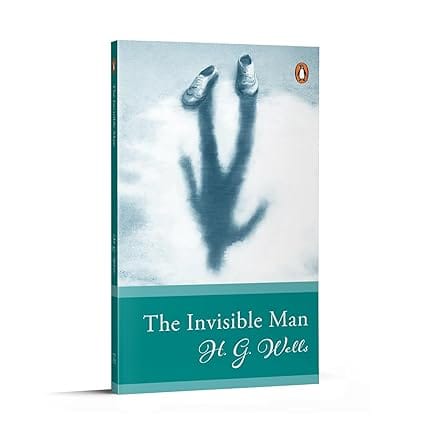
Griffin, an ingenious research scientist, develops a process that can render physical objects invisible. He successfully performs the experiment on himself, but soon realises that it is impossible to survive oblivious to the world and all those that matter to him.
This invisible man is now desperate to reverse the process. Will Griffin be able to become visible again? Or his obsession for invisibility will result in his doom?
Considered to be a pioneer of science fiction, this novel explores the deep and unresolved ideas of science vs the universal power, the extent of human mind and the dangers of being swept by the mind’s wickedness. The Invisible Man warns about the destructive effects science can have if not practiced with limits on the human desires.
A relevant story, especially in the age of artificial intelligence.
H.G. Wells was born in Bromley, Kent, in 1866. After an education repeatedly interrupted by his family’s financial problems, he eventually found work as a teacher at a succession of schools, where he began to write his first stories.
Wells became a prolific writer with a diverse output, of which the famous works are his science fiction novels. These are some of the earliest and most influential examples of the genre, and include classics such as The Time Machine and The War of the Worlds. Most of his books very well-received, and had a huge influence on many younger writers, including George Orwell and Isaac Asimov. Wells also wrote many popular non-fiction books, and used his writing to support the wide range of political and social causes in which he had an interest, although these became increasingly eccentric towards the end of his life.
Twice-married, Wells had many affairs, including a ten-year liaison with Rebecca West that produced a son. He died in London in 1946.

“Perhaps to lose a sense of where you are implies the danger of losing a sense of who you are.”
Griffin, an ingenious research scientist, develops a process that can render physical objects invisible. He successfully performs the experiment on himself, but soon realises that it is impossible to survive oblivious to the world and all those that matter to him.
This invisible man is now desperate to reverse the process. Will Griffin be able to become visible again? Or his obsession for invisibility will result in his doom?
Considered to be a pioneer of science fiction, this novel explores the deep and unresolved ideas of science vs the universal power, the extent of human mind and the dangers of being swept by the mind’s wickedness. The Invisible Man warns about the destructive effects science can have if not practiced with limits on the human desires.
A relevant story, especially in the age of artificial intelligence.
H.G. Wells was born in Bromley, Kent, in 1866. After an education repeatedly interrupted by his family’s financial problems, he eventually found work as a teacher at a succession of schools, where he began to write his first stories.
Wells became a prolific writer with a diverse output, of which the famous works are his science fiction novels. These are some of the earliest and most influential examples of the genre, and include classics such as The Time Machine and The War of the Worlds. Most of his books very well-received, and had a huge influence on many younger writers, including George Orwell and Isaac Asimov. Wells also wrote many popular non-fiction books, and used his writing to support the wide range of political and social causes in which he had an interest, although these became increasingly eccentric towards the end of his life.
Twice-married, Wells had many affairs, including a ten-year liaison with Rebecca West that produced a son. He died in London in 1946.
Subscribe to get Email Updates!
Thanks for subscribing.
Your response has been recorded.
"We Believe In The Power of Books" Our mission is to make books accessible to everyone, and to cultivate a culture of reading and learning. We strive to provide a wide range of books, from classic literature, sci-fi and fantasy, to graphic novels, biographies and self-help books, so that everyone can find something to read.
Whether you’re looking for your next great read, a gift for someone special, or just browsing, Midland is here to make your book-buying experience easy and enjoyable.